
Liability, Comprehensive, and Collision - What Each One Actually Covers

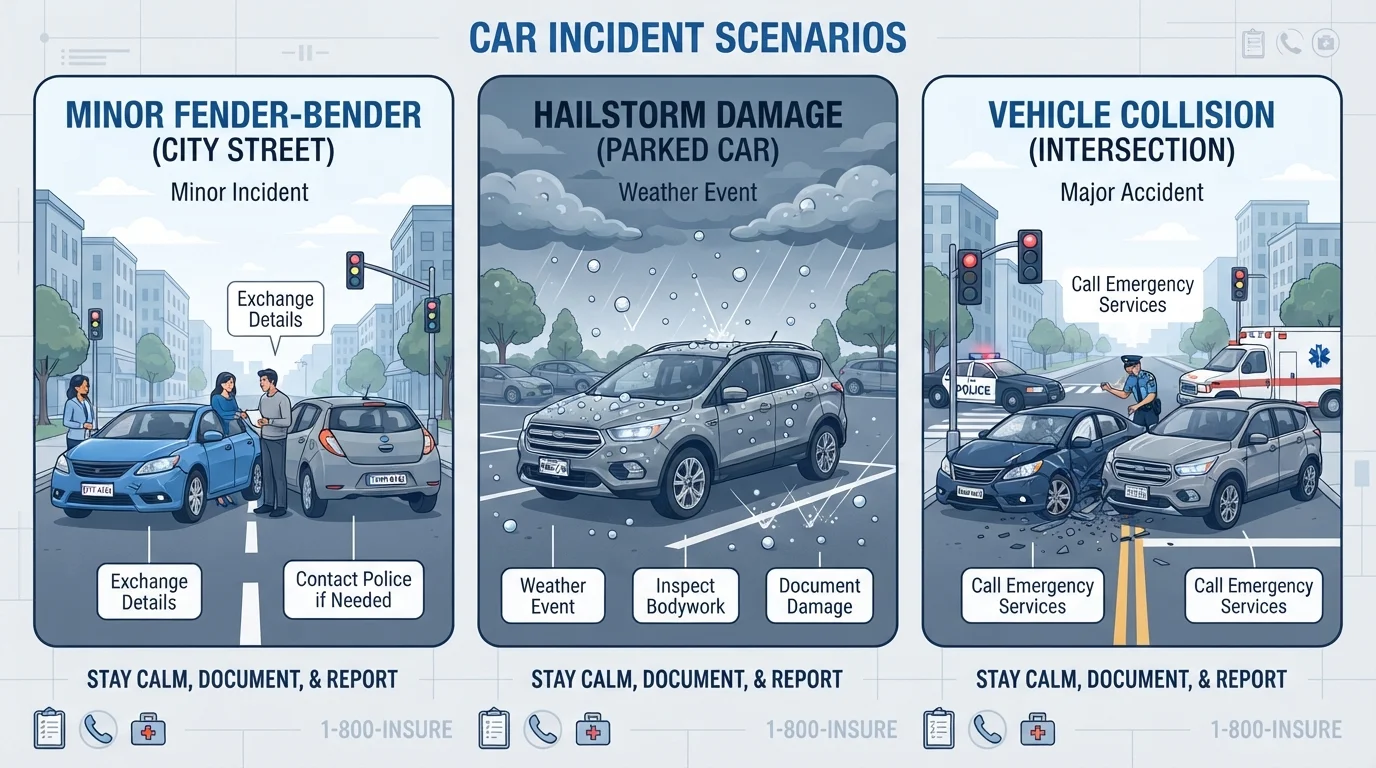
Photo: AnswersSquad.com | Explore Insightful Blogs editorial
The Three Core Coverage Types, Defined
When you shop for auto insurance in the U.S., nearly every policy is built from three foundational coverage types: liability, comprehensive, and collision. They are often sold together, but they protect against very different situations - and each comes with its own cost, deductible, and limits.
Liability Coverage
Insurance that pays for bodily injury or property damage you cause to others in an at-fault accident. It does not cover your own vehicle or injuries.
Collision Coverage
Insurance that pays to repair or replace your own vehicle after a crash with another car or object, regardless of fault. A deductible applies.
Comprehensive Coverage
Insurance that covers damage to your own vehicle from non-collision events such as theft, fire, flooding, or vandalism. A deductible also applies.
Deductible
The fixed dollar amount you agree to pay out of pocket before your insurance company covers the remainder of a claim. Higher deductibles generally mean lower premiums.
Actual Cash Value (ACV)
The market value of your vehicle at the time of a claim, accounting for depreciation. This is the maximum a comprehensive or collision policy will typically pay out.
Personal Injury Protection (PIP)
An optional or required (depending on state) coverage that pays for your own medical expenses and sometimes lost wages after an accident, regardless of fault.
Knowing what each one actually does prevents two expensive mistakes: paying for coverage you don't need, and assuming you're covered when you're not. This article is general educational information, not personalized insurance advice. Policy terms vary by provider and state - always read your actual policy documents and consult a licensed insurance agent before making coverage decisions.
Liability: What You Owe Others After an Accident
Liability coverage pays for damages and injuries you cause to other people when you are at fault in an accident. It does not pay for your own vehicle or your own medical bills.
There are two sub-types:
- Bodily injury liability - covers medical expenses, lost wages, and legal costs for the other driver or passengers if you injure them.
- Property damage liability - covers repair or replacement of the other party's vehicle or property (a fence, a storefront, etc.).
Liability is legally required in nearly every U.S. state, typically expressed as three numbers - for example, 25/50/25 - representing the per-person injury limit, per-accident injury limit, and property damage limit in thousands of dollars. State minimums exist, but many financial professionals suggest carrying higher limits because out-of-pocket exposure from a serious accident can far exceed a state's minimum requirement. That said, how much coverage is right for you depends on your personal financial situation - a topic worth discussing with a licensed agent.
| Legally Required | Liability (in nearly all U.S. states) (Requirements vary by state; verify with your state DMV) |
| Lender-Required | Collision + Comprehensive (for financed or leased vehicles) (Typical lender requirement; confirm with your financing agreement) |
| Common Liability Format | Three-number notation (e.g., 25/50/25) (Represents per-person / per-accident / property damage limits in thousands) |
| Payout Basis | Actual Cash Value (ACV), not replacement cost (Applies to comprehensive and collision payouts) |
| Medical Bills (Your Own) | Not covered by liability, collision, or comprehensive (Requires MedPay or PIP add-on) |
| Uninsured Driver Protection | Requires separate uninsured motorist endorsement (Required in some states; optional in others) |
Collision and Comprehensive: Protecting Your Own Vehicle
While liability covers damage you cause to others, collision and comprehensive each cover damage to your own car - but under completely different circumstances.
Collision Coverage
Collision pays for repairs to your vehicle when it's damaged in a crash - whether you hit another car, a guardrail, or a telephone pole. It applies regardless of who is at fault, though if another driver is at fault, your insurer may pursue reimbursement from theirs. You'll pay a deductible (a set amount you cover before insurance kicks in) each time you file a claim.
Comprehensive Coverage
Comprehensive covers damage from events that are not a collision - think theft, vandalism, fire, flooding, falling objects, or hitting an animal. Despite the name, it is not unlimited; it still has a deductible and a payout cap tied to the vehicle's actual cash value (ACV), meaning depreciation is factored in.
Neither collision nor comprehensive is legally required in any U.S. state, but lenders typically require both if you have a car loan or lease. Once a vehicle's ACV drops significantly, some drivers choose to drop one or both to reduce premiums - a trade-off worth evaluating carefully based on your car's value and your ability to absorb a repair cost.
For a deeper look at how these coverage tiers compare as standalone policies, see third-party vs. comprehensive coverage for young drivers. And if you want a broader overview of all insurance categories, car insurance categories demystified for new drivers breaks down the full spectrum.
What None of These Coverages Include
Even with all three types active, there are common gaps drivers are often surprised to discover:
- Your own medical bills - those may be covered under separate add-ons like Medical Payments (MedPay) or Personal Injury Protection (PIP), depending on your state.
- Uninsured or underinsured drivers - if someone hits you and lacks adequate coverage, you may need a specific uninsured motorist endorsement.
- Rental car costs while yours is being repaired - this is typically a separate add-on.
- Custom equipment or aftermarket parts - standard policies often pay only for factory-standard replacements.
- Mechanical breakdown or wear and tear - auto insurance is not a maintenance plan.
Building a realistic car budget means accounting for these potential costs. Resources on budgeting basics can help you map out your full vehicle expense picture, including insurance premiums, deductibles, and out-of-pocket gaps.
This article is intended for general informational and educational purposes only and does not constitute personalized insurance, financial, or legal advice. Coverage terms, exclusions, and state requirements vary. Consult a licensed insurance professional and review your actual policy documents before making any coverage decisions.
The content provided on our blog site traverses numerous categories, offering readers valuable and practical information. Readers can use the editorial team’s research and data to gain more insights into their topics of interest. However, they are requested not to treat the articles as conclusive. The website team cannot be held responsible for differences in data or inaccuracies found across other platforms. Please also note that the site might also miss out on various schemes and offers available that the readers may find more beneficial than the ones we cover.