
Fitness Terms Every Beginner Deserves to Understand

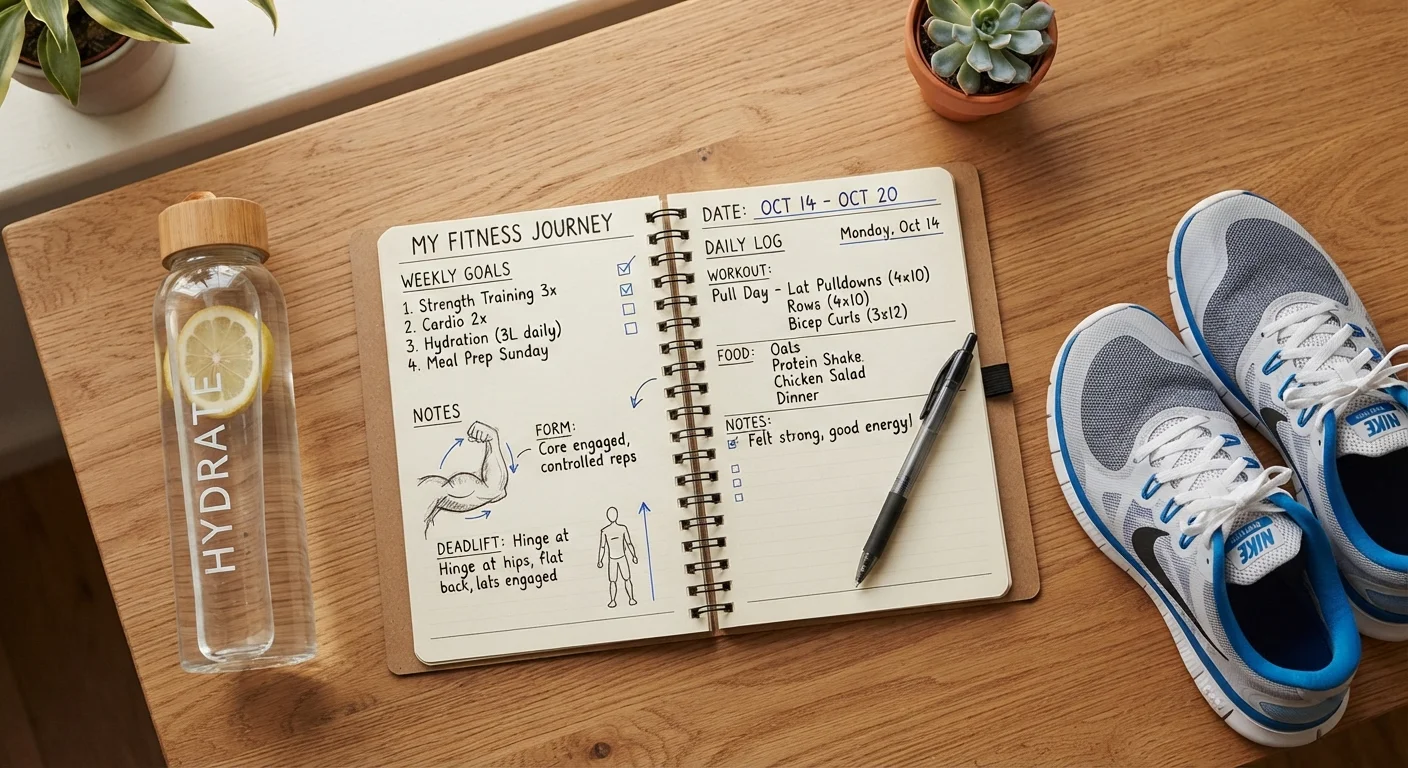
Photo: AnswersSquad.com | Explore Insightful Blogs editorial
Why Fitness Language Matters
Walking into a gym or opening a workout app for the first time can feel like landing in a foreign country. People talk about their macros, warn you to watch your form, and casually mention progressive overload like it's common knowledge. It isn't - and that gap in vocabulary is one of the quieter reasons people feel like fitness isn't "for them."
This guide cuts through that. The terms below are the ones you'll actually encounter when you start moving - in gym classes, fitness apps, online communities, and conversations with trainers. Understanding them won't make you fitter on its own, but it will make every workout, article, and piece of advice easier to act on.
If you're just getting started, you might also find our realistic roadmap for returning to exercise useful as a companion read.
Reps (Repetitions)
One complete movement of an exercise - for example, one squat or one push-up. Reps are usually grouped into sets.
Sets
A group of consecutive reps performed without resting. A typical instruction might be "3 sets of 10 reps," meaning you do 10 reps, rest, and repeat that two more times.
RPE (Rate of Perceived Exertion)
A self-reported scale - usually 1 to 10 - describing how hard an effort feels. An RPE of 5 feels moderately challenging; an RPE of 9 means you're near your limit. It's a practical way to gauge intensity without equipment.
Progressive Overload
The practice of gradually increasing the challenge of your workouts over time so your body continues to adapt and improve. This can mean adding weight, doing more reps, or shortening rest periods.
Compound Movement
An exercise that works multiple muscle groups and joints at once - like a squat, deadlift, or push-up. These are efficient and foundational to most programs.
Isolation Exercise
An exercise that targets a single muscle group, such as a bicep curl. Often used alongside compound movements to address specific muscles.
DOMS (Delayed Onset Muscle Soreness)
The muscle soreness that typically peaks 24-48 hours after unfamiliar or intense exercise. It's a normal response to training stress, not a sign of injury.
Cardiovascular Exercise (Cardio)
Any sustained activity that raises your heart rate and works your heart and lungs - walking, cycling, swimming, running. It supports heart health, endurance, and overall fitness.
Resistance Training
Exercise that works muscles against a force - bodyweight, free weights, resistance bands, or machines. Also called strength training or weight training.
Form
The technique used to perform an exercise correctly and safely. Good form reduces injury risk and ensures you're actually working the intended muscles.
Active Recovery
Low-intensity movement on rest days - like walking or gentle stretching - that promotes blood flow and helps reduce soreness without taxing your body further.
Macros (Macronutrients)
The three main nutrient categories that provide energy: protein, carbohydrates, and fat. Fitness communities often discuss the ratio of these in a diet, though specific targets vary widely by individual.
Key Concepts You'll Encounter Early
Beyond the terminology itself, a few ideas form the backbone of almost every training program. Knowing them helps you understand why workouts are structured the way they are - not just what you're being asked to do.
| What RPE 7 feels like | Challenging but sustainable - you could talk in short sentences |
| When DOMS typically peaks | 24-48 hours after exercise (American College of Sports Medicine) |
| Compound vs. isolation exercises | Compound = multiple joints; isolation = one muscle group |
| Progressive overload principle | Gradually increase demand over time to keep adapting |
| Recommended weekly activity (general adults) | 150+ minutes of moderate aerobic activity (U.S. Department of Health and Human Services Physical Activity Guidelines) |
| Rest between sets (general guideline) | 30 seconds to 3 minutes depending on intensity and goal |
Progressive overload is probably the most important concept in all of fitness. It simply means gradually increasing the demand on your body over time - more weight, more reps, more sets, or less rest - so it continues to adapt. Without it, progress tends to stall.
Recovery is where adaptation actually happens. Your muscles don't grow during a workout; they grow during rest afterward. That's why rest days are part of training, not a break from it. For a deeper look, see our article on the role of rest days in a fitness routine.
It's also worth knowing that fitness doesn't happen in isolation - nutrition plays a direct role in how your body performs and recovers. Our starter's guide to everyday nutrition covers the basics without the jargon. And if you've run into common fitness myths along the way, this look at exercise myths that keep people stuck is worth a read.
This article is for general informational purposes only and is not a substitute for advice from a qualified fitness or healthcare professional. If you have any health conditions or concerns, consult a professional before starting a new exercise program.
The content provided on our blog site traverses numerous categories, offering readers valuable and practical information. Readers can use the editorial team’s research and data to gain more insights into their topics of interest. However, they are requested not to treat the articles as conclusive. The website team cannot be held responsible for differences in data or inaccuracies found across other platforms. Please also note that the site might also miss out on various schemes and offers available that the readers may find more beneficial than the ones we cover.