
Reading a Retailer's Sale Calendar Before You Buy

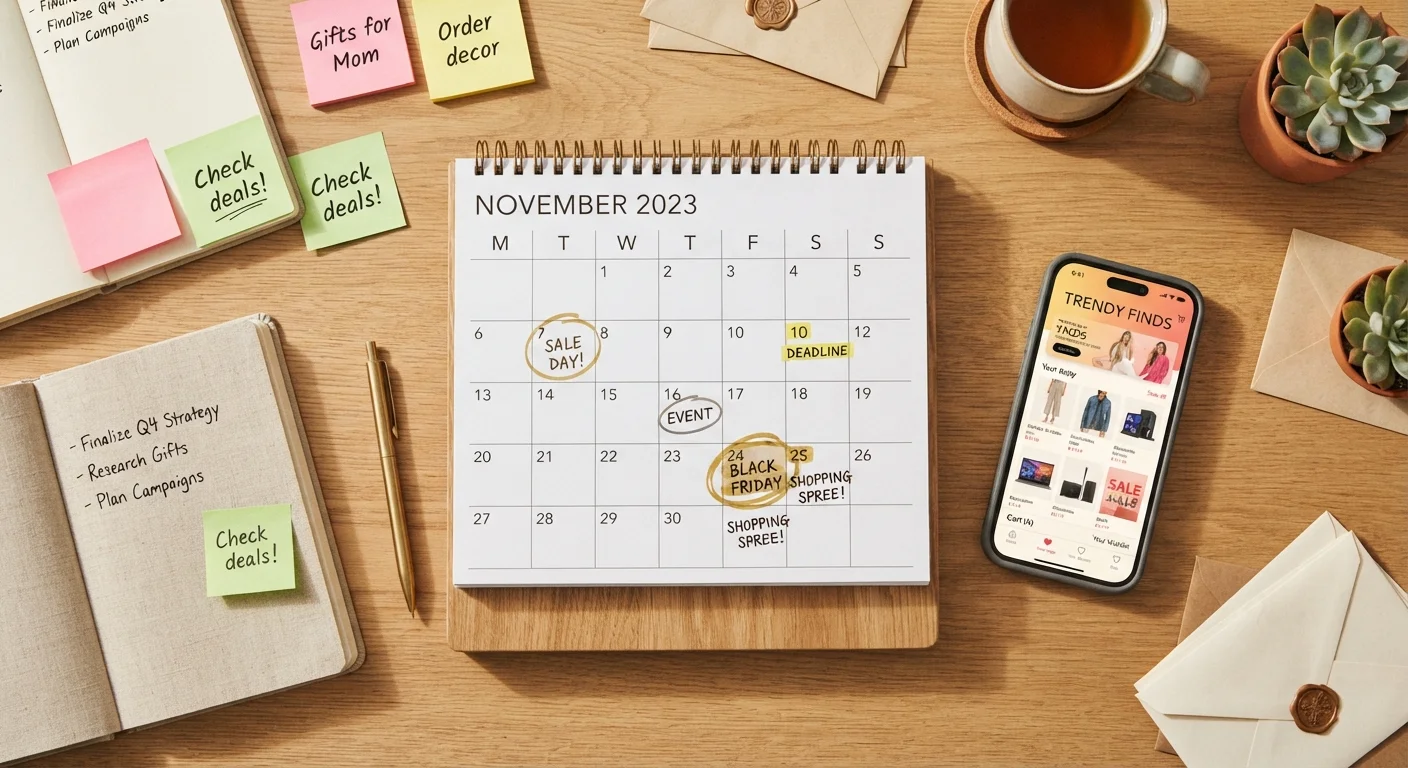
Photo: AnswersSquad.com | Explore Insightful Blogs editorial
Key Takeaways
- Retailers follow recurring discount cycles tied to seasons, inventory turns, and fiscal calendars.
- Checking a retailer's price history over several months reveals genuine low-price windows.
- Planning purchases two to six weeks ahead gives you time to wait for predictable dips.
- Urgency tactics like countdown timers are designed to override patient, calendar-aware shopping.
- A simple purchase wishlist combined with sale-date awareness is enough to consistently pay less.
Why Retailers Follow Predictable Patterns
Retail pricing isn't random. Merchants manage inventory on seasonal and fiscal cycles — they need to clear old stock before new shipments arrive, hit revenue targets before quarter-end, and compete during culturally established shopping events. These pressures produce patterns that repeat, often within a few weeks of the same dates each year.
Understanding this isn't insider knowledge — it's publicly observable if you know what to look for. Once you recognize that a particular retailer runs a major apparel clearance every late January and a tech event every late November, you can plan purchases accordingly rather than reacting to whatever's on the homepage today.
If you're newer to systematic deal-finding, the beginner's introduction to paying less online covers the foundational habits and tools that make calendar-aware shopping easier to put into practice.
Sale Prices Aren't Always the Lowest Price
What You'll Need Before You Start
Calendar-aware shopping works best when you come prepared. The tools below are what you'll reference throughout the steps that follow.
Price history tracker (e.g., a browser extension or dedicated site)
Lets you view months or years of price data for a specific product so you can identify genuine low-price periods.
Spreadsheet or notes app
Used to log your purchase wishlist alongside target price thresholds and anticipated sale windows.
Retailer email or app notifications
Allows you to receive direct alerts when a sale event is announced, so you don't have to check manually.
Browser bookmarks folder for sale calendars
Stores links to retailer event pages or publicly available promotional calendars for quick reference.
What you will need
How to Read and Use a Retailer's Sale Calendar
Follow these steps sequentially. The process takes fifteen to thirty minutes upfront per item category and pays dividends across multiple future purchases once you've established the pattern for a retailer.
Build your purchase wishlist before looking at any sales
Start with need, not opportunity. Write down every item you intend to buy in the next one to three months — clothing, electronics, home goods, whatever applies. Assign a rough maximum you're willing to pay for each. This list becomes your filter for every sale you encounter. Without it, sale calendars become a browsing prompt rather than a planning tool.
Learn the retailer's recurring sale structure
Most retailers run the same promotional events year after year: end-of-season clearances, back-to-school events, holiday weekends, and fiscal-quarter-end pushes. Spend five minutes reviewing the retailer's previous years' sale pages — many archive these publicly — or simply search for the retailer name plus 'sale schedule' or 'promo calendar.' Note which months and weekends consistently feature the deepest discounts on the category you're shopping.
Pull up the item's price history
Before committing to any purchase, look up how that specific product's price has moved over the past six to twelve months using a price history tracker. Note the floor price (the lowest it's reached), the average, and how often it hits a low. This tells you whether today's price is genuinely good or just average. For a deeper explanation of how these tools collect and display data, see how price tracking tools work.
Map the anticipated sale window against your timeline
Cross-reference what you learned in steps 2 and 3. If the product historically hits its low price during a sale event that's four weeks away, and you don't need the item urgently, waiting is almost always the rational choice. If you need it sooner, check whether the current price is at or near its historical floor — if it is, buying now is defensible. The goal is a conscious decision, not a reactive one.
Set a price alert and step away
Once you've identified your target price based on historical data, use the retailer's wishlist feature or a browser extension to set an alert for when the item drops to that level. This removes the need to check manually and — critically — removes you from the browsing environment where urgency tactics are most effective. For more on how those tactics work and how to counter them, see how countdown timers and low-stock warnings shape decisions.
Evaluate the deal when the alert fires
When you receive an alert, don't buy immediately. Verify that the current price matches or beats the historical floor you identified. Check whether shipping costs, return restrictions, or bundled items have changed — these can erode apparent savings. Only then decide. If the deal doesn't genuinely beat your target, it's fine to wait for the next cycle. Most recurring sales repeat within a few months.
Don't Let Sale Dates Drive Unnecessary Purchases
Fitting This Into a Broader Shopping Strategy
Reading sale calendars is one layer of a larger system. It works best when paired with a personal budget that separates planned purchases from discretionary spending — the Budgeting Basics hub is a practical starting point if that structure isn't in place yet.
It's also worth periodically auditing your assumptions. The common discount myths that keep shoppers overpaying article challenges several intuitions — like the idea that a bigger percentage off always means a better deal — that can undermine even a well-planned approach.
For the broadest view of how these habits connect, the complete playbook for finding deals online walks through the full sequence from price alerts to timing seasonal events and stacking rewards.
Build a Simple Purchase Calendar
The content provided on our blog site traverses numerous categories, offering readers valuable and practical information. Readers can use the editorial team’s research and data to gain more insights into their topics of interest. However, they are requested not to treat the articles as conclusive. The website team cannot be held responsible for differences in data or inaccuracies found across other platforms. Please also note that the site might also miss out on various schemes and offers available that the readers may find more beneficial than the ones we cover.