
The Anatomy of a Suspicious Online Listing

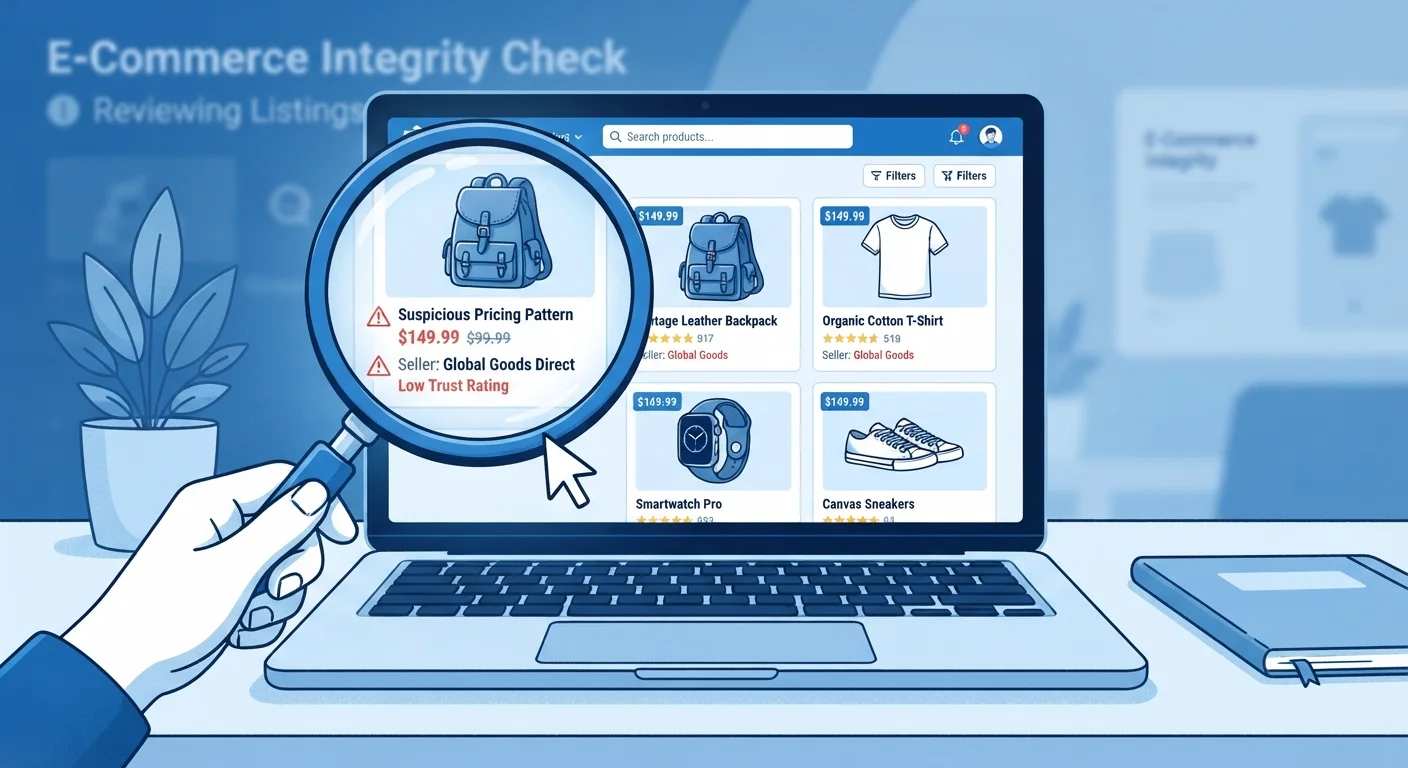
Photo: AnswersSquad.com | Explore Insightful Blogs editorial
Why Listings Lie — And What That Looks Like
A product listing is a seller's pitch, and like any pitch, it can be constructed to mislead. The challenge for online shoppers is that the signals of a suspicious listing are often subtle — designed to look normal at a glance but fall apart under scrutiny.
The most common deception isn't an outright lie. It's selective omission: a listing that technically includes required information but buries or obscures the details that would change your decision. A phone case described as "compatible with most models" without specifying which. A rug with dimensions only in the fine print, not the headline. A jacket with photos that show the front but never the back.
These patterns are worth learning because they repeat across categories and platforms. Once you recognize the structure of a suspicious listing, you'll spot it in seconds — not after the package arrives.
| Primary red flag | Stock photos used instead of original product images |
| Pricing signal to watch | Price significantly below typical market range for identical items |
| Description warning sign | Vague, copy-pasted, or grammatically inconsistent product details |
| Seller account red flag | Account created very recently with no review history |
| Review pattern to question | Clusters of 5-star reviews posted within a short time window |
| Payment caution | Requests for wire transfer, gift cards, or off-platform payment |
The Five Core Warning Signals
1. Images That Aren't Really the Product
Legitimate sellers photograph their actual inventory. When images are overly polished, inconsistent in lighting, or appear identical to manufacturer press shots, run a reverse image search. If the photo turns up on dozens of unrelated listings or stock sites, the seller likely doesn't have the product in hand.
2. Descriptions That Say Nothing
Vague descriptions — heavy on adjectives, light on specifications — are a consistent marker of low-quality or counterfeit listings. Watch for copy-pasted manufacturer marketing copy, inconsistent terminology, or language that reads as machine-translated. A genuine seller who stocks what they describe can tell you exactly what they have.
3. Pricing That Defies Logic
An item priced well below what identical products sell for elsewhere usually signals one of three things: it's a different (lesser) item, it's counterfeit, or the listed price excludes significant costs added at checkout. See our guide to evaluating whether a discount is genuine before assuming a low price is a good deal.
4. A Seller Account With No History
New accounts with no reviews, no transaction history, and no verifiable business information carry meaningful risk. This doesn't automatically mean fraud, but it does mean you have no evidence to assess trustworthiness. For a full breakdown of how to read seller feedback, see our article on navigating seller trust on online marketplaces.
5. Suspicious Review Patterns
Reviews that arrived in a short burst, use near-identical phrasing, or contain no detail about the actual product are often incentivized or fabricated. Genuine review distributions tend to include some middling scores and specific feedback — good and bad.
Platforms Have Buyer Protections — But They Have Limits
What to Do Before You Decide
When a listing raises even one of these signals, slow down. Cross-reference the item on at least two other platforms to establish a realistic price range. Search the seller's username or store name alongside terms like "complaint" or "scam" to surface any reported issues.
Check the return and refund policy before clicking through to payment — not after. If a listing links to a separate website for checkout, verify that the domain is legitimate and uses HTTPS. Requests for wire transfers, gift cards, or payment outside the platform's own system are unambiguous red flags; use a credit card through the platform's native checkout where possible.
When you're ready to commit, run through a structured pre-purchase check. Our pre-purchase checklist for online orders covers the key verification steps in order. And if you're shopping somewhere unfamiliar for the first time, this practical walkthrough for unfamiliar platforms covers account setup, payment safety, and what to do when something goes wrong.
Stock photo
A generic, commercially licensed photograph used in place of an original image. In product listings, stock photos often signal that the seller does not possess or has never photographed the actual item being sold.
Dropshipping
A fulfillment model where a seller lists products they don't physically hold, forwarding orders to a third-party supplier. Legitimate when disclosed, but commonly associated with listings that misrepresent origin, shipping time, or quality.
Reverse image search
A tool that lets you upload or paste an image to find where else it appears online. Used to check whether a product photo is original or copied from another source.
Dark pattern
A deceptive interface design intended to mislead users — for example, hiding fees until checkout, making cancellation difficult, or using countdown timers to pressure purchases.
Escrow payment
A payment method where funds are held by a neutral third party until both buyer and seller fulfill agreed conditions. Offers stronger consumer protection than direct transfers.
Counterfeit goods
Items made to resemble a legitimate branded product without authorization. Counterfeits are illegal to sell and often inferior in safety and quality to genuine items.
This article is for general informational purposes only and does not constitute financial, legal, or consumer advice specific to your situation. Always verify information directly with platforms and relevant authorities before making purchasing decisions.
The content provided on our blog site traverses numerous categories, offering readers valuable and practical information. Readers can use the editorial team’s research and data to gain more insights into their topics of interest. However, they are requested not to treat the articles as conclusive. The website team cannot be held responsible for differences in data or inaccuracies found across other platforms. Please also note that the site might also miss out on various schemes and offers available that the readers may find more beneficial than the ones we cover.