
Carrying a Balance Each Month Is Not Helping Your Credit Score

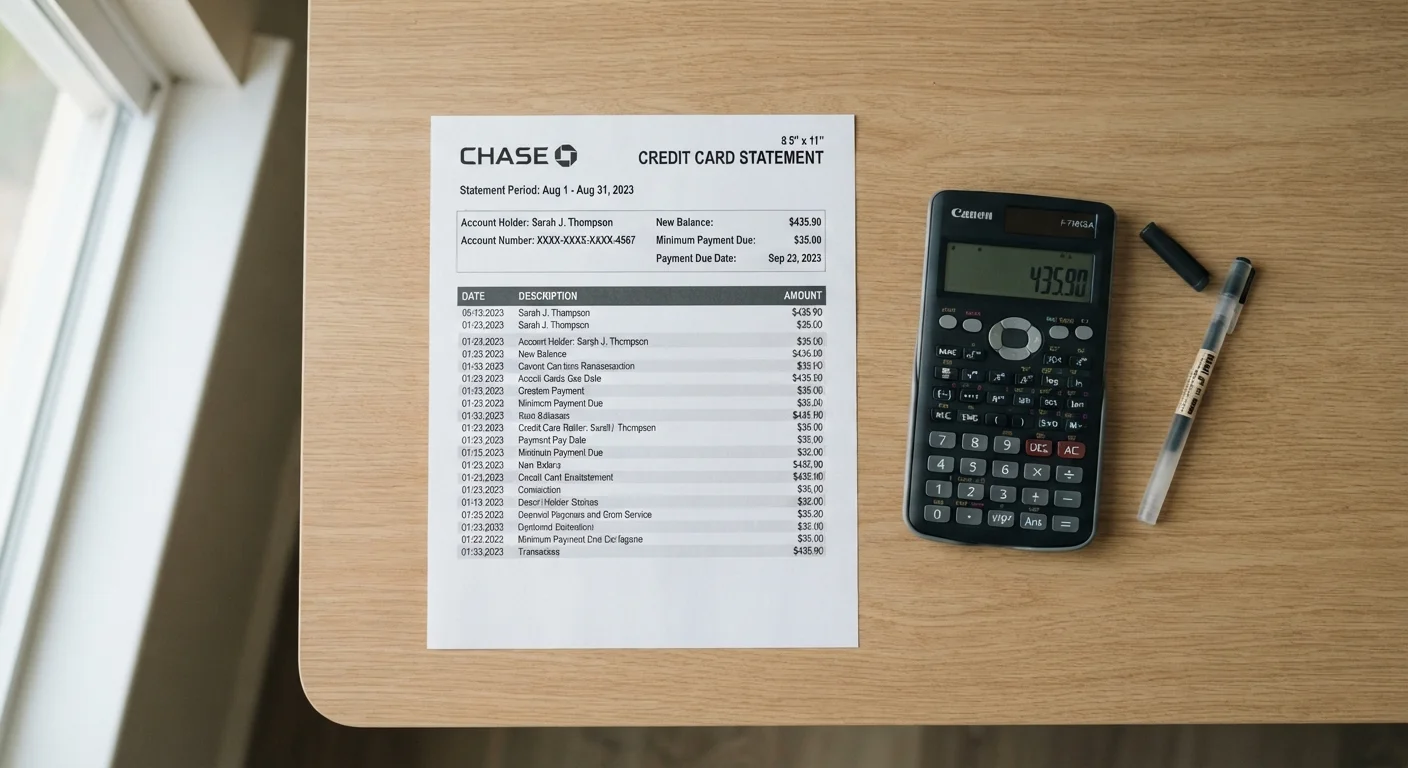
Photo: AnswersSquad.com | Explore Insightful Blogs editorial
Key Takeaways
- Carrying a balance does not improve your credit score — paying in full each month does.
- Credit utilization, not balance age, is the key factor scoring models measure on your card accounts.
- Interest charges are a real cost; no scoring benefit offsets the money lost to revolving debt.
- Payment history, not balance size, is the single largest component of most credit scores.
- You can build excellent credit using a card regularly while paying the full statement balance monthly.
Where This Myth Comes From
The idea that carrying a balance somehow signals financial responsibility — and rewards you with a better credit score — has circulated for decades. It likely started as a misunderstanding of how credit card activity is reported, combined with well-meaning but inaccurate advice passed between friends and family.
Some versions of the myth go further: that paying your bill in full every month makes it look like you're not using credit at all, or that lenders prefer customers who carry debt because it shows they're managing obligations over time. Neither of these is accurate, and believing them costs real money in unnecessary interest charges.
If you've also heard myths in adjacent financial decisions, our piece on car finance myths shows how widely this kind of misinformation spreads across different product types.
The Myths — And What's Actually True
Let's go through the most common misconceptions directly, with clear corrections based on how credit scoring models actually work.
Myth
Leaving a small balance on your card each month boosts your credit score.
Fact
Carrying a balance has no positive effect on your score — it only costs you interest.
Credit scoring models don't reward you for revolving debt month to month. What they measure is whether you're using credit (your utilization ratio) and whether you pay on time. A balance of $1 or $500 at statement close reports the same utilization data. Paying in full means you avoid interest with zero scoring penalty.
Myth
Paying your balance in full makes it look like you're not using your credit card.
Fact
Your spending activity is reported to bureaus regardless of whether you carry a balance.
Card issuers typically report your statement balance — the amount owed at the close of your billing cycle — to the credit bureaus. That figure reflects your usage whether or not you later pay it in full. So a card you charge $400 to and pay off completely still shows $400 in activity during that cycle.
Myth
Creditors prefer borrowers who carry balances because it shows they manage debt responsibly.
Fact
Lenders care about on-time payments and low utilization — not whether you pay interest to them.
While card issuers do profit from interest when you carry a balance, the underwriting criteria used to extend new credit focuses on risk signals: delinquency history, utilization, and overall debt load. A borrower who pays in full and never misses a payment looks less risky, not more, from a creditworthiness standpoint.
Myth
You need to carry some debt to have a credit score at all.
Fact
Regular card use — even with full payoff — generates the activity needed to maintain an active score.
Scores require recent account activity to remain scoreable, but that activity doesn't need to be unpaid debt. Using a card for groceries, subscriptions, or gas and paying it off monthly satisfies the activity requirement. A zero balance after payment is a sign of responsible management, not dormancy.
Myth
A higher balance signals you're a heavy user, which lenders see as experience with credit.
Fact
High balances relative to your credit limit increase your utilization ratio and can lower your score.
Credit utilization — what you owe divided by your total available credit — is one of the most closely watched factors in most scoring models. Carrying a large balance pushes that ratio up. A utilization rate consistently above 30% is generally associated with score decreases, not increases, regardless of your payment history.
For a deeper look at how utilization is calculated and why the direction most people manage it is backwards, see our guide on credit utilisation.
What Actually Builds Your Score
Credit scores — whether FICO or VantageScore — are built primarily on five factors: payment history, amounts owed (which includes utilization), length of credit history, new credit inquiries, and credit mix. Payment history alone accounts for roughly 35% of a FICO score, making on-time payments far and away the most powerful lever you have.
~35%
Payment history's share of a FICO score
According to FICO's published score factor breakdown, payment history is the single largest component of a standard FICO credit score.
~30%
Amounts owed (including utilization) share of FICO score
FICO's published framework shows amounts owed — which includes credit utilization — as the second-largest scoring factor, underscoring why carrying a high balance hurts rather than helps.
The practical takeaway: use your card regularly for normal purchases, pay the full statement balance by the due date every month, and keep your utilization ratio below 30% (ideally under 10% if you want to optimize). That combination — consistent use plus full payoff — is what scoring models reward.
For the complete picture of behaviors that protect and gradually improve your score, see habits that keep a credit score healthy.
Interest Charges Are a Real, Ongoing Cost
One more common move worth examining: closing a card to feel tidier about your finances. That decision interacts directly with utilization and credit age — two factors this myth often clouds. Our article on closing a credit card account walks through the tradeoffs carefully.
This article is for general informational and educational purposes only and does not constitute personalised financial advice. Consult a qualified financial professional for guidance specific to your situation.
The content provided on our blog site traverses numerous categories, offering readers valuable and practical information. Readers can use the editorial team’s research and data to gain more insights into their topics of interest. However, they are requested not to treat the articles as conclusive. The website team cannot be held responsible for differences in data or inaccuracies found across other platforms. Please also note that the site might also miss out on various schemes and offers available that the readers may find more beneficial than the ones we cover.