
Credit Scores Decoded: What the Number Actually Measures

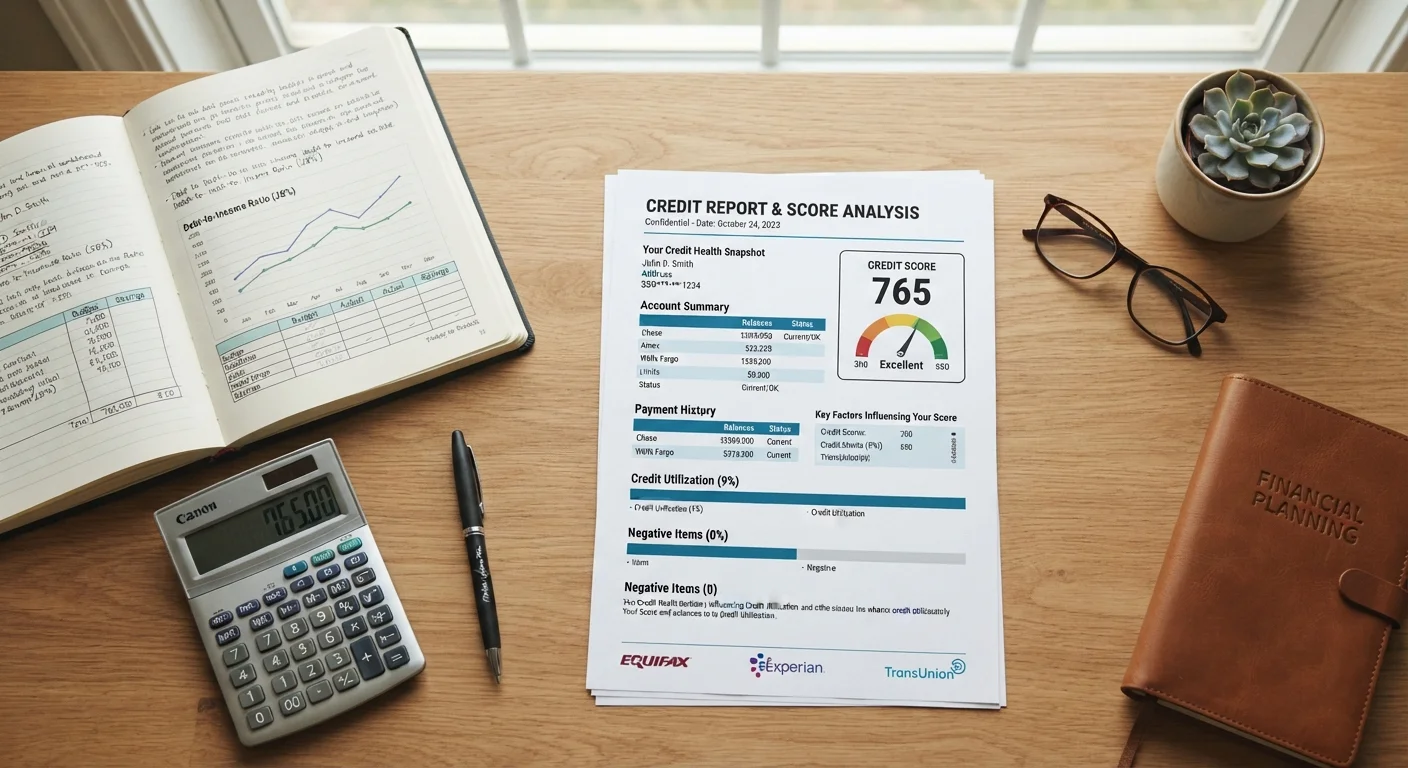
Photo: AnswersSquad.com | Explore Insightful Blogs editorial
Key Takeaways
- Payment history is the single largest factor in your credit score, accounting for roughly 35% of a FICO® Score.
- Credit utilization — how much of your available credit you're using — is the second most influential factor.
- A longer credit history generally helps your score, so closing old accounts can sometimes backfire.
- Hard inquiries from new credit applications temporarily lower your score, but the impact fades within a year.
- Your income, savings, and employment status do not appear in your credit score calculation.
- Checking your own credit report is a 'soft inquiry' and never hurts your score.
The Five Factors Behind the Number
Your FICO® Score is built from five categories of credit behavior, each weighted differently. Understanding what each one measures is the first step to managing your score with intention rather than guesswork.
- Payment history (35%): Whether you've paid past credit accounts on time. A single missed payment — especially one 30+ days late — can cause a noticeable drop, particularly on an otherwise clean file.
- Amounts owed / Credit utilization (30%): How much of your available revolving credit you're currently using. Lower is generally better. This is one area where small adjustments can produce fairly quick results. See our deep dive on credit utilization for common mistakes people make here.
- Length of credit history (15%): How long your accounts have been open, including the age of your oldest account, newest account, and the average age of all accounts.
- Credit mix (10%): Whether you have experience managing different types of credit — revolving accounts (like credit cards) and installment loans (like auto or student loans).
- New credit (10%): Recent applications for new credit, which generate hard inquiries on your report.
35%
Share of FICO® Score driven by payment history
According to FICO, on-time payments are the single most influential factor in the standard scoring model.
300–850
Standard FICO® Score range
FICO® Scores range from 300 (highest risk) to 850 (lowest risk), with most U.S. consumers scoring above 600.
3
Major U.S. credit bureaus maintaining separate files
Equifax, Experian, and TransUnion each independently track your credit history, which is why scores can differ between them.
What a Credit Score Does Not Measure
Just as important as what's in your score is what's explicitly left out. Your credit score does not factor in:
- Your income, salary, or net worth
- Your savings or investment account balances
- Your employment status or job history
- Your age, race, gender, or marital status
- Where you live
- Debit card usage or bank account activity
This is why someone earning a high salary can have a poor credit score, and a moderate earner can have an excellent one. The score is narrowly focused on your borrowing behavior — nothing more.
Lenders often look beyond the score too. Your debt-to-income ratio — which does factor in your income — is a separate but equally important metric lenders evaluate alongside your credit score when approving applications.
Score vs. Report: Know the Difference
Why Lenders Care — and What It Costs You in Practice
Lenders use credit scores to make fast, consistent lending decisions at scale. A higher score signals statistically lower default risk, which translates directly into better terms for you as a borrower — typically a lower interest rate, a higher credit limit, or both.
The practical stakes are significant. On a 30-year mortgage, the difference between a score in the 'good' range versus the 'exceptional' range can mean tens of thousands of dollars in total interest paid over the life of the loan. On an auto loan, the gap between the highest and lowest tier rates can run several percentage points — a meaningful difference in your monthly payment.
Building and maintaining a strong score isn't a one-time event — it's the result of consistent habits over time. Our guide on habits that keep a credit score healthy walks through the low-effort behaviors that protect and gradually improve your score across months and years.
This article is for general informational purposes only and does not constitute personalized financial or credit advice. Consult a licensed financial professional for guidance specific to your situation.
Frequently Asked Questions
The content provided on our blog site traverses numerous categories, offering readers valuable and practical information. Readers can use the editorial team’s research and data to gain more insights into their topics of interest. However, they are requested not to treat the articles as conclusive. The website team cannot be held responsible for differences in data or inaccuracies found across other platforms. Please also note that the site might also miss out on various schemes and offers available that the readers may find more beneficial than the ones we cover.