
Buying Privately vs. Buying From a Dealer: What Changes Beyond the Price

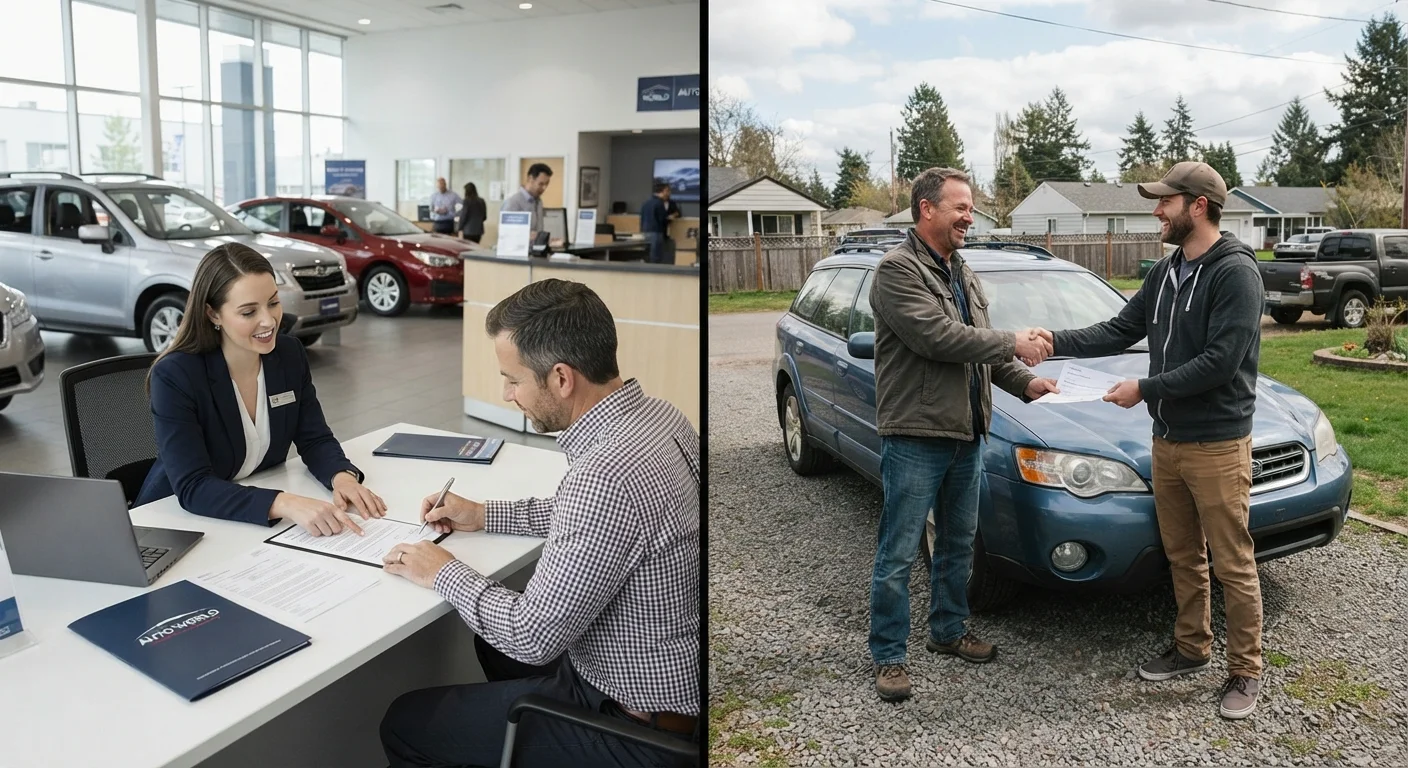
Photo: AnswersSquad.com | Explore Insightful Blogs editorial
Key Takeaways
- Private sellers offer no statutory buyer protections; dealers must meet federal and state consumer law requirements.
- Financing is only available through a dealer at point of sale - private purchases require pre-arranged funding.
- Dealer vehicles often carry certified inspections or warranties; private sales are typically 'as-is' with no recourse.
- Negotiating with a private seller can be more direct, but verifying the vehicle's history is entirely your responsibility.
- Neither channel is universally better - your priorities, budget, and risk tolerance should guide the choice.
Why the Purchase Channel Matters More Than Most Buyers Expect
When first-time buyers compare private sellers to dealerships, the conversation almost always gravitates to price. But the channel you choose shapes the legal protections available to you, how the paperwork flows, where your financing comes from, and what happens if something goes wrong after you drive away. These are consequential differences that no amount of negotiating can bridge after the fact.
For a full overview of the buying process from start to finish, see our end-to-end first-car guide before committing to either route. This article focuses specifically on what changes between the two channels - beyond the sticker.
Legal Protections: Where They Apply and Where They Don't
Licensed dealerships operating in the United States are subject to a range of federal and state consumer protection laws. The Federal Trade Commission's Used Car Rule, for example, requires dealers to display a Buyers Guide on every used vehicle they sell, disclosing whether the car comes with a warranty or is sold as-is. Many states layer additional protections on top of this, such as implied warranty provisions or lemon law coverage for recently purchased used vehicles.
Private sellers, in most states, face no such obligations. A private sale is typically treated as an as-is transaction by default - meaning once you hand over the money and take the title, you generally have little legal recourse if mechanical problems emerge. There is no Buyers Guide requirement, no mandated disclosure of known defects in most jurisdictions, and no dealer license for a regulator to sanction.
Private Sales Offer Little Recourse After the Fact
This doesn't mean private sellers are dishonest - most are not. But it does mean the burden of discovery falls entirely on you as the buyer when purchasing privately.
Financing, Paperwork, and the Title Transfer
One of the most practical differences is financing. Dealerships can arrange point-of-sale financing - you apply, get approved, and drive away in one visit. They work directly with lenders and can sometimes offer promotional rates, though it's worth comparing any dealer-arranged loan against offers from your bank or credit union. Our article on dealer financing vs. bank loans explains how those two paths compare in detail.
Private sellers cannot offer financing. If you don't have cash, you'll need a pre-approved auto loan in hand before approaching a private seller - your lender will typically issue a check or arrange payment directly once you've agreed on a price. This adds a step, but it also means you arrive knowing exactly your borrowing limit.
Title transfer also works differently. Dealers handle most of the DMV paperwork as part of the sale. In a private transaction, buyer and seller must manage the title transfer themselves, which varies by state. Errors here - a missing signature, an unreleased lien - can delay registration or create legal headaches.
Always Pre-Arrange Financing Before a Private Purchase
Vehicle History and Condition: Who Checks What
Dealerships, particularly those selling certified pre-owned (CPO) vehicles, typically conduct multi-point inspections and pull vehicle history reports as part of their reconditioning process. CPO programs also attach limited warranties. This doesn't guarantee perfection, but it does mean some independent verification has occurred before the car reaches the lot.
In a private sale, obtaining a vehicle history report - using the car's VIN - and arranging an independent pre-purchase inspection from a trusted mechanic is your responsibility. Skipping these steps is one of the most common and costly mistakes first-time private buyers make. Budget roughly $100-$200 for a pre-purchase inspection; it is almost always worth it.
If you're also weighing whether to buy new or used in the first place, our new vs. used car comparison covers those trade-offs clearly.
Negotiation, Pressure, and the Overall Experience
Private sellers are often more flexible on price and less likely to involve add-on products (such as extended warranties, paint protection plans, or financing products that dealerships sometimes bundle into transactions). Negotiations tend to be direct and personal. However, the absence of a formal process can also mean less predictability - a seller can back out, fail to disclose a known issue, or simply be difficult to reach after the sale.
Dealerships offer a more structured environment with trained staff, but some buyers find the sales experience high-pressure. Understanding your rights and arriving prepared - with competing financing offers and a clear budget - reduces that pressure significantly. Remember that fees like documentation fees and dealer preparation charges add to the out-the-door cost; always ask for the total price, not just the sticker.
After you've bought, don't forget to account for ongoing costs. Our article on hidden car ownership costs walks through expenses that often surprise new owners - regardless of which purchase channel they used.
Side-by-Side: What Each Channel Offers
The table below summarises the core differences across the dimensions most likely to affect a first-time buyer's experience and risk exposure.
| Private Seller | Licensed Dealership | |
|---|---|---|
| Legal protections | Minimal - typically as-is in most states | FTC Used Car Rule, state consumer laws apply |
| Financing at point of sale | Not available - pre-arrange your own loan | Available through dealer-partnered lenders |
| Vehicle history disclosure | Buyer must obtain independently | Often provided; CPO requires inspection |
| Warranty coverage | Rarely included | As-is, limited, or CPO warranty options |
| Paperwork and title transfer | Buyer and seller manage themselves | Dealer typically handles DMV paperwork |
| Negotiation style | Direct, informal, flexible | Structured, may include add-on products |
| Post-sale recourse | Very limited in most jurisdictions | Dispute options via dealer, lender, or regulator |
This article is for general informational and educational purposes only and is not legal, financial, or professional advice. Consumer protection laws vary by state; verify the rules that apply in your jurisdiction before making a purchase decision.
The content provided on our blog site traverses numerous categories, offering readers valuable and practical information. Readers can use the editorial team’s research and data to gain more insights into their topics of interest. However, they are requested not to treat the articles as conclusive. The website team cannot be held responsible for differences in data or inaccuracies found across other platforms. Please also note that the site might also miss out on various schemes and offers available that the readers may find more beneficial than the ones we cover.