
New Car vs. Used Car: What First-Time Buyers Actually Give Up Each Way

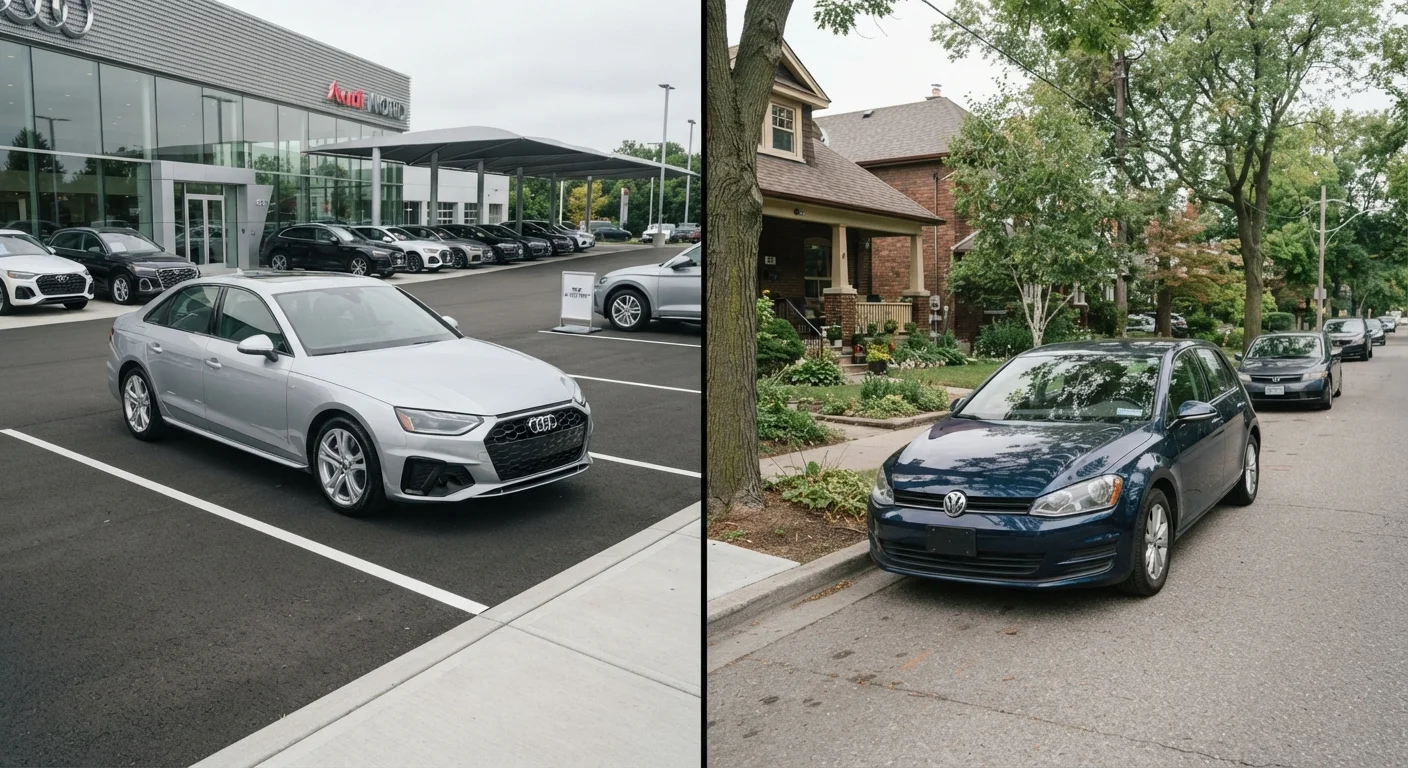
Photo: AnswersSquad.com | Explore Insightful Blogs editorial
Key Takeaways
- New cars cost more upfront but come with manufacturer warranties and no ownership history to investigate.
- Used cars typically have a lower purchase price, but repair costs and reliability can vary significantly by vehicle.
- Depreciation hits new cars hardest in the first one to three years - used buyers skip that steepest drop.
- Financing terms often differ: new cars may qualify for lower interest rates, while used car loans can carry higher rates.
- Neither option is universally better - the right choice depends on your budget, driving needs, and risk tolerance.
What You Actually Give Up Buying New
Buying a new car feels simple: you choose a vehicle, no one has used it before you, and a manufacturer warranty typically covers defects for a set period - often three years or 36,000 miles for basic coverage, with powertrain warranties extending further. That clarity has real value, especially for a first-time buyer who doesn't yet know what a transmission noise or a mystery warning light actually means.
But the trade-off is immediate and significant: depreciation - the loss of value over time. A new car can lose a meaningful portion of its value within the first year simply by being driven. You absorb that loss the moment you take ownership. If you sell or trade in the car within a few years, you'll recover less than you paid, sometimes considerably less.
There's also the sticker price itself. New cars carry higher purchase prices, which means larger loan amounts. Larger loans mean more interest paid over time, even at competitive rates. First-time buyers often underestimate total cost by focusing on monthly payments rather than the full picture - a pattern worth consciously avoiding.
What a Manufacturer Warranty Actually Covers
What You Actually Give Up Buying Used
The main appeal of a used car is price. Someone else absorbed that steep early depreciation, so you pay less for the same physical vehicle. In many cases, a car that's two or three years old is mechanically very similar to its new equivalent - but priced noticeably lower.
What you give up is certainty. Every used car has a history, and some of that history may affect reliability or safety. A vehicle history report (which documents past ownership, accidents, and title status) is an essential starting point, not an optional extra. Our guide on reading a used car history report explains what each section means and which flags are worth taking seriously.
Financing a used car can also cost more in interest. Lenders often charge higher rates on used vehicles because older cars carry more uncertainty as collateral. A lower purchase price doesn't automatically mean a lower total cost - it's worth calculating the full loan cost, not just the monthly payment.
Warranties on used cars vary widely. Some certified pre-owned programs (offered through franchised dealers) extend limited warranties; private-party sales typically come with none. Knowing what coverage, if any, transfers to you is critical before signing.
| Criterion | New Car | Used Car |
|---|---|---|
| Purchase price | Higher | Lower (depreciation absorbed) |
| Depreciation risk | Steepest in year one-three | Steepest drop already passed |
| Manufacturer warranty | Full warranty included | Varies; may be expired or none |
| Ownership history | None - you're the first owner | Requires investigation via history report |
| Typical loan interest rate | Often lower | Often higher |
| Insurance cost | Generally higher premiums | Often lower premiums |
| Safety technology | Latest standard features | Depends on model year |
| Near-term maintenance risk | Low - mostly routine service | Higher - age/mileage dependent |
Financing, Insurance, and the Costs You Don't See at Signing
The purchase price is only one part of the equation. Insurance premiums, registration fees, and ongoing maintenance all differ between new and used vehicles - sometimes in ways that flip the apparent savings.
New cars generally cost more to insure because their replacement value is higher. Used cars with a lower market value may carry lower comprehensive and collision premiums, though this varies by vehicle age, model, and your own driving profile. Neither outcome is guaranteed; get actual quotes before assuming one route is cheaper to insure.
Maintenance deserves attention too. A new car typically needs only routine service early in ownership. A used car - depending on its mileage and prior care - may need tires, brakes, belts, or other components sooner. A pre-purchase inspection by an independent, qualified mechanic is one of the most valuable steps a used-car buyer can take. For a fuller picture of ongoing ownership costs, see our breakdown of hidden car ownership costs that rarely appear in the purchase conversation.
~20%
Typical new car value lost in year one
Industry data consistently shows new vehicles can depreciate roughly 15-20% in their first year of ownership, with the steepest drop occurring immediately after purchase.
1-3 yrs
Age range where used-car value often stabilizes
Vehicles in the one-to-three year old range have absorbed the sharpest depreciation while often retaining modern safety features and manageable mileage.
Higher APR
Used car loan rates vs. new car loans
According to Federal Reserve consumer credit data, interest rates on used vehicle loans have historically averaged higher than rates on new vehicle loans from the same lenders.
This article is for general informational purposes only and does not constitute financial or legal advice. For guidance specific to your situation, consult a qualified financial adviser or licensed professional.
The content provided on our blog site traverses numerous categories, offering readers valuable and practical information. Readers can use the editorial team’s research and data to gain more insights into their topics of interest. However, they are requested not to treat the articles as conclusive. The website team cannot be held responsible for differences in data or inaccuracies found across other platforms. Please also note that the site might also miss out on various schemes and offers available that the readers may find more beneficial than the ones we cover.