
Reading a Used Car History Report Without Getting Lost

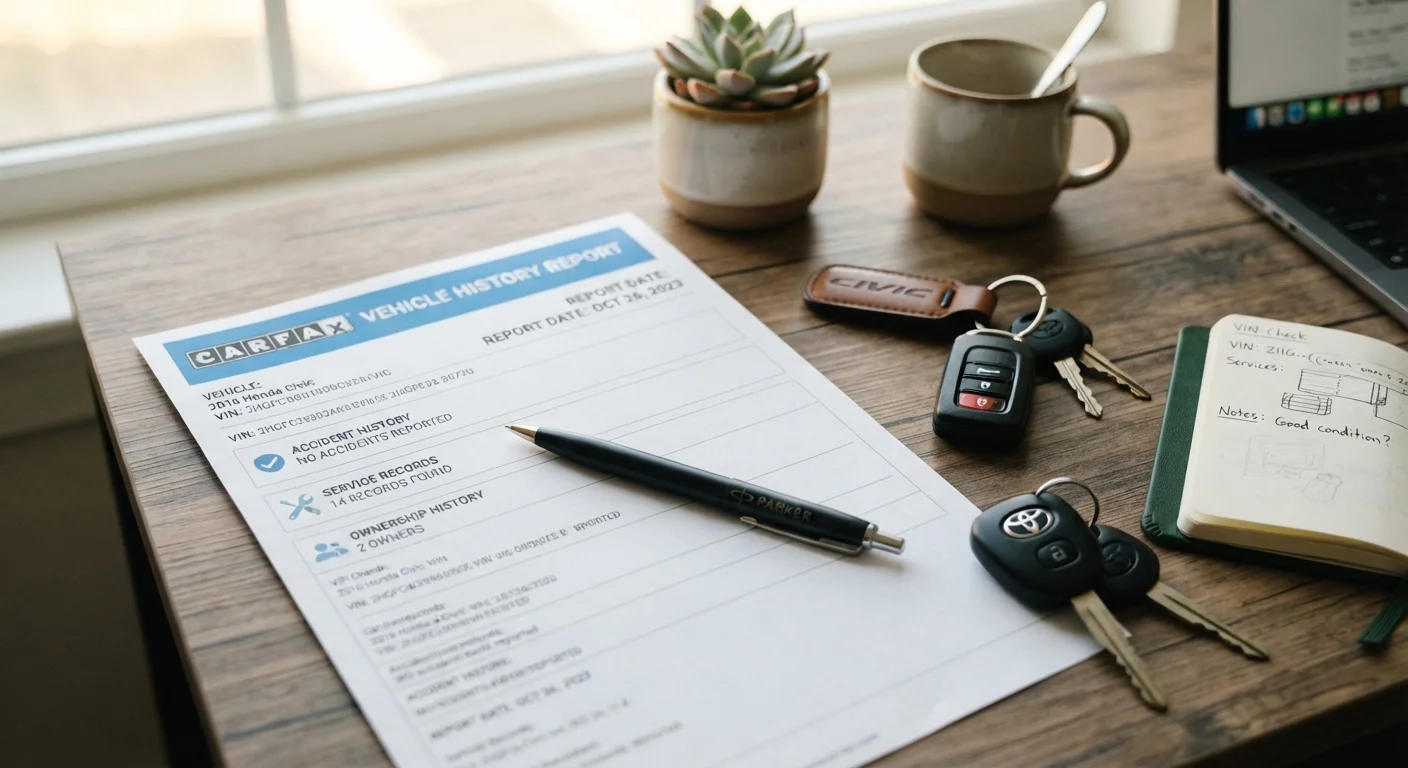
Photo: AnswersSquad.com | Explore Insightful Blogs editorial
Key Takeaways
- A vehicle history report reveals title status, accident records, odometer readings, and ownership history.
- Not every flag on a report is a dealbreaker - context determines how seriously to weigh each entry.
- Salvage titles, flood damage, and odometer rollbacks are the most serious red flags to watch for.
- A history report supplements but does not replace an independent pre-purchase mechanical inspection.
- Always cross-reference the report's VIN with the one physically on the vehicle before buying.
What a Vehicle History Report Actually Contains
A vehicle history report is a compiled record of publicly available and industry-reported data tied to a specific car's VIN - a 17-character code unique to every vehicle. Think of it as a car's paper trail. It does not capture everything that has ever happened to a car, but it aggregates information from sources like state motor vehicle departments, insurance companies, auction records, and repair facilities that voluntarily submit data.
Most reports are organized into the same broad categories:
- Title history: Who has owned the car, in which states, and whether the title carries any special designations.
- Accident and damage records: Collisions reported to insurers or flagged at repair shops.
- Odometer readings: Mileage snapshots taken at inspections, registrations, and auctions over time.
- Use type: Whether the vehicle was registered as a personal car, rental, fleet, taxi, or lease vehicle.
- Recalls: Open or completed federal safety recall campaigns affecting the model.
Understanding this structure upfront helps you move through the report methodically rather than scanning it for anything alarming. For broader context on buying a used car, see our guide to the trade-offs between new and used vehicles.
How to Read Each Section Step by Step
Follow these steps each time you review a report to avoid missing anything critical.
Locate and verify the VIN
Before purchasing a report, find the VIN on the vehicle itself - typically on the driver's side dashboard (visible through the windshield) and the driver's door jamb sticker. Write it down and confirm it matches exactly what the seller has provided. This prevents you from accidentally pulling a report for a different vehicle.
Review the title history section first
The title section shows every state where the car was registered and any special title designations. Look specifically for these terms:
- Clean title: No major designations - a positive baseline, though not a guarantee of trouble-free history.
- Salvage title: An insurer declared the car a total loss at some point.
- Rebuilt or reconstructed title: A salvage vehicle was repaired and passed a state inspection, but the designation stays on the title permanently.
- Flood, fire, or hail damage: Specific damage types that some states brand onto the title.
- Lemon law buyback: A manufacturer repurchased the vehicle under consumer protection law.
Multiple state registrations are normal for older vehicles - it simply means the car moved around. Focus on the designations, not the count of states.
Examine accident and damage records
This section logs incidents reported to insurance companies and damage noted at auctions or repair facilities. For each entry, note:
- The severity described (minor, moderate, severe, or airbag deployment)
- Which part of the vehicle was affected (front, rear, side, or structural/frame)
- Whether repairs were documented as completed
Frame damage - damage to the vehicle's underlying structure - is the most consequential type. A properly repaired minor rear-end collision is far less concerning than any reported frame or structural damage, which can affect alignment, safety, and long-term reliability.
Check the odometer reading timeline
The report will list odometer readings recorded at various points - state inspections, auctions, dealer service visits, and registration renewals. Read them in chronological order. The numbers should increase steadily over time. Any decrease in mileage between two readings is a serious red flag indicating potential odometer tampering.
Also compare the most recent recorded mileage to what is currently displayed on the dashboard. A large unexplained gap could indicate the car was used heavily during a period with no recorded data.
Note the use type and number of owners
Vehicles registered as rental, fleet, or taxi/rideshare typically accumulate miles quickly and may have experienced harder use than a privately owned car. This does not automatically make them poor choices, but it should inform how closely you inspect maintenance records and mechanical condition. Fleet vehicles, for example, are sometimes well-maintained under strict schedules - context matters.
The number of previous owners tells a partial story. One or two owners over a vehicle's lifetime is common; five owners in three years is worth questioning.
Review open recalls
The report may list recall information, but confirm independently using the NHTSA's free VIN lookup tool at nhtsa.gov. An open recall means the safety issue has not yet been repaired. Recall repairs are performed at no cost to the owner by authorized dealerships - so an open recall is fixable, but you want to ensure it gets addressed before or immediately after purchase.
This article is for general informational and educational purposes only. It does not constitute legal, financial, or professional automotive advice. Always consult a qualified mechanic and, where applicable, a licensed professional before making a vehicle purchase decision.
Red Flags That Genuinely Warrant Walking Away
Not every imperfect entry means you should exit the deal, but certain findings shift the risk significantly. Here is how to separate serious concerns from minor ones:
| Finding | Risk Level | What It Means |
|---|---|---|
| Salvage or rebuilt title | High | The vehicle was declared a total loss by an insurer. Financing and insuring it can be difficult, and resale value is significantly reduced. |
| Flood or fire damage | High | Water and heat damage to electrical systems and structural components can cause chronic, unpredictable problems even after repairs. |
| Odometer rollback | High | Mileage that decreases between readings suggests tampering - a federal offense - and means the car has more wear than advertised. |
| Lemon law buyback | High | A manufacturer repurchased this vehicle under a state lemon law, signaling persistent defects that were never fully resolved. |
| Multiple owners in a short period | Medium | Rapid resales may indicate a recurring problem the owner could not resolve. It warrants deeper investigation, not automatic rejection. |
| Minor fender-bender with no structural damage | Low | Common and usually not consequential if repaired properly. Request repair documentation and have a mechanic inspect the area. |
History Reports Have Known Gaps
If a report comes back completely clean on a vehicle with significant age or mileage, remain curious rather than relieved. Not all incidents are reported - private repairs, cash transactions, and incidents in states with limited reporting will not appear. A history report is a starting point, not a guarantee. The real ongoing costs of owning a vehicle are worth understanding alongside any purchase decision.
Verifying the Report and Taking Next Steps
Before acting on a report's findings, take two verification steps that many buyers skip:
- Match the VIN physically. The VIN appears on a small plate visible through the windshield at the driver's side dashboard, on the driver's door jamb sticker, and on key components like the engine block. All should match the report and the title document. A mismatch is a serious warning sign.
- Check for open recalls. The National Highway Traffic Safety Administration (NHTSA) maintains a free public database where you can enter a VIN and see whether any safety recalls remain unaddressed. An open recall is not disqualifying, but the repair should be completed before or shortly after purchase.
After reviewing the report, schedule an independent pre-purchase inspection with a mechanic of your choosing - not one affiliated with the seller. A history report tells you what was recorded; a mechanic tells you what is actually happening under the hood right now. Together, these two tools give you the most complete picture available before signing anything.
For a comprehensive walkthrough of the full purchase process, our end-to-end first-car buying guide covers everything from setting a budget to driving away. And once you own the vehicle, knowing how to read dashboard warning lights is a natural next step in staying on top of its health.
The content provided on our blog site traverses numerous categories, offering readers valuable and practical information. Readers can use the editorial team’s research and data to gain more insights into their topics of interest. However, they are requested not to treat the articles as conclusive. The website team cannot be held responsible for differences in data or inaccuracies found across other platforms. Please also note that the site might also miss out on various schemes and offers available that the readers may find more beneficial than the ones we cover.