
What Your Dashboard Warning Lights Are Actually Telling You

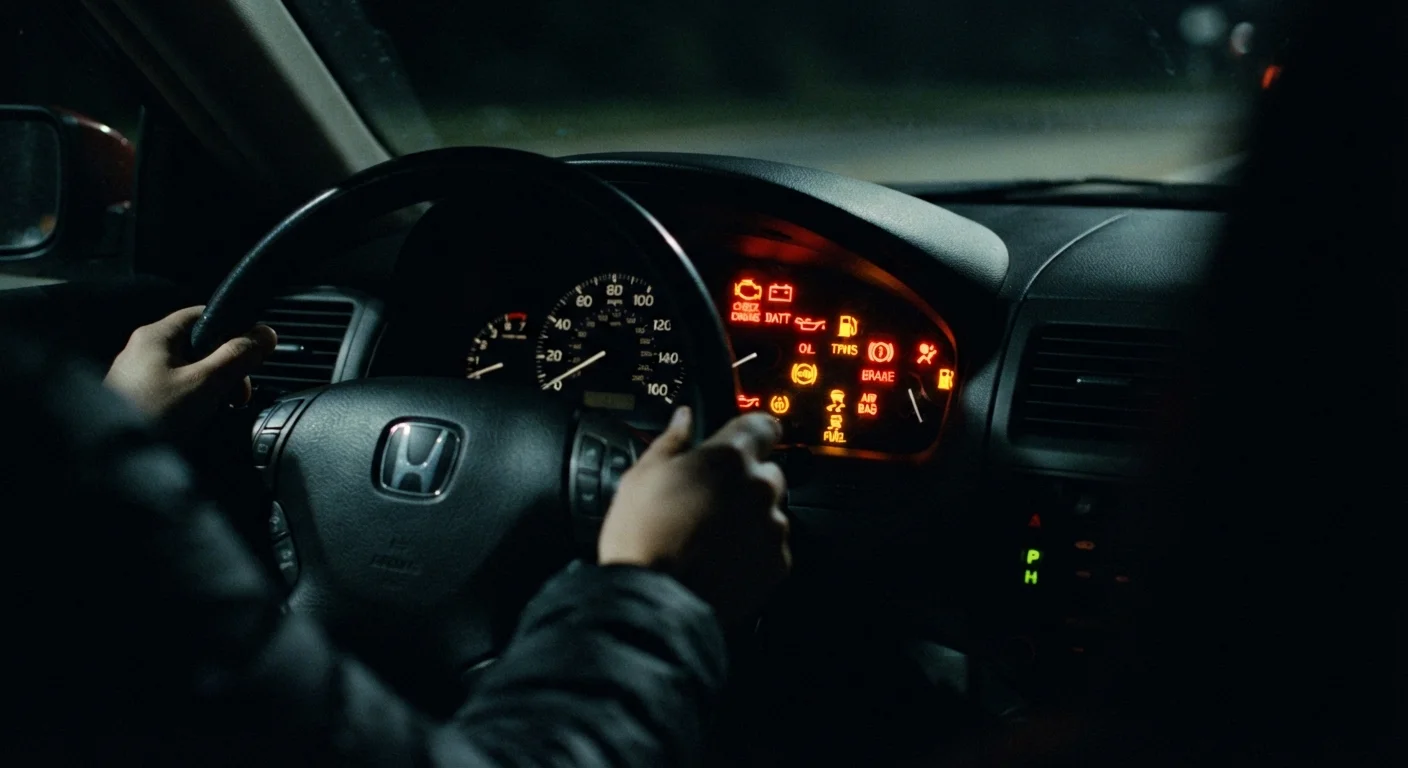
Photo: AnswersSquad.com | Explore Insightful Blogs editorial
Why Dashboard Lights Exist (And Why Ignoring Them Is Costly)
Your car's onboard computer - called the ECU - continuously monitors dozens of systems, from engine temperature to tire pressure. When a sensor detects something outside its acceptable range, it triggers a warning light on your instrument cluster. Think of these lights the way you'd think of signals your body sends during exercise: some are informational, some need prompt attention, and a few demand that you stop immediately.
Ignoring a warning light rarely makes the underlying problem disappear. In most cases, small issues become expensive ones the longer they go unaddressed. A $15 oil top-up ignored long enough can become a $4,000 engine replacement. This reference guide decodes the most common warning lights so you know exactly what to do - and when to do it.
For a broader vocabulary of car-ownership terms, see our first-time buyer jargon sheet.
| Number of standard OBD-II fault codes | Over 5,000 (SAE International OBD-II standard) |
| Color meaning: immediate danger | Red |
| Color meaning: service needed soon | Amber/Yellow |
| Where to find your car's specific light definitions | Owner's manual |
| Recommended tire pressure location | Driver's door jamb sticker or owner's manual |
| Flashing check engine light urgency | Same-day service recommended (General industry guidance) |
The Lights You'll See Most Often
Warning lights generally appear in three colors, each carrying a different urgency level.
- Red - Stop driving as soon as it is safe to do so. A red light signals an immediate risk to your safety or the engine.
- Amber/Yellow - Something needs attention soon, but you can typically drive to a mechanic rather than pulling over immediately.
- Green or Blue - Informational only; a system is active (e.g., high beams or a turn signal).
Below are the lights most new owners encounter:
ECU (Engine Control Unit)
The onboard computer that monitors and manages your car's engine and related systems. It interprets data from sensors and triggers warning lights when something falls outside acceptable parameters.
Diagnostic Trouble Code (DTC)
A standardized code stored by the ECU when a fault is detected. A scan tool reads these codes to help identify the source of a warning light.
Catalytic Converter
An emissions control device in your exhaust system that converts harmful gases into less harmful ones. Engine misfires can damage it if left uncorrected.
SRS (Supplemental Restraint System)
The technical term for your car's airbag and seatbelt pretensioner system. A fault in the SRS can prevent airbags from deploying correctly in a crash.
Tire Pressure (PSI)
Pounds per square inch - the unit used to measure how inflated your tires are. The correct PSI for your vehicle is found on a sticker inside the driver's door jamb or in the owner's manual.
Alternator
A generator driven by the engine that charges the battery while the car is running. If it fails, the battery will drain and the car will eventually lose power.
Check Engine Light (Amber engine outline): One of the most misunderstood lights. It can mean anything from a loose gas cap to a failing catalytic converter. If it's steady, schedule a diagnostic scan. If it's flashing, reduce speed and seek service the same day - a flashing light typically indicates an engine misfire that can damage the catalytic converter.
Oil Pressure Warning (Red oil can): Stop driving. Low oil pressure can destroy an engine within minutes. Check your oil level first; if it's adequate, the pressure sensor or oil pump may be failing. Either way, do not continue driving until a mechanic has cleared this.
Battery (Red battery outline): Your charging system isn't maintaining voltage. The alternator, battery, or a related cable is likely the culprit. You may have limited driving time before the car loses power entirely.
Tire Pressure (Amber horseshoe with exclamation mark): One or more tires is outside the manufacturer's recommended PSI range. Check all four tires (and your spare) with a gauge. Under-inflated tires wear faster and reduce fuel efficiency. For a full pre-drive inspection routine, see this pre-trip vehicle check.
Brake Warning (Red circle with exclamation or "BRAKE"): Could mean your parking brake is engaged, brake fluid is low, or - more seriously - there's a fault in the brake system. Never ignore this. If the pedal feels soft or the car pulls when braking, stop driving and call for assistance. Learn more in our brake maintenance basics guide.
Temperature Warning (Red thermometer in liquid): Your engine is overheating. Pull over safely, turn off the engine, and let it cool - do not open the hood immediately. Continuing to drive risks warping the cylinder head, a repair that can run into the thousands.
Traction Control / Stability Control (Amber car with wavy lines): Usually illuminates briefly on slippery roads as the system activates. If it stays on, the system may be disabled or faulty - worth a diagnostic check.
Airbag / SRS Warning (Amber figure with circle): A fault exists in the Supplemental Restraint System. Airbags may not deploy correctly in a collision. Schedule service promptly.
Your Owner's Manual Is the Real Authority
What to Do When a Light Comes On
Follow this general sequence:
- Note the color. Red means stop; amber means schedule service soon.
- Check your owner's manual. Every vehicle has unique symbols - your manual is the authoritative source for your specific car.
- Don't panic, but don't delay. If the light is amber and the car feels normal, you can usually drive it to a shop. If anything feels or sounds different - unusual vibration, smell, or noise - trust that instinct and pull over.
- Get a diagnostic scan. Most auto parts retailers offer free code reads that translate the error into a specific fault code. This is a starting point, not a full diagnosis.
- Confirm with a qualified mechanic. A scan code narrows down the issue, but a licensed technician should perform any repair beyond basic maintenance like adding fluids or adjusting tire pressure.
This article is for general informational purposes only. Always consult a qualified mechanic before making repair decisions, and refer to your vehicle's owner's manual for guidance specific to your car's make and model.
The content provided on our blog site traverses numerous categories, offering readers valuable and practical information. Readers can use the editorial team’s research and data to gain more insights into their topics of interest. However, they are requested not to treat the articles as conclusive. The website team cannot be held responsible for differences in data or inaccuracies found across other platforms. Please also note that the site might also miss out on various schemes and offers available that the readers may find more beneficial than the ones we cover.