
Negotiating a Car Price When You've Never Done It Before

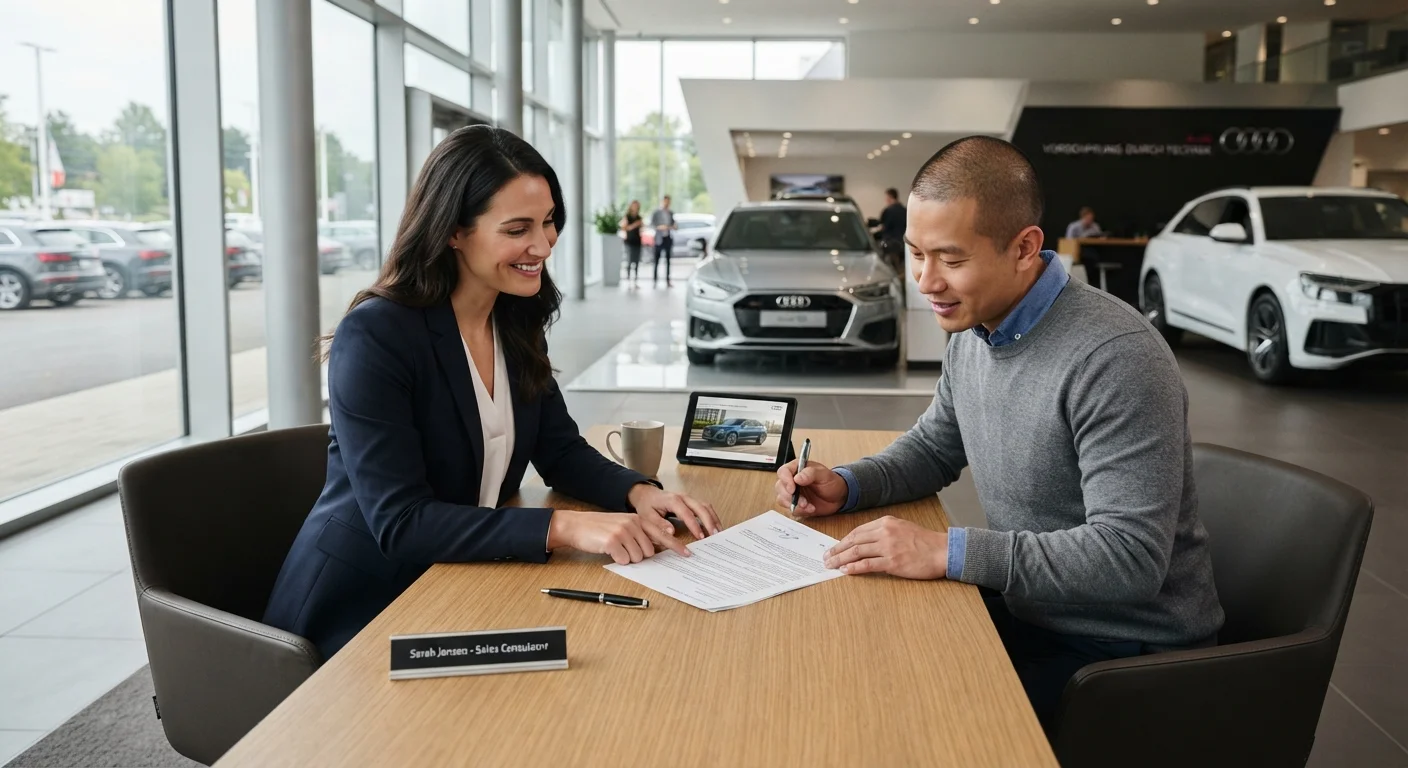
Photo: AnswersSquad.com | Explore Insightful Blogs editorial
Key Takeaways
- Research the market value of your target vehicle before setting foot in a dealership.
- Negotiate the total out-the-door price, not just the monthly payment figure.
- Silence and patience are powerful tools - you never have to accept the first offer.
- Getting pre-approved for financing gives you a concrete benchmark to compare dealer offers.
- Walking away is a legitimate tactic, and dealers often follow up with better terms.
Why Negotiation Feels Intimidating - And Why It Shouldn't
For most first-time buyers, the idea of negotiating a car price feels uncomfortable, even confrontational. It doesn't have to be. Negotiation in this context is simply a structured conversation where both parties are trying to reach a number that works. Dealerships expect it. Salespeople are trained for it. What looks like a fixed sticker price is almost always a starting point.
The discomfort usually comes from unfamiliarity with the process, not the process itself. If you've ever thought about how salary negotiations work, car negotiation follows a similar rhythm: research your market value, make a reasonable opening, respond to counteroffers calmly, and know when to hold your ground. The main difference is that a vehicle transaction involves more line items - and more opportunities for costs to quietly increase if you're not watching.
This guide walks you through each stage so that your first negotiation is grounded in preparation rather than guesswork. For a complete picture of everything involved in buying your first car, see our end-to-end first-car guide.
Get Pre-Approved Before You Arrive
What You Need Before the Negotiation Begins
Good negotiation starts well before you walk onto a lot. The buyer who arrives with research, a clear budget, and a pre-approved financing offer is in a fundamentally stronger position than one who shows up open-ended.
What you will need
Independent Vehicle Pricing Sources
Used to determine fair market value for the specific vehicle you're considering, giving you a defensible starting point for negotiation.
Pre-Approval Letter from a Lender
Provides a concrete financing benchmark so you can evaluate whether the dealer's loan offer is competitive.
Notepad or Phone Notes App
Track every number the dealer presents - price, fees, trade-in offer, and financing terms - so nothing gets lost or misrepresented.
Whether you're considering a new vehicle or a used one matters here too. New cars have MSRP (Manufacturer's Suggested Retail Price) as a public baseline, while used car pricing depends more heavily on condition, mileage, and local demand. If you're still deciding between the two, understanding the real trade-offs between new and used can help you choose the right category before you begin price research.
How to Negotiate Step by Step
Follow these steps in order. Each one builds on the last, and skipping ahead - especially to discussing financing before agreeing on price - can cost you leverage.
Never Negotiate From Monthly Payment Alone
Research the vehicle's fair market value
Before any conversation with a salesperson, look up what other buyers in your area are actually paying for the same vehicle - same make, model, trim, year, and approximate mileage if used. Use at least two independent pricing sources so you have a range, not just a single figure. Write the numbers down. This becomes your anchor: the price above which you won't go without a clear reason.
Set your walk-away number before you arrive
Decide in advance the maximum total price - including all fees - you're willing to pay. This is your walk-away number. Write it down and keep it in mind throughout the visit. Having this figure set before emotions and sales pressure enter the picture helps you stay grounded. If the final out-the-door price can't reach that number, you leave. This isn't a bluff; it's a boundary that protects your budget. For more on avoiding common first-time buyer pitfalls, see why first-time buyers often spend more than they planned.
Make the first offer below your target price
Open with a number that is meaningfully lower than what you're actually willing to pay - but still reasonable enough to be taken seriously. A common approach is to start at or slightly below the lower end of the market value range you researched. This creates room to move upward through counteroffers while landing closer to your actual goal. State the offer calmly and confidently, then stop talking.
Respond to counteroffers methodically
When the dealer comes back with a higher number, don't accept or reject immediately. Ask what's included in that price - are there add-ons bundled in? Are certain fees negotiable? Move in small increments and always ask what the dealer can do to close the gap. Each counteroffer should bring the conversation closer to your target, not leap toward their asking price.
Confirm the full out-the-door price in writing
Once you've verbally agreed on a number, ask for the complete out-the-door price itemized in writing before signing anything. This should include the vehicle price, taxes, title and registration fees, documentation fees, and any agreed add-ons. Compare this written breakdown against what was discussed. If new line items appear that weren't part of the negotiation, ask for them to be explained and, if unjustified, removed.
Be prepared to walk away - and mean it
If the dealer won't meet a price that falls within fair market range and your budget, politely thank them and leave. This is not a failure - it's leverage. Dealerships frequently follow up by phone or email with improved offers once they see you're serious. You can also take what you've learned to another dealership selling a comparable vehicle. For broader context on how negotiation dynamics work across different situations, understanding negotiation from both sides can give you useful perspective.
Watch Out for Add-Ons at the Finance Desk
This article is for general informational and educational purposes only. It does not constitute financial, legal, or purchasing advice tailored to your individual situation. Consult a qualified financial adviser before making significant financial commitments.
The content provided on our blog site traverses numerous categories, offering readers valuable and practical information. Readers can use the editorial team’s research and data to gain more insights into their topics of interest. However, they are requested not to treat the articles as conclusive. The website team cannot be held responsible for differences in data or inaccuracies found across other platforms. Please also note that the site might also miss out on various schemes and offers available that the readers may find more beneficial than the ones we cover.