
What Happens Inside Your Engine When You Skip an Oil Change

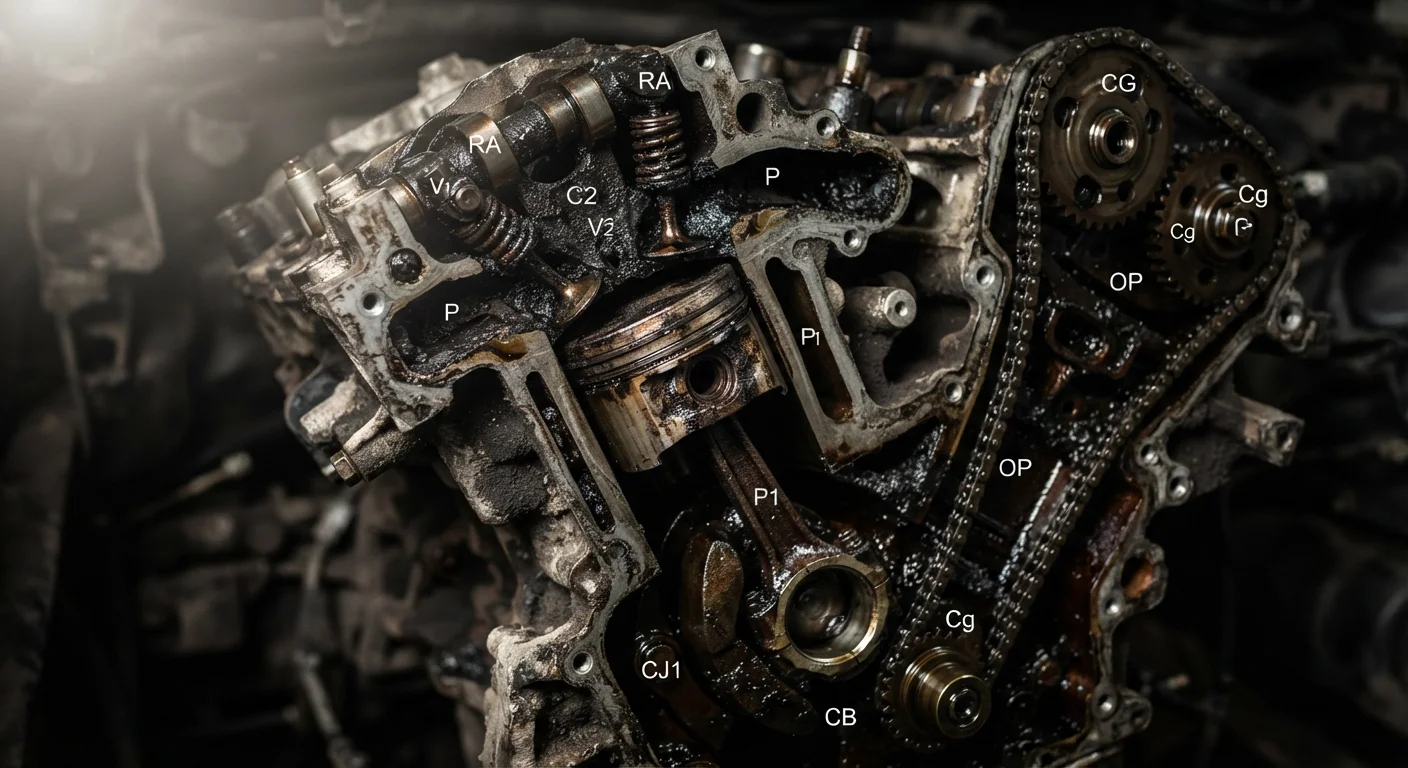
Photo: AnswersSquad.com | Explore Insightful Blogs editorial
Key Takeaways
- Oil doesn't just get dirty - it chemically breaks down and loses its protective properties.
- Skipping oil changes triggers a chain reaction: friction increases, heat builds, and metal components wear prematurely.
- Sludge - thick, tar-like residue - can permanently block oil passages and damage your engine.
- The cost of an oil change is far lower than the cost of an engine repair or replacement.
- Following your vehicle's recommended oil change interval is one of the highest-value maintenance habits you can adopt.
What Engine Oil Actually Does
Before understanding what goes wrong, it helps to know what oil is doing right. Motor oil performs four essential jobs simultaneously: it lubricates metal surfaces that move against each other at high speed, cools components that the coolant system can't reach, cleans by suspending contaminants and carrying them to the oil filter, and protects against corrosion and oxidation inside the engine.
An engine contains dozens of parts moving in close contact - pistons, crankshaft bearings, camshafts, valve train components - all separated by a thin film of oil. Without that film, metal grinds directly against metal. Oil change intervals exist because this fluid has a finite lifespan, not because manufacturers want to sell you more oil.
Oil Filter Role Is Often Overlooked
The Chain Reaction That Starts When Oil Gets Old
Oil degradation isn't a slow, harmless fading - it's a chemical cascade with real mechanical consequences.
- Additive depletion: The specialized chemicals in fresh oil - including anti-wear agents and detergents - are consumed first. Once depleted, the oil can no longer neutralize acids produced during combustion or prevent metal-to-metal contact effectively.
- Oxidation and thickening: Exposure to heat and oxygen causes the base oil molecules to break down and link together, making the oil thicker and more viscous. Thick oil flows poorly, especially when the engine is cold, leaving components unprotected at startup.
- Contamination buildup: Combustion byproducts - including water, fuel blow-by, and soot - accumulate in the oil. The filter captures particles, but dissolved chemicals pass right through. Over time, the oil becomes a corrosive slurry rather than a protective fluid.
- Sludge formation: When oxidized oil mixes with contaminants, it can congeal into a thick, tar-like substance called engine sludge. Sludge clogs oil passages, starving parts of lubrication precisely when they need it most.
~$7,000+
Average cost of a replacement engine
Engine replacement labor and parts costs vary widely, but industry estimates from automotive repair data suggest full engine replacements commonly exceed this figure for many passenger vehicles.
40-50%
Of engine wear occurs at cold startup
Engineering studies on engine wear patterns consistently attribute a substantial share of total bearing and cylinder wear to the first seconds after a cold start - when thick or depleted oil is slowest to circulate.
5,000-10,000 mi
Typical modern oil change interval
Most current vehicle manufacturer recommendations fall in this range for synthetic oil, though intervals vary significantly by model, oil type, and driving conditions - always defer to the owner's manual.
What the Damage Looks Like Inside
As lubrication fails, the damage becomes increasingly physical. Bearings - smooth metal sleeves that support the crankshaft and connecting rods - rely entirely on an oil film to function. When that film thins or disappears, bearings wear rapidly and can fail outright, often requiring a full engine rebuild.
Piston rings, which seal combustion gases inside the cylinder and scrape excess oil off the cylinder walls, lose their elasticity when exposed to degraded oil. This allows oil to burn in the combustion chamber (producing blue exhaust smoke) and reduces engine efficiency - something you may notice at the fuel pump. For more on how engine condition affects running costs, see our piece on fuel costs over time.
Perhaps the most insidious consequence is sludge blocking the oil pickup tube - the component that draws oil from the bottom of the engine. If the pickup is blocked, oil pressure drops suddenly and the entire engine can seize within minutes of driving.
Check Your Oil the Right Way
Building the Habit: What New Owners Should Do
The good news: all of this is preventable with one of the simplest maintenance habits in car ownership. Here's what to put into practice:
- Read your owner's manual. It lists the exact oil change interval and oil specification for your vehicle. This is more reliable than any blanket rule - and some modern intervals are much longer than the old 3,000-mile guideline. If you've heard that the 3,000-mile rule is outdated, you're right - see our look at common car maintenance myths for context.
- Check oil level monthly. Use your dipstick to verify the level is within the safe range and note the color. Dark, gritty oil approaching its change interval is normal; milky or foamy oil signals a more serious problem requiring professional attention.
- Note the date and mileage of each change. A simple note in your phone or a sticker on your windshield removes any guesswork.
- Don't ignore warning lights. An oil pressure warning light is not a reminder - it's an emergency. Pull over safely and do not continue driving until the issue is assessed by a qualified mechanic.
This article provides general educational information about engine maintenance. For guidance specific to your vehicle or a mechanical concern, consult a qualified automotive technician.
Frequently Asked Questions
The content provided on our blog site traverses numerous categories, offering readers valuable and practical information. Readers can use the editorial team’s research and data to gain more insights into their topics of interest. However, they are requested not to treat the articles as conclusive. The website team cannot be held responsible for differences in data or inaccuracies found across other platforms. Please also note that the site might also miss out on various schemes and offers available that the readers may find more beneficial than the ones we cover.