
Understanding Portion Sizes Without Obsessing Over Every Gram

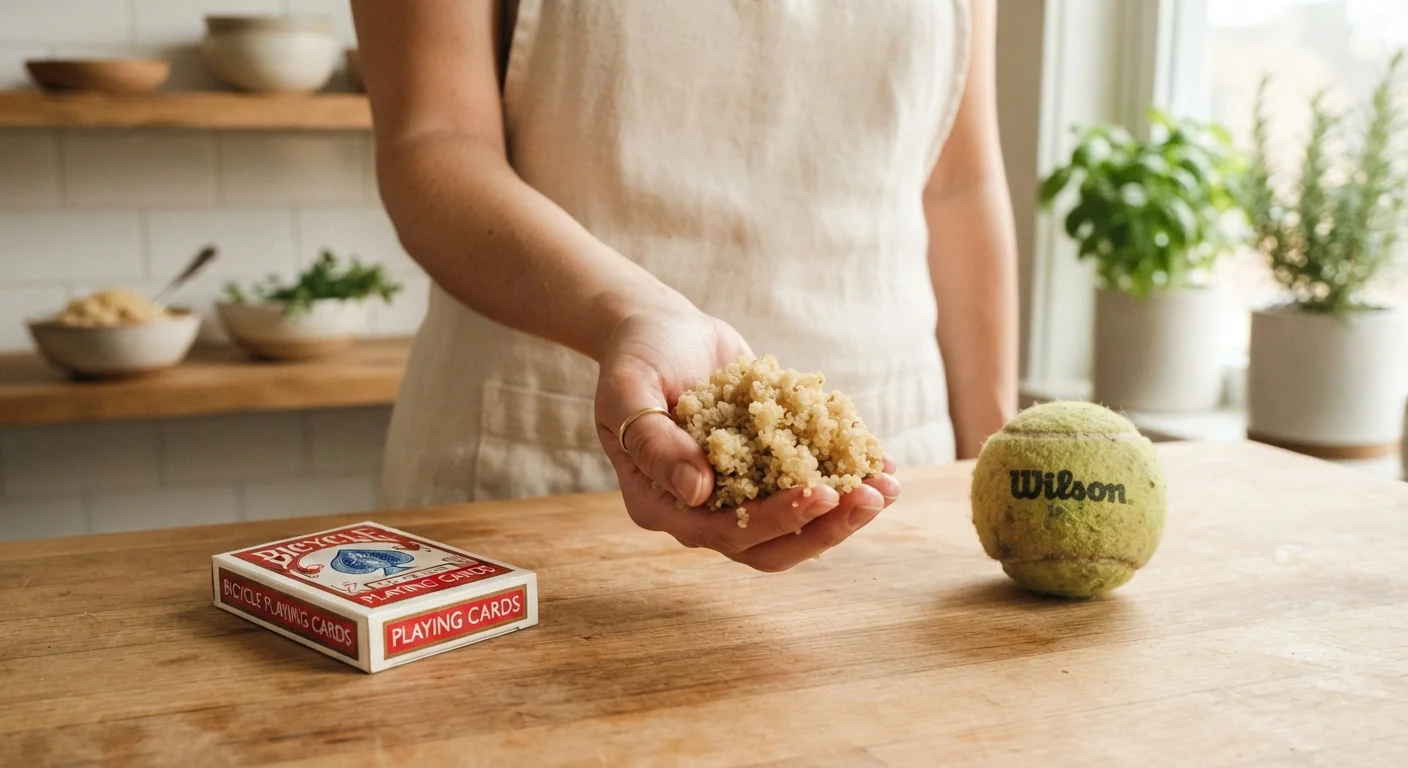
Photo: AnswersSquad.com | Explore Insightful Blogs editorial
Key Takeaways
- Everyday objects like your palm or a deck of cards can reliably approximate common serving sizes.
- Portion awareness is about building a general sense of scale, not achieving precision.
- Visual reference points work in restaurants, at home, and anywhere you don't have measuring tools.
- Hunger and fullness cues matter alongside portion awareness for sustainable eating habits.
- Rigid calorie counting isn't necessary to make more intentional food choices.
Why Portion Awareness Matters Without the Obsession
Most of us eat more or less than we intend to - not because we're careless, but because estimating amounts is genuinely hard without practice. Portion awareness isn't about hitting an exact number of grams at every meal. It's about developing a general sense of scale so you can make more intentional choices in the real world, whether you're cooking at home or eating out.
Obsessive tracking - weighing every bite, logging every macro - can create more stress than it resolves, and for some people it can edge into an unhealthy relationship with food. The goal here is the middle ground: a few reliable reference points you can carry in your head and apply without tools or apps. If you want broader context on how portions fit into overall eating habits, the Starter's Guide to Everyday Nutrition covers the bigger picture.
Awareness, Not Restriction
Your Built-In Measuring Tools: The Hand Method
Your hand is proportional to your body, which makes it a surprisingly consistent reference point across different people. Here's a practical breakdown:
- Palm (no fingers): Roughly 3 oz of cooked protein - about the size of a standard serving of chicken, fish, or beef.
- Cupped hand: Approximately half a cup - useful for grains, cereal, or cut fruit.
- Fist: About one cup - a reasonable guide for vegetables, pasta, or mixed dishes.
- Thumb tip to first knuckle: Roughly one teaspoon - handy for oils, butter, or spreads.
- Whole thumb: Close to one tablespoon - useful for nut butters, dressings, and condiments.
These aren't laboratory-precise, but they don't need to be. They give you a workable frame of reference that travels with you everywhere.
Everyday Object References You'll Actually Remember
Beyond the hand method, comparing foods to common objects can help cement a more intuitive sense of size:
- Deck of cards: A standard serving of meat or fish (about 3 oz cooked).
- Tennis ball: One medium piece of whole fruit, or about one cup of salad greens or cut vegetables.
- Golf ball: About a quarter cup - a reasonable portion for nuts or dried fruit.
- Matchbox: Approximately 1 oz of hard cheese.
- Poker chip: A tablespoon of oil, butter, or salad dressing.
These references show up on many dietitian-approved education materials and are consistent with general guidance found in sources like the USDA's MyPlate framework. That said, individual calorie and nutrient needs vary based on age, activity level, health status, and other factors - a registered dietitian can provide guidance tailored to your specific situation.
It's also worth checking how to read a nutrition label so you can cross-reference package serving sizes when you want a more grounded comparison.
One Size Doesn't Fit Everyone
Practical Steps to Build the Habit
Start with one reference point, not all of them
Pick a single reference - your palm for protein or a fist for vegetables - and use it consistently for one week. Trying to memorize five visual cues at once usually means none of them stick. Build familiarity one comparison at a time.
Check your reference against a measured amount once
Before relying on visual estimates, measure one portion of a food you eat often - using a measuring cup or a kitchen scale if you have one - and compare it to your hand or object reference. This one-time check calibrates your mental model so your future estimates are grounded in reality, not assumption.
Apply the method before serving, not after
Portion awareness works best when you think about amounts before food is on your plate. Dish out what looks like a reasonable portion using your reference points, then sit down and eat. Assessing a plate you've already filled is less useful because it doesn't change your behavior in the moment.
Pause mid-meal to check in with hunger cues
Portion size and hunger satisfaction aren't the same thing. Halfway through a meal, pause for a moment and assess how you feel. Eating slowly enough to notice satiety signals - the body's signs that you've had enough - helps you stop when you're satisfied rather than when your plate is empty.
Adjust in context, not with rigid rules
Your portion needs shift depending on the meal, the day, and your activity level. A larger portion of whole grains before a physically active day is different from a large portion of the same food on a sedentary one. Use your reference points as a starting framework, not a rigid ceiling. Flexibility is part of sustainable eating.
Once you've worked through these steps a few times, estimating portions becomes more automatic. You won't need to run through the whole checklist every meal - the reference points start to feel natural. For a look at which broader eating patterns tend to support good health, see eating patterns backed by nutrition research.
And if you suspect your habits have some gaps you haven't noticed, common nutrition blind spots is worth a read.
This article is for general informational purposes only and is not a substitute for advice from a registered dietitian or qualified healthcare professional. Individual nutritional needs vary. Please consult a professional for guidance specific to your health situation.
The content provided on our blog site traverses numerous categories, offering readers valuable and practical information. Readers can use the editorial team’s research and data to gain more insights into their topics of interest. However, they are requested not to treat the articles as conclusive. The website team cannot be held responsible for differences in data or inaccuracies found across other platforms. Please also note that the site might also miss out on various schemes and offers available that the readers may find more beneficial than the ones we cover.