
Whole Foods vs. Processed Foods: What the Difference Really Means

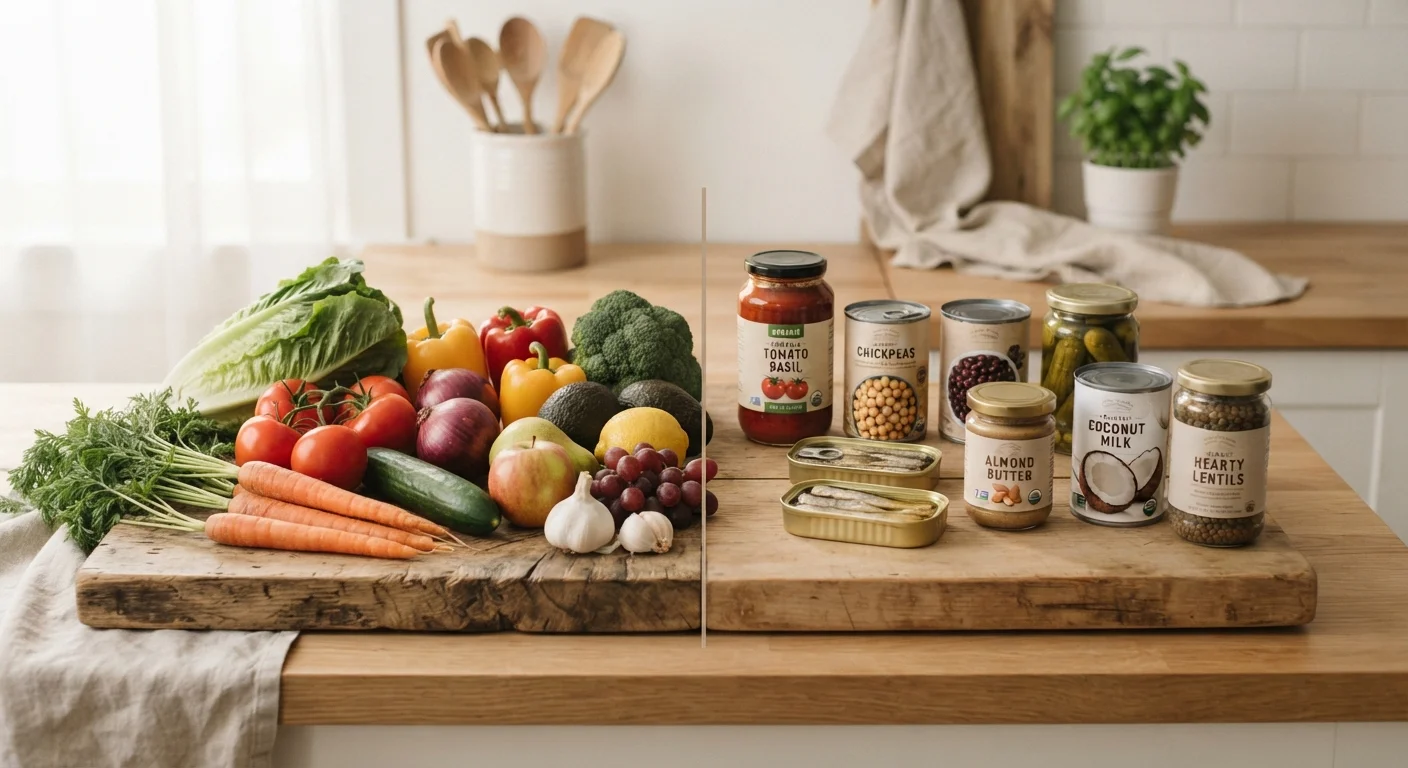
Photo: AnswersSquad.com | Explore Insightful Blogs editorial
Key Takeaways
- Processing exists on a spectrum - canned beans and frozen vegetables are processed but still nutritious.
- Ultra-processed foods, not all processed foods, are most strongly linked to poor diet quality.
- Whole foods tend to retain more fiber, vitamins, and minerals than heavily refined alternatives.
- Reading ingredient lists helps you distinguish minimally processed options from ultra-processed ones.
- Neither category is perfectly good or bad - context and overall dietary pattern matter most.
What These Terms Actually Mean
The phrase "processed food" gets used like a warning label, but the word itself just means the food has been altered from its original state in some way. By that definition, pasteurized milk, rolled oats, and bagged salad greens are all technically processed. So is a frozen dinner loaded with sodium and artificial flavoring. Clearly, not all processing is equal.
Nutritionists and researchers often rely on a classification system called NOVA, developed by researchers at the University of São Paulo, which groups foods into four categories based on the extent and purpose of processing. At one end sit unprocessed or minimally processed foods - fresh fruit, plain meat, dried legumes. At the other end sit ultra-processed foods: products assembled from industrial ingredients like high-fructose corn syrup, hydrogenated oils, and flavor additives, with little resemblance to anything you'd find in a kitchen.
Whole foods typically refer to foods eaten close to their natural form - vegetables, fruits, whole grains, legumes, nuts, and plain proteins. They haven't been stripped of their fiber or had large quantities of sugar, salt, or fat added to them.
Understanding this spectrum matters because the real nutritional concern isn't "processed vs. unprocessed" - it's where on that spectrum your everyday choices tend to land. See Building a Balanced Plate for a plain-language look at how these pieces fit into everyday eating.
How They Compare Nutritionally
Whole foods tend to win on nutrient density. Because they haven't been refined or reformulated, they typically deliver fiber, phytonutrients, vitamins, and minerals in forms your body recognizes and uses efficiently. An apple, for example, provides fiber that slows sugar absorption - something that's largely absent in apple juice, even if the juice contains similar natural sugars.
| Criterion | Whole Foods | Processed Foods |
|---|---|---|
| Fiber content | Naturally present, often high | Often reduced or absent in ultra-processed |
| Added sugars | None added | Common in ultra-processed varieties |
| Sodium levels | Naturally low | Often elevated; varies widely by product |
| Micronutrient density | Generally high | Variable; can be fortified or depleted |
| Shelf life & convenience | Often shorter; requires prep | Longer shelf life; ready or quick to prepare |
| Cost accessibility | Varies; fresh produce can be costly | Minimally processed options often affordable |
Ultra-processed foods, by contrast, are often engineered for palatability rather than nutrition. High levels of added sugar, sodium, and refined carbohydrates are common, while fiber and micronutrients tend to be low. Research - including large-scale observational studies published in journals like The BMJ - has found associations between high ultra-processed food consumption and outcomes like increased cardiovascular risk and poorer overall diet quality. These are associations, not proof of direct cause, and context always matters.
But minimally processed foods - think canned tomatoes, plain frozen spinach, or low-sodium canned chickpeas - are a different story. Processing methods like canning and freezing preserve most nutritional value and make nutritious foods more accessible and affordable. Dismissing all processed food as harmful overlooks this important distinction.
For a deeper look at what your body actually does with the nutrients in these foods, Macronutrients Decoded breaks down how carbs, protein, and fat each function day to day.
Reading Labels Without Getting Overwhelmed
You don't need to avoid every packaged product to eat well. A more practical approach is learning to distinguish minimally processed options from ultra-processed ones. A few habits help:
- Check the ingredient list, not just the front of the package. A short list of recognizable ingredients generally signals less processing. A long list of additives, stabilizers, and sweeteners signals more.
- Watch for added sugars and sodium. These appear under many names - corn syrup, dextrose, maltodextrin, and more. The Nutrition Facts panel lists added sugars separately, which makes comparison easier.
- Fiber is a quick proxy for minimally processed grains. Whole grain bread or pasta with meaningful fiber per serving is a better choice than a refined-grain equivalent with near-zero fiber.
Fortified Foods: A Nuance Worth Knowing
None of this requires perfect eating. A diet that's mostly whole and minimally processed foods - with room for convenience and enjoyment - is more sustainable than one that treats any processing as a dealbreaker. If you're thinking about making bigger dietary changes, Key Questions to Ask Yourself Before Changing How You Eat is worth reading first.
This article is for general informational purposes only and is not a substitute for personalized medical or nutritional advice. Consult a registered dietitian or qualified healthcare professional for guidance specific to your health needs.
The content provided on our blog site traverses numerous categories, offering readers valuable and practical information. Readers can use the editorial team’s research and data to gain more insights into their topics of interest. However, they are requested not to treat the articles as conclusive. The website team cannot be held responsible for differences in data or inaccuracies found across other platforms. Please also note that the site might also miss out on various schemes and offers available that the readers may find more beneficial than the ones we cover.