
Understanding Home Warranties vs. Homeowners Insurance

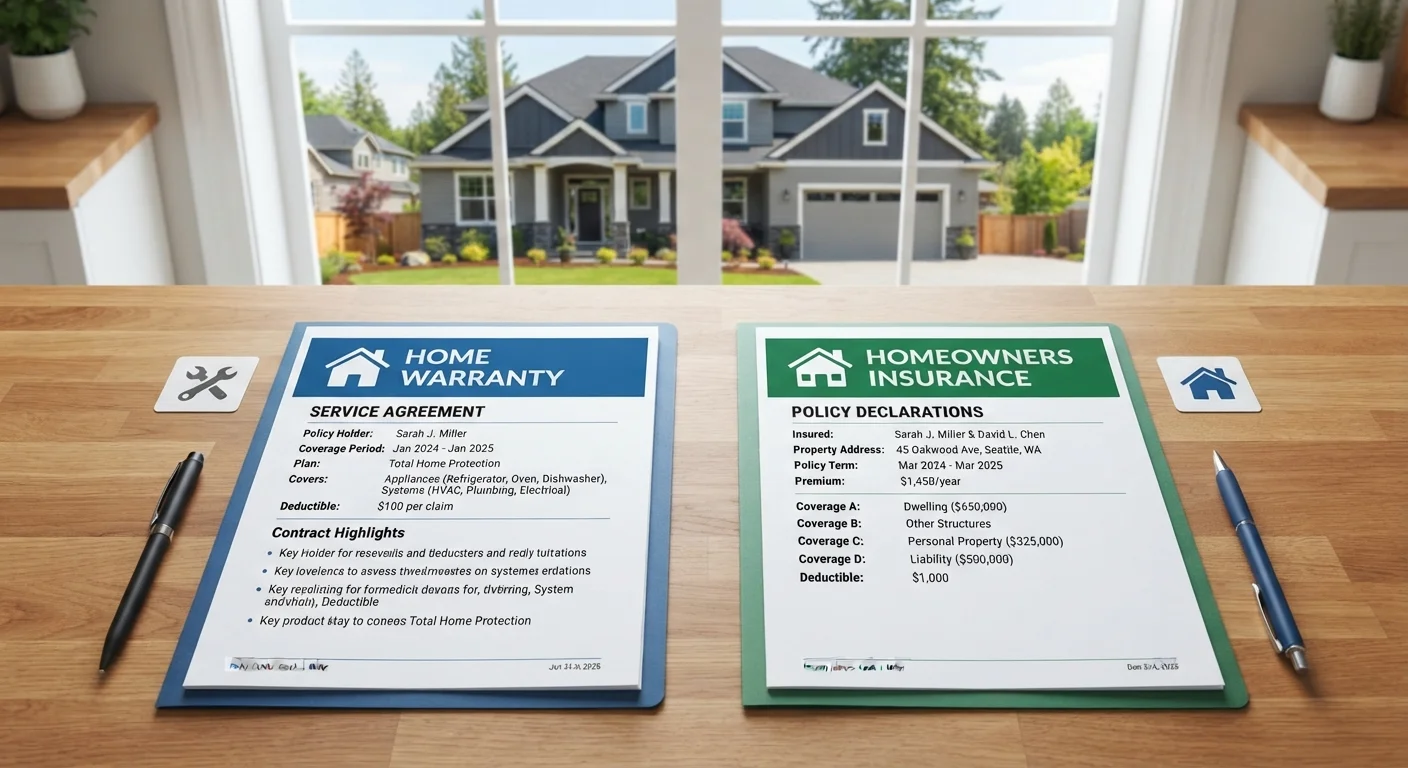
Photo: AnswersSquad.com | Explore Insightful Blogs editorial
Key Takeaways
- Homeowners insurance covers sudden damage from events like fires, storms, and theft.
- A home warranty covers mechanical failures of systems and appliances due to age and wear.
- Mortgage lenders usually require homeowners insurance; home warranties are optional.
- Neither policy is a complete safety net - both have exclusions you need to understand.
- Having both can reduce out-of-pocket costs across a wider range of home problems.
- Always read policy documents carefully and consult a licensed agent for your specific situation.
Two Types of Coverage, Two Very Different Jobs
When you become a homeowner, two terms come up almost immediately: home warranty and homeowners insurance. They sound similar, and both involve paying for protection against home-related costs - but they work in fundamentally different ways and solve different problems.
Understanding the distinction isn't just useful trivia. It helps you file the right claim at the right time, avoid denied claims, and make informed decisions about which coverage actually fits your situation.
~80%
U.S. homeowners with homeowners insurance
According to the Insurance Information Institute, the vast majority of American homeowners carry homeowners insurance, largely because mortgage lenders require it.
$600-$1,200+
Typical annual home warranty cost range
Home warranty pricing varies widely by provider, coverage tier, and region; service call fees per visit are typically additional.
1 in 20
Insured homes filing a claim each year
The Insurance Information Institute estimates roughly one in twenty insured homeowners files a claim annually, underscoring the value of adequate coverage.
What Homeowners Insurance Actually Covers
Homeowners insurance is designed to protect you from sudden, unexpected events - the kind of damage that happens quickly and isn't the result of gradual wear. Standard policies typically cover:
- Dwelling coverage: Damage to your home's structure from covered events like fire, lightning, windstorms, and vandalism.
- Personal property: Your belongings - furniture, electronics, clothing - if they're damaged or stolen.
- Liability protection: If someone is injured on your property and sues you, your policy may cover legal costs and damages.
- Additional living expenses: If your home is uninhabitable due to a covered event, your policy may help pay for temporary housing.
What it doesn't cover: gradual deterioration, routine maintenance, or mechanical breakdowns. A leaky roof due to years of wear isn't the same as a roof damaged by a hailstorm - and insurers treat them very differently.
Just like decoding auto policy types, understanding exactly what's included and excluded is critical. Our explainer on how liability, comprehensive, and collision coverage work walks through a similar framework for thinking about insurance boundaries.
What a Home Warranty Covers
A home warranty is a service contract, not an insurance policy. It covers the cost of repairing or replacing home systems and appliances that fail due to normal use over time. Common items covered include:
- HVAC systems (heating and air conditioning)
- Plumbing and electrical systems
- Kitchen appliances (refrigerator, oven, dishwasher)
- Water heater and washer/dryer units
When a covered item breaks down, you call the warranty provider, pay a service call fee, and the provider sends a technician. If the repair or replacement is covered, the contract handles the cost up to its stated limits.
What it doesn't cover: cosmetic damage, pre-existing conditions, items not properly maintained, or any damage caused by external events. A flooded dishwasher from a burst pipe is more likely an insurance claim than a warranty claim.
Keep Maintenance Records for Both
How to Think About Both Together
Think of the two as covering opposite ends of the risk spectrum:
| Scenario | Which Applies |
|---|---|
| Fire damages your kitchen | Homeowners insurance |
| Your oven stops working after years of use | Home warranty |
| A thief steals your laptop | Homeowners insurance |
| Your HVAC system fails mid-summer | Home warranty |
| A storm blows off your roof shingles | Homeowners insurance |
Carrying both can significantly reduce out-of-pocket costs across a wider range of situations. But neither is a complete safety net. Both come with deductibles or service fees, coverage limits, and exclusions - so it's essential to read the actual contract documents, not just the marketing summary.
A well-organized home maintenance schedule can also help you prevent the kind of neglect that voids warranty coverage or gives insurers grounds to deny a claim.
Getting the Right Coverage for Your Home
Before signing any contract or policy, ask these practical questions:
- What is specifically excluded? Both types of coverage have exclusion lists. Read them.
- What are the coverage limits? A home warranty might cap HVAC replacement at a certain dollar amount - know that number before you need it.
- How does the claims process work? For warranties, you typically must use the provider's approved contractors. For insurance, you may have more flexibility.
- Is there a waiting period? Many home warranties include a 30-day waiting period before coverage activates.
This is general educational information - not personalized financial or insurance advice. Coverage terms, costs, and eligibility vary by provider and location. For decisions about your own home and finances, consult a licensed insurance agent or financial adviser who can evaluate your specific situation.
This article is for informational purposes only and does not constitute insurance, financial, or legal advice. Always review policy and contract documents carefully and consult a licensed professional before making coverage decisions.
Frequently Asked Questions
The content provided on our blog site traverses numerous categories, offering readers valuable and practical information. Readers can use the editorial team’s research and data to gain more insights into their topics of interest. However, they are requested not to treat the articles as conclusive. The website team cannot be held responsible for differences in data or inaccuracies found across other platforms. Please also note that the site might also miss out on various schemes and offers available that the readers may find more beneficial than the ones we cover.