
Trade School vs. University: Weighing Long-Term Returns

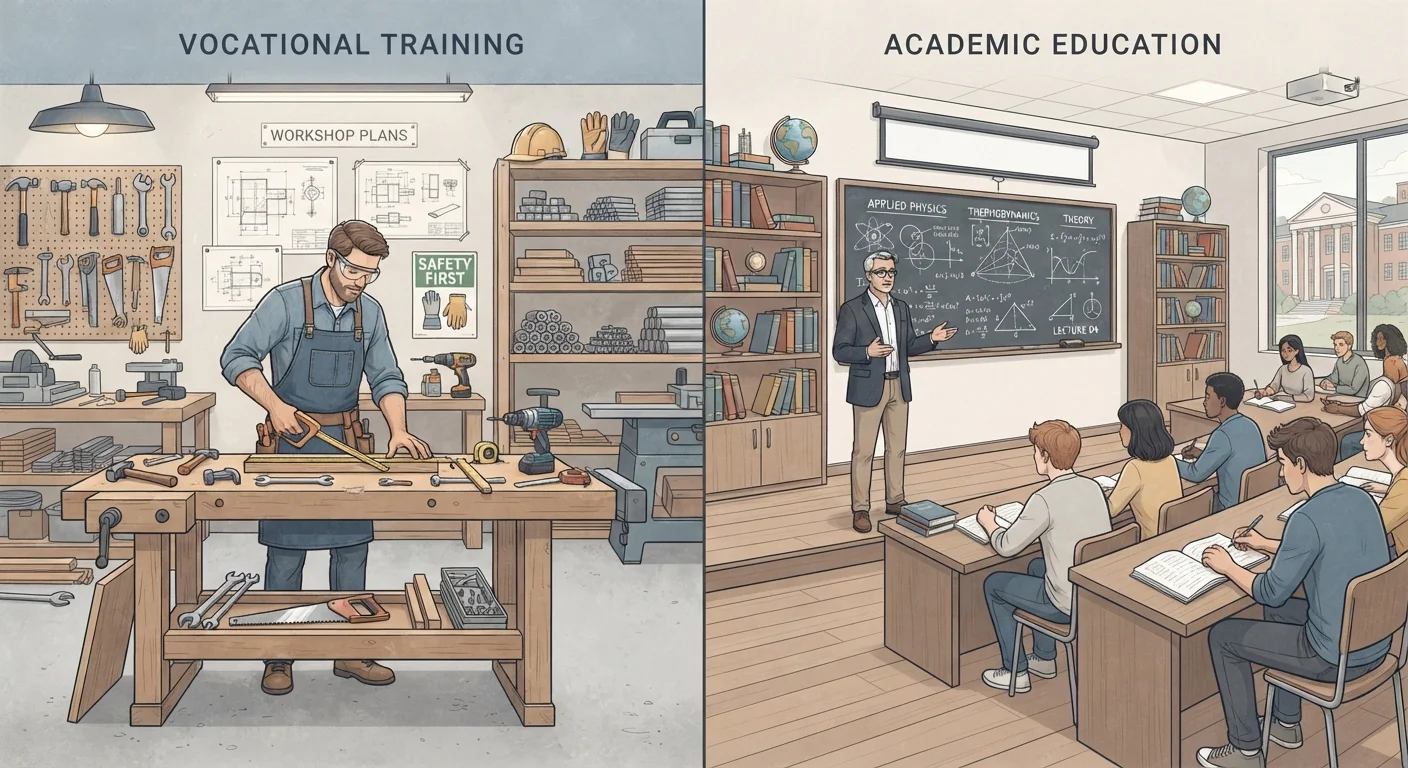
Photo: AnswersSquad.com | Explore Insightful Blogs editorial
Key Takeaways
- Trade school programs typically take one to two years and cost significantly less than a four-year degree.
- University graduates generally earn higher lifetime wages, but high student debt can erode that advantage.
- Skilled trades face a persistent labor shortage, creating strong job stability and demand in many regions.
- Your ideal path depends on the career field, your financial situation, and how you learn best.
- Neither route is universally superior — both can lead to financially rewarding, stable careers.
Cost and Time: The First Big Difference
One of the most concrete differences between these two paths is what they cost — in tuition and in time. According to the National Center for Education Statistics, average annual tuition at a four-year public university in the U.S. runs into the tens of thousands of dollars, and that figure doesn't include housing, books, or lost income during the years of study. For a fuller breakdown of those hidden expenses, see the real cost of a four-year degree.
Trade school programs, by contrast, typically cost between $5,000 and $15,000 in total and can be completed in one to two years. That shorter runway matters: trade graduates often begin earning full-time wages two to three years before their university-enrolled peers, which meaningfully changes the financial picture over a career.
| Criterion | Trade School | Four-Year University |
|---|---|---|
| Typical duration | 1–2 years | 4–6 years |
| Average total cost | $5,000–$15,000 | $40,000–$120,000+ |
| Time to first paycheck | 1–2 years | 4+ years |
| Average completion rate | Higher (shorter program) | ~60% within 6 years |
| Career flexibility | Narrower, trade-specific | Broader across industries |
| Automation risk | Lower for hands-on trades | Varies widely by field |
| Graduate school eligibility | Generally not a pathway | Required prerequisite |
| Labor demand | High; persistent shortage | Varies by degree field |
Of course, cost alone doesn't determine value. The right question is what each dollar invested returns — in income, career options, and job security — over the long run.
Earning Potential: Lifetime Wages in Context
On average, bachelor's degree holders earn more over a lifetime than workers with a vocational certificate. The U.S. Bureau of Labor Statistics consistently reports a wage premium associated with four-year degrees. However, averages can be misleading. That premium is unevenly distributed: it's strongest in fields like technology, finance, and management, but much narrower — or even reversed — in skilled trades.
~$1.2M
Estimated lifetime earnings premium for bachelor's degree holders
The Georgetown Center on Education and the Workforce estimates this advantage over a career, though it varies significantly by field and region.
$67,000+
Median annual wage for electricians
According to U.S. Bureau of Labor Statistics Occupational Employment data, experienced electricians regularly earn well above the national median wage.
60%
6-year graduation rate at 4-year public universities
National Center for Education Statistics data shows roughly 40% of students who enroll in four-year public schools do not complete their degree within six years.
An experienced licensed electrician or elevator installer, for example, can earn six-figure annual wages. When you subtract student loan payments from a university graduate's take-home income, the actual disposable income gap between paths may shrink considerably, especially in the early career years.
The calculation also shifts depending on whether a student graduates on time. Only about 60% of students at four-year public universities complete their degree within six years, according to NCES data. Students who don't graduate still carry debt — without the earning premium a degree provides. Trade programs tend to have much higher completion rates, partly because of their shorter duration and structured format.
Job Stability and Labor Market Trends
Skilled trades are experiencing a well-documented labor shortage across the United States. An aging workforce is retiring faster than new workers are entering the trades, and years of cultural messaging pushing four-year degrees has thinned the pipeline of apprentices and vocational students. For many trades, this creates durable demand and negotiating leverage for qualified workers.
University-educated workers face a different landscape. Some degree fields — particularly in STEM and healthcare — continue to see strong demand. Others face more competitive hiring, partly because the number of bachelor's degree holders has grown significantly over the past two decades, increasing credential competition in many white-collar fields.
Automation and AI are reshaping both sectors, but in distinct ways. Knowledge work in areas like data entry, legal research, and basic financial analysis faces increasing automation pressure. Many skilled trades — electrical work, plumbing, HVAC installation, welding — require physical judgment and on-site problem solving that is much harder to automate in the near term. For a closer look at which specific fields favor trade credentials, see fields where trade qualifications outpace degrees.
Credentials Can Be Combined
Choosing the Right Path for You
Neither trade school nor university is the right answer for everyone. The better question is: which path aligns with your goals, your finances, and the specific career you're pursuing? Some careers allow entry through either route; others are gated behind a degree or a licensed credential. Research the specific requirements for your target field before deciding.
It's also worth considering how you learn. If structured academic study motivates you and you have a clear path to a degree-required profession, university makes sense. If you learn better through doing, want to limit debt, and have a trade career in mind, vocational training may deliver a stronger return on investment.
For readers still weighing multiple options — including self-directed learning — comparing all three pathways side by side can help you map the full picture. And if you're interested in how flexible online study compares to campus-based programs, what the research says about online vs. on-campus learning is worth reviewing.
Whatever route you choose, the goal is the same: build skills that translate to a stable livelihood and a career that fits your life. Both paths, taken seriously, can get you there.
This article is for general informational and educational purposes only. Labor market data and cost figures are generalizations; individual outcomes will vary significantly based on field of study, institution, location, and personal circumstances. Consult a licensed educational or financial adviser before making significant financial commitments related to education.
The content provided on our blog site traverses numerous categories, offering readers valuable and practical information. Readers can use the editorial team’s research and data to gain more insights into their topics of interest. However, they are requested not to treat the articles as conclusive. The website team cannot be held responsible for differences in data or inaccuracies found across other platforms. Please also note that the site might also miss out on various schemes and offers available that the readers may find more beneficial than the ones we cover.