
Shopping Across Borders: What Changes When You Order Internationally

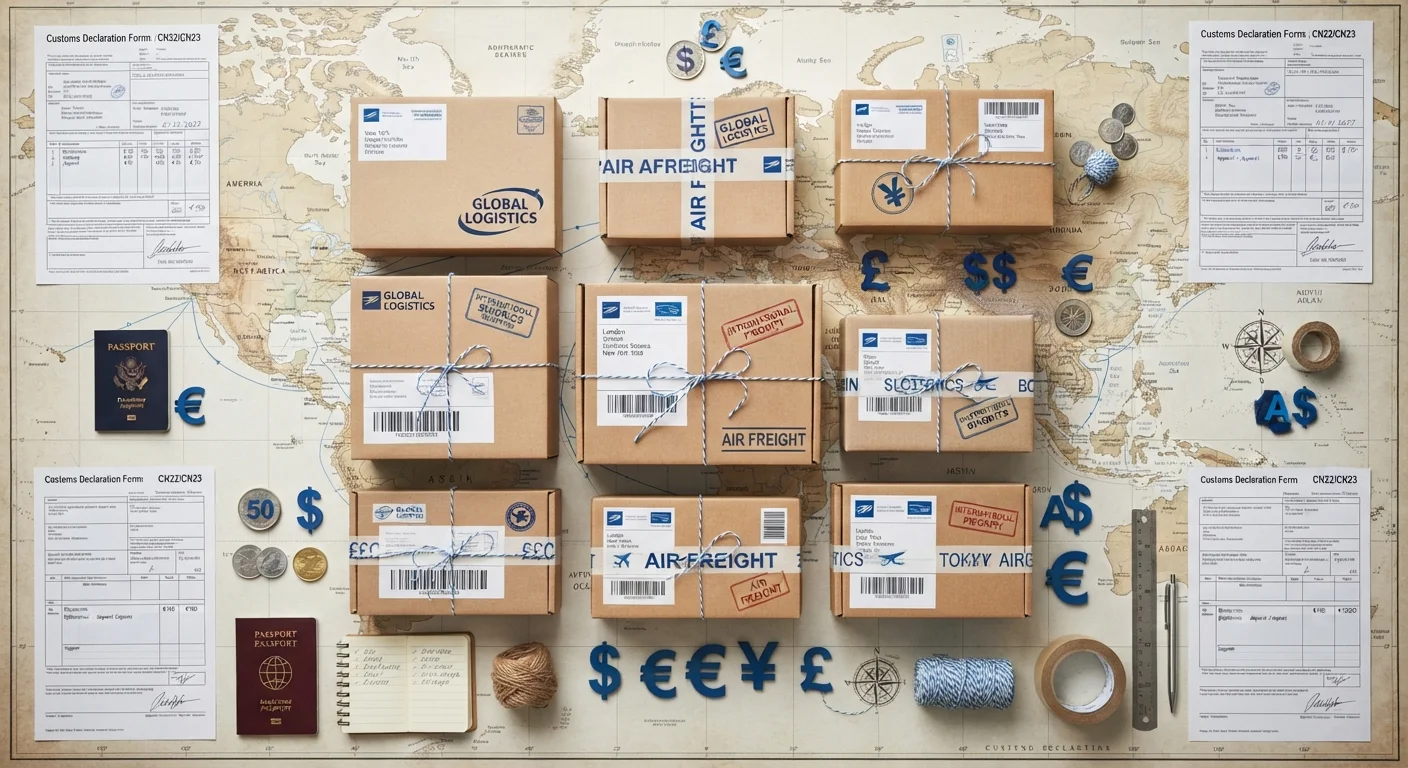
Photo: AnswersSquad.com | Explore Insightful Blogs editorial
Key Takeaways
- Customs duties and import taxes can significantly raise the final cost of an international order.
- Shipping times for overseas orders are often measured in weeks, not days.
- Consumer protection rights may not apply the same way when buying from foreign retailers.
- Currency conversion fees and exchange rate fluctuations can affect what you actually pay.
- Returns on international orders are frequently expensive, slow, or not accepted at all.
Access to products unavailable domestically
Specialty goods, regional brands, and limited-edition items are often only sold in their country of origin. International ordering opens up a much wider product range than any domestic marketplace.
Potential price advantages in certain categories
After factoring in duties and shipping, some internationally sourced goods still land at a lower price than domestic equivalents — particularly in categories like specialty textiles, ceramics, or hobbyist supplies.
Supports small and independent global sellers
Cross-border shopping allows consumers to buy directly from artisans, small workshops, and independent businesses that don't have a US distribution presence.
Customs duties inflate the final cost
Import duties, brokerage fees, and applicable taxes can add 10–30% or more to your order total, erasing any apparent price advantage and catching many shoppers off guard.
Returns are costly and often impractical
Shipping an item back overseas can cost more than the item's value, and many international sellers restrict or exclude returns from foreign buyers altogether.
Weaker consumer protection and dispute resolution
US consumer protection laws generally don't extend to foreign sellers, leaving payment provider disputes as the primary recourse if an order goes wrong.
Shipping timelines are slow and unpredictable
International parcels typically take two to six weeks and may go dark in tracking systems mid-transit, making it difficult to monitor or intercept a delayed shipment.
Currency fees and exchange rate risk
Foreign transaction fees from your card issuer and fluctuating exchange rates can quietly increase what you pay — and reduce what you get back in a refund.
The Hidden Layer: Customs, Duties, and Import Taxes
The listed price on an overseas retailer's site is rarely the final number that hits your bank account. When goods cross international borders, they're subject to import duties and, in many cases, state or local sales tax assessed at the point of entry. In the US, US Customs and Border Protection sets duty rates that vary by product category and country of origin.
Some lower-value shipments fall under a de minimis threshold — the dollar value below which duties are not collected. However, this threshold has been subject to policy changes, and certain product categories are excluded. Don't assume a small order automatically arrives duty-free. Always check the current rules through official government sources before ordering.
It's also worth knowing that carriers often charge a customs brokerage fee for clearing your package — a line-item that can appear as a surprise invoice after delivery. Understanding your full landed cost upfront is essential. See our smart budgeting framework for help calculating whether a purchase truly makes financial sense.
Access to products unavailable domestically
Specialty goods, regional brands, and limited-edition items are often only sold in their country of origin. International ordering opens up a much wider product range than any domestic marketplace.
Potential price advantages in certain categories
After factoring in duties and shipping, some internationally sourced goods still land at a lower price than domestic equivalents — particularly in categories like specialty textiles, ceramics, or hobbyist supplies.
Supports small and independent global sellers
Cross-border shopping allows consumers to buy directly from artisans, small workshops, and independent businesses that don't have a US distribution presence.
Shipping Timelines and What Can Go Wrong
Domestic two-day shipping has recalibrated consumer expectations in ways that international shipping simply can't match. Cross-border orders routinely take two to six weeks depending on origin country, shipping method, and how long customs processing takes. During peak periods — major holidays or global disruptions — delays can stretch further.
Beyond timing, international shipments carry a higher risk of loss or damage, and resolving those issues is more complicated. Tracking information can go dark once a package crosses into a new postal system, leaving you with limited visibility. Always check whether the retailer provides end-to-end tracking and what their process is if a package doesn't arrive.
2–6 weeks
Typical international shipping window
Standard cross-border e-commerce shipments to the US commonly take two to six weeks, depending on origin and carrier, according to general logistics industry guidance.
1–3%
Foreign transaction fee on many credit cards
Many US credit cards charge a foreign transaction fee of 1–3% on purchases denominated in a non-USD currency; some travel-oriented cards waive this entirely.
If delivery timelines matter to your purchase — a gift with a date, replacement parts you need soon — international ordering is a significant gamble. For a full pre-purchase checklist covering shipping details and seller verification, see our pre-purchase checklist.
Returns, Disputes, and Consumer Protections
This is where international shopping gets genuinely complicated. Returns to overseas sellers often require you to ship items back at your own expense — which can easily exceed the value of the item itself. Some sellers explicitly exclude international buyers from their standard return policy, and marketplace guarantees may not extend across borders in the same way.
Consumer protection laws in the US apply to transactions with US-based sellers. When you buy from a retailer operating under a foreign jurisdiction, you may have little practical recourse through domestic channels if something goes wrong. Dispute resolution through your payment provider is often the most reliable backstop — make sure your payment method offers purchase protection before you check out.
To understand what seller guarantees and dispute clauses actually cover, reading marketplace policies carefully is a non-negotiable step. And for a deeper look at navigating return complications, see our guide to online returns.
Customs duties inflate the final cost
Import duties, brokerage fees, and applicable taxes can add 10–30% or more to your order total, erasing any apparent price advantage and catching many shoppers off guard.
Returns are costly and often impractical
Shipping an item back overseas can cost more than the item's value, and many international sellers restrict or exclude returns from foreign buyers altogether.
Weaker consumer protection and dispute resolution
US consumer protection laws generally don't extend to foreign sellers, leaving payment provider disputes as the primary recourse if an order goes wrong.
Shipping timelines are slow and unpredictable
International parcels typically take two to six weeks and may go dark in tracking systems mid-transit, making it difficult to monitor or intercept a delayed shipment.
Currency fees and exchange rate risk
Foreign transaction fees from your card issuer and fluctuating exchange rates can quietly increase what you pay — and reduce what you get back in a refund.
When International Orders Do Make Sense
Despite the complications, cross-border shopping has real advantages in the right circumstances. Specialty, handmade, or regionally exclusive items may simply not be available through domestic channels — and for collectors or hobbyists, that access alone justifies the added friction. In some categories, price differences after duties are still meaningful enough to make an international order worthwhile.
Currency fluctuations can occasionally work in your favor, though they can just as easily work against you. Be aware that your card issuer may charge a foreign transaction fee — typically 1–3% — on purchases denominated in another currency. Some cards waive this fee entirely, which is worth checking before you pay. Also factor in that exchange rates at the time of purchase and refund may differ if you need to return an item.
If you're weighing whether a seemingly lower price overseas actually saves money, don't overlook shipping costs. Our article on free shipping trade-offs breaks down how to evaluate the real cost of any shipping offer — a calculation that matters even more for international orders.
Check Official Sources for Current Duty Rules
The content provided on our blog site traverses numerous categories, offering readers valuable and practical information. Readers can use the editorial team’s research and data to gain more insights into their topics of interest. However, they are requested not to treat the articles as conclusive. The website team cannot be held responsible for differences in data or inaccuracies found across other platforms. Please also note that the site might also miss out on various schemes and offers available that the readers may find more beneficial than the ones we cover.