
Compound Interest: The Mechanic Behind Long-Term Wealth Growth

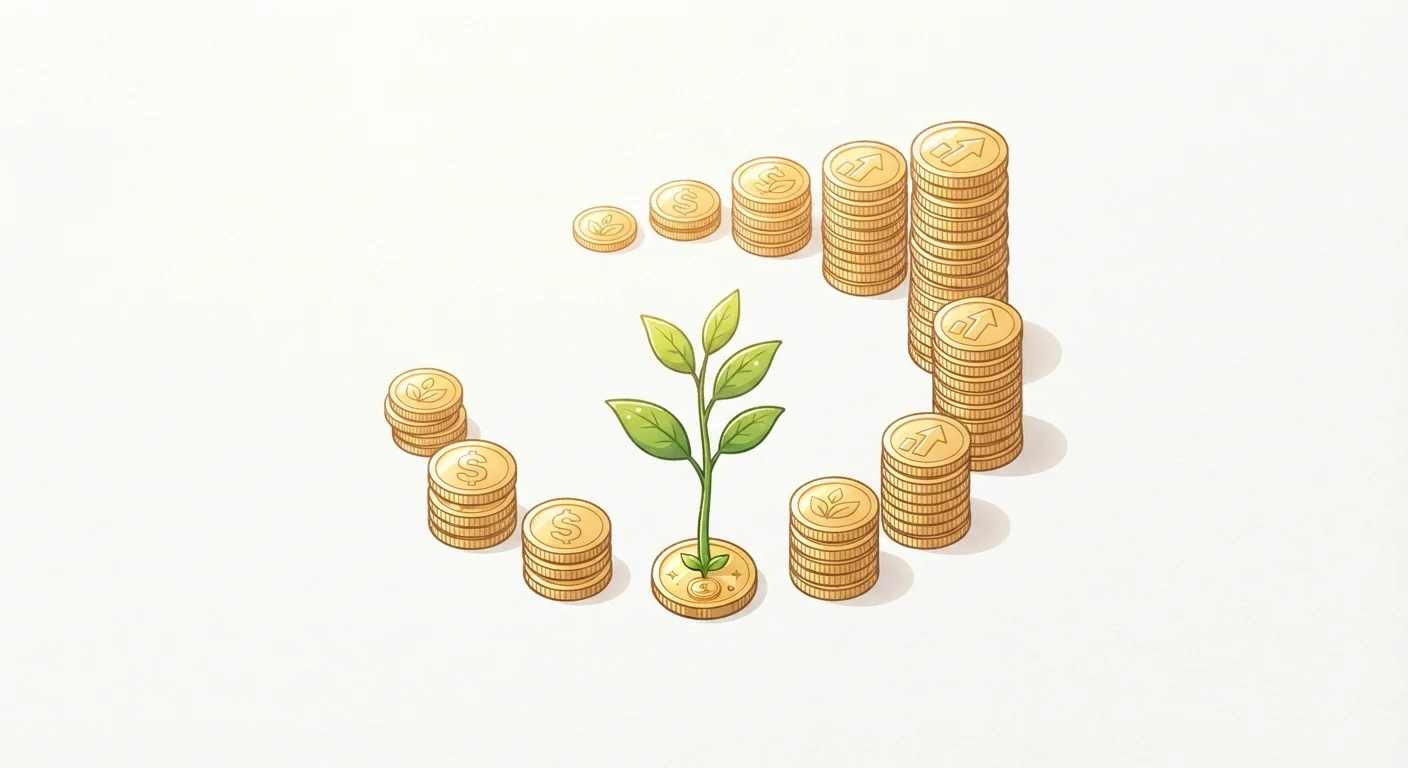
Photo: AnswersSquad.com | Explore Insightful Blogs editorial
Key Takeaways
- Compound interest grows your money by earning returns on both principal and accumulated interest.
- Time in the market is the single most powerful variable — starting earlier matters more than starting with more.
- Compounding also works against you when carrying debt, especially on high-interest balances.
- Consistent, automated contributions amplify compounding by continuously increasing the base that earns returns.
- Even modest initial amounts can grow substantially given enough time and a reasonable rate of return.
How Compounding Actually Works
The mechanics are straightforward. Suppose you deposit $1,000 into an account earning 5% interest annually. After year one, you earn $50 in interest, bringing your balance to $1,050. In year two, that 5% applies to the full $1,050 — not the original $1,000 — so you earn $52.50. By year three, you're earning interest on $1,102.50.
Each cycle, your earning base grows slightly larger. Early on, the differences look trivial. But extend the timeline to 10, 20, or 30 years and the gap between compounded and non-compounded growth becomes dramatic. After 30 years at 5%, that original $1,000 grows to roughly $4,322 without a single additional contribution. A simple interest calculation at the same rate would return only $2,500.
This is why compound interest is frequently described as one of the most important concepts in personal finance — not because any single year is transformative, but because the effect compounds alongside time itself. For a deeper grounding in the vocabulary around this topic, see key savings and investing terms that every new saver should know.
72
Years to double money at 1% interest (Rule of 72)
The Rule of 72 is a standard financial shortcut: divide 72 by the annual interest rate to estimate how many years your money takes to double.
~$4,322
Value of $1,000 after 30 years at 5% compounded annually
Compared to $2,500 under simple interest at the same rate, the difference illustrates how compounding accelerates long-term growth without additional contributions.
9 years
Approximate time to double money at 8% annual return
Using the Rule of 72, $10,000 earning 8% per year would grow to roughly $20,000 in about nine years through compounding alone.
Why Starting Early Matters More Than Starting Big
The most common piece of advice attached to compound interest is "start early," and the math backs it up. Consider two savers: one who invests $200 per month from age 22 to 32 — ten years — then stops. Another starts at 32 and contributes $200 per month for the next 30 years. Assuming a 7% average annual return, the early starter often ends up with more at retirement despite contributing far less total money. Time, not contribution size, is the dominant variable.
This reality has a practical implication: don't wait until you have a large lump sum. Small, consistent contributions started today outperform larger contributions started later. One of the most effective ways to make this happen is through automated transfers — removing the decision entirely. Paying yourself first through automation directly supports the consistency that compounding requires.
Use the Rule of 72 as a quick gut check
The Double-Edged Nature of Compounding
Compound interest is neutral — it amplifies whatever direction money is flowing. When it's working for you in a savings or investment account, it builds wealth quietly in the background. When it's working against you on unpaid debt, it accelerates how fast what you owe grows.
High-interest credit card debt is the clearest example. A $3,000 balance at 22% APR, left unpaid for five years with only minimum payments, can result in repaying significantly more than the original balance. The same compounding curve that rewards patient savers punishes slow debt repayment.
This symmetry makes it worth thinking about both sides of your financial picture at once. Reducing high-interest debt isn't just about clearing obligations — it stops a compounding cycle that's running in the wrong direction. If you carry balances, understanding the habits that protect your credit over time is directly relevant to keeping compounding on your side.
Putting Compounding to Work Practically
Understanding compound interest is only useful if it changes behavior. The most accessible first step is opening an account that actually earns interest — high-yield savings accounts, certificates of deposit, or tax-advantaged accounts like a Roth IRA or 401(k) all allow compounding to work in your favor. The specific product that fits your situation will depend on your goals, timeline, and tax context — a licensed financial adviser can help you evaluate options for your circumstances.
Once an account is in place, the two levers are rate of return and consistency of contributions. You have limited control over market returns, but you have full control over how regularly you add to your base. Even contributions that feel insignificant — $25 or $50 per month — increase the principal on which future interest accrues. Certain financial habits, on the other hand, quietly work against this progress. Patterns that undermine long-term saving are worth recognizing early before they erode the compounding runway you're building.
This article is for general informational and educational purposes only and does not constitute personalized financial, investment, tax, or legal advice. Consult a qualified, licensed financial professional before making decisions about your specific financial situation.
Frequently Asked Questions
The content provided on our blog site traverses numerous categories, offering readers valuable and practical information. Readers can use the editorial team’s research and data to gain more insights into their topics of interest. However, they are requested not to treat the articles as conclusive. The website team cannot be held responsible for differences in data or inaccuracies found across other platforms. Please also note that the site might also miss out on various schemes and offers available that the readers may find more beneficial than the ones we cover.