
Emergency Fund vs. Investment Account: Where Should Spare Cash Go First?

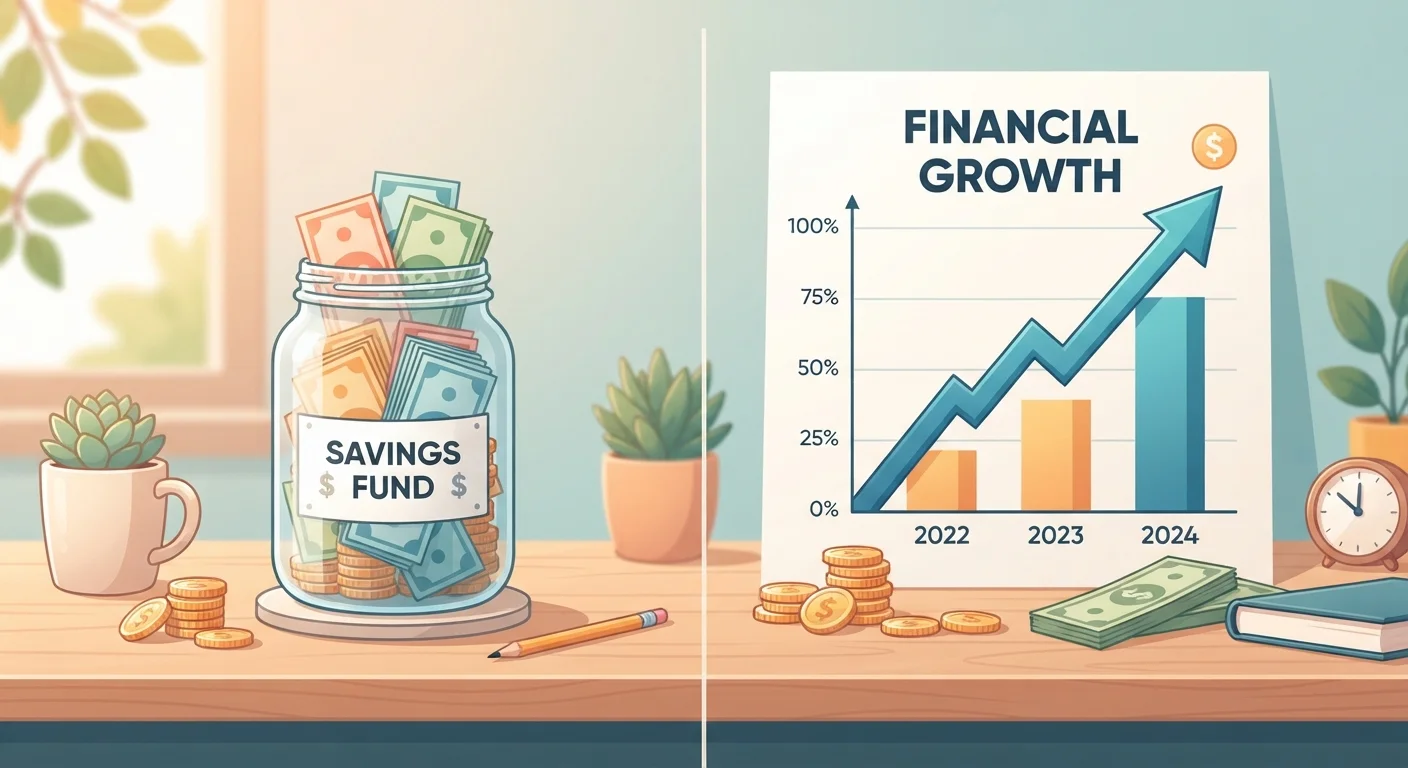
Photo: AnswersSquad.com | Explore Insightful Blogs editorial
Key Takeaways
- An emergency fund should generally be funded before opening a taxable investment account.
- Most financial educators recommend three to six months of essential expenses as an emergency fund target.
- Investment accounts carry market risk — money invested can lose value, making them unsuitable for emergency use.
- Once your safety net is in place, investing regularly — even small amounts — helps compound growth over time.
- High-yield savings accounts can make your emergency fund work harder without adding market risk.
Why the Order of Operations Matters
When extra cash hits your account — a tax refund, a bonus, or simply a lighter month — the instinct to immediately invest it is understandable. Markets reward patience and early entry. But investing before you have a financial cushion is a bit like building a second floor before you've laid the foundation: it can work until it very suddenly doesn't.
Personal finance frameworks consistently place an emergency fund before taxable investing for one straightforward reason: market investments can lose value at exactly the moment life throws a curveball at you. If your car breaks down or your hours get cut, and your only savings are tied up in a brokerage account that's down 15%, you're forced to sell at a loss — or reach for a credit card. Neither outcome is part of the plan.
The sequencing recommended by most financial educators looks roughly like this: cover high-interest debt first, build a starter emergency fund, then invest. Once investing starts, contributions to your safety net can continue in parallel until it's fully funded. The pay-yourself-first approach makes this structure easier to automate so the decision doesn't have to happen manually each month.
What Each Account Actually Does
These two tools serve fundamentally different functions, and conflating them is one of the most common early money mistakes.
| Criterion | Emergency Fund | Investment Account |
|---|---|---|
| Primary purpose | Cover unexpected expenses | Grow wealth over time |
| Typical account type | High-yield savings account | Brokerage, Roth IRA, 401(k) |
| Liquidity | Fully liquid, same-day access | Accessible but may require selling assets |
| Risk level | No market risk (FDIC insured) | Subject to market fluctuations |
| Expected return | Modest interest rate | Historically higher, but variable |
| Time horizon | Short-term (immediate need) | Long-term (years to decades) |
| When to use it | Job loss, medical bill, urgent repair | Retirement, long-term financial goals |
An emergency fund is not meant to grow aggressively — it's meant to be there, reliably, when you need it. Holding it in a high-yield savings account lets it earn a meaningful interest rate without introducing any market risk. You won't beat inflation by much, but that's not the goal here.
An investment account — whether a brokerage, a Roth IRA, or a 401(k) — is designed for money you genuinely won't need for years. That time horizon is what allows market volatility to smooth out and compounding to do meaningful work. Index funds, ETFs, and mutual funds are common starting points for new investors, but understanding your risk tolerance matters before choosing where money goes.
How Much Is Enough Before You Start Investing?
The traditional target — three to six months of essential living expenses — is a useful benchmark, but not a rigid gate. Essential expenses means rent, utilities, food, insurance, and minimum debt payments: not your full discretionary budget.
~57%
Americans without $1,000 in emergency savings
According to Bankrate's annual Emergency Savings Report, a significant share of U.S. adults could not cover a $1,000 unexpected expense from savings alone.
3–6 months
Recommended emergency fund coverage
Most personal finance frameworks, including guidance from the Consumer Financial Protection Bureau, suggest three to six months of essential expenses as a target range.
10%+ APY
Historical average annual stock market return
The S&P 500 has historically averaged roughly 10% annually before inflation over long periods, though past performance does not guarantee future results.
A practical middle path: aim for one full month of essential expenses before opening an investment account, then build both in parallel. This gives you a meaningful buffer against minor disruptions while still getting money into the market earlier. Once the fund hits three months, you can shift more toward investing without sacrificing security.
Before committing money to a brokerage, it's worth running through a readiness check. Our investment account readiness checklist walks through the key questions to answer first. And if you're planning for specific costs — a car repair fund, an annual insurance premium — sinking funds handle those separately so they don't erode your emergency buffer.
One common concern: isn't money sitting in a savings account losing value to inflation? It is, marginally — but the alternative of keeping no buffer and investing everything carries a real cost too. Playing it too safe has its own risks, but so does skipping the safety net entirely.
This article is for general informational and educational purposes only and does not constitute personalised financial advice. Consult a licensed financial adviser for guidance specific to your situation.
The content provided on our blog site traverses numerous categories, offering readers valuable and practical information. Readers can use the editorial team’s research and data to gain more insights into their topics of interest. However, they are requested not to treat the articles as conclusive. The website team cannot be held responsible for differences in data or inaccuracies found across other platforms. Please also note that the site might also miss out on various schemes and offers available that the readers may find more beneficial than the ones we cover.