
Direct Flights vs. Layovers: The Full Picture for Budget Travelers

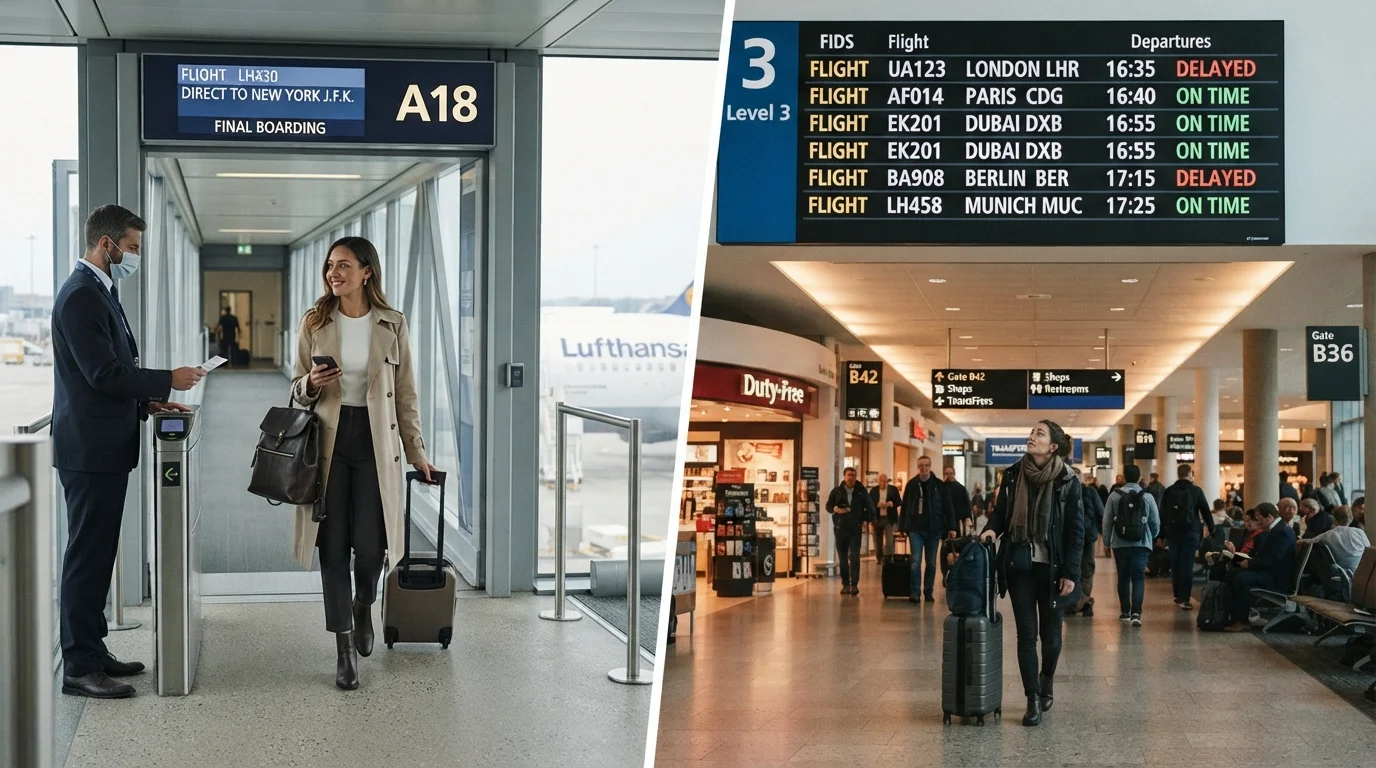
Photo: AnswersSquad.com | Explore Insightful Blogs editorial
Key Takeaways
- Layovers typically cost less upfront but introduce real risks like missed connections and lost luggage.
- Direct flights save time and reduce stress, but the price premium can be significant on long-haul routes.
- A short layover (under 90 minutes) on a single itinerary is the riskiest scenario for budget travelers.
- Overnight layovers can sometimes double as a low-cost mini-destination if planned carefully.
- Your choice should factor in checked bags, travel insurance, and how rigid your arrival window is.
Layovers typically come with lower upfront fares
Connecting flights are generally priced lower than nonstop options on the same route, sometimes by a meaningful margin on long-haul trips. For travelers with time to spare, this fare gap can fund additional nights at the destination.
Direct flights eliminate missed-connection risk entirely
Once you're on a nonstop flight, you cannot miss a connection. This single factor makes direct flights the rational default for anyone with a fixed arrival deadline — a wedding, a cruise departure, or a prepaid hotel check-in.
Connecting flights offer more routing options
Layovers open up itineraries that don't exist as nonstop routes, which can be the only way to reach smaller or less-trafficked destinations affordably. Sometimes a connection is simply the only option available.
Direct flights dramatically reduce travel time and fatigue
A nonstop flight is typically two to six hours shorter once you factor in connection time, waiting, and re-boarding. Arriving less exhausted has real value, especially on a trip with a packed first day.
Long layovers can double as low-cost stopovers
A six-hour or overnight layover in an accessible city lets you experience a second destination without purchasing a separate ticket. Some transit programs even offer complimentary city tours for qualifying passengers.
Direct flights simplify checked baggage logistics
Bags checked on a nonstop flight travel the same path you do, with no transfer risk. On connecting flights — especially across separate bookings — luggage delays and misrouting are a documented and common problem.
Missed connections can cost more than the savings
A delayed inbound segment that causes a misconnection can result in an unplanned hotel stay and a last-minute replacement fare. On separate bookings, those costs fall entirely on you — potentially erasing weeks of budget savings.
Direct flights carry a significant price premium
On popular international routes, nonstop fares can run substantially higher than the cheapest connecting alternative. For price-constrained travelers, this gap may be the deciding factor regardless of other considerations.
Short layovers create severe time pressure
A connection under 90 minutes at a large hub leaves almost no margin for gate changes, delayed jet bridges, or security re-screening. Even airlines build in minimum connection times that don't account for real-world variability.
Separate-ticket bookings remove airline responsibility
Booking two independent tickets to save money eliminates the carrier's legal obligation to rebook you if the first flight is late. You absorb every downstream cost of the disruption personally.
Layovers add unpredictable physical fatigue
Multiple boarding processes, terminal transfers, and extended airport time accumulate quickly, particularly on long-haul trips crossing time zones. Arriving drained can affect the first days of your trip.
Why This Decision Matters More Than Just Price
Flight search results make the choice look simple: the connecting flight is cheaper, the direct flight costs more. But that framing strips out most of what actually matters. The real comparison involves your schedule flexibility, how you're packing, your destination's connection options, and the financial exposure if something goes wrong.
For a first-time budget traveler, it's easy to filter by lowest price and click book. Before you do, it's worth understanding exactly what you're trading. See what hidden costs to watch for before locking in any itinerary.
Layovers typically come with lower upfront fares
Connecting flights are generally priced lower than nonstop options on the same route, sometimes by a meaningful margin on long-haul trips. For travelers with time to spare, this fare gap can fund additional nights at the destination.
Direct flights eliminate missed-connection risk entirely
Once you're on a nonstop flight, you cannot miss a connection. This single factor makes direct flights the rational default for anyone with a fixed arrival deadline — a wedding, a cruise departure, or a prepaid hotel check-in.
Connecting flights offer more routing options
Layovers open up itineraries that don't exist as nonstop routes, which can be the only way to reach smaller or less-trafficked destinations affordably. Sometimes a connection is simply the only option available.
Direct flights dramatically reduce travel time and fatigue
A nonstop flight is typically two to six hours shorter once you factor in connection time, waiting, and re-boarding. Arriving less exhausted has real value, especially on a trip with a packed first day.
Long layovers can double as low-cost stopovers
A six-hour or overnight layover in an accessible city lets you experience a second destination without purchasing a separate ticket. Some transit programs even offer complimentary city tours for qualifying passengers.
Direct flights simplify checked baggage logistics
Bags checked on a nonstop flight travel the same path you do, with no transfer risk. On connecting flights — especially across separate bookings — luggage delays and misrouting are a documented and common problem.
The Real Risks of Layovers (Beyond Just Waiting Around)
The most serious layover risk isn't boredom — it's a missed connection. If your inbound flight is delayed and you miss the second leg, what happens next depends entirely on how you booked. A single itinerary from one airline means the carrier is responsible for rebooking you. Two separate tickets — a common budget hack — means you're on your own, potentially buying a last-minute replacement flight at full fare.
Missed connections can cost more than the savings
A delayed inbound segment that causes a misconnection can result in an unplanned hotel stay and a last-minute replacement fare. On separate bookings, those costs fall entirely on you — potentially erasing weeks of budget savings.
Direct flights carry a significant price premium
On popular international routes, nonstop fares can run substantially higher than the cheapest connecting alternative. For price-constrained travelers, this gap may be the deciding factor regardless of other considerations.
Short layovers create severe time pressure
A connection under 90 minutes at a large hub leaves almost no margin for gate changes, delayed jet bridges, or security re-screening. Even airlines build in minimum connection times that don't account for real-world variability.
Separate-ticket bookings remove airline responsibility
Booking two independent tickets to save money eliminates the carrier's legal obligation to rebook you if the first flight is late. You absorb every downstream cost of the disruption personally.
Layovers add unpredictable physical fatigue
Multiple boarding processes, terminal transfers, and extended airport time accumulate quickly, particularly on long-haul trips crossing time zones. Arriving drained can affect the first days of your trip.
Checked luggage adds another layer of risk. Even on a single itinerary, bags occasionally fail to make tight connections. On separate bookings, they almost certainly won't transfer automatically. Traveling carry-on only eliminates this variable entirely.
Short layovers at unfamiliar or large hub airports deserve particular scrutiny. A 75-minute connection at a major international hub may look fine on paper but leave almost no margin for a gate change, immigration, or a slow jet bridge.
When Layovers Actually Work in Your Favor
Not all layovers are a liability. A long layover — six hours or more — at an accessible city can function as an unplanned stop at minimal extra cost. Several airports offer free city tours for transit passengers, and some travelers deliberately route through destinations they want to glimpse without adding a full leg to their trip.
~20%
Average fare savings on connecting vs. nonstop flights
Industry analysis consistently shows connecting flights average around 20% less than nonstop fares on comparable routes, though the gap varies widely by route and timing.
1 in 5
U.S. flights arriving late in a typical year
U.S. Department of Transportation data shows roughly 20% of domestic flights arrive late in a given year, a figure that directly affects connection viability on tight itineraries.
Overnight layovers follow a similar logic. If the alternative is a red-eye with a tight connection, booking a longer stopover with a cheap transit hotel can mean arriving rested rather than exhausted. This only pencils out financially if the fare savings plus a budget hotel still undercut the direct flight — do the math before assuming it does.
How much flexibility you have in your overall travel style also shapes the calculation. If you're already thinking about slower travel patterns, see the cost difference between slow travel and multi-country hopping — the mindset overlaps.
How to Decide: A Practical Framework
Run through these checkpoints before booking:
- Is this a single itinerary or two separate tickets? Separate tickets eliminate the airline's rebooking obligation if you misconnect.
- How long is the layover? Under 90 minutes at a large hub is high-risk. Two or more hours provides reasonable buffer domestically; three-plus hours is safer internationally.
- Are you checking a bag? Checked luggage and tight layovers are a bad combination. Carry-on only dramatically reduces your risk exposure.
- What does the price difference actually cover? If the direct flight costs $80 more and a misconnection could cost $300–$600 in last-minute fares or an unplanned hotel, the math shifts.
- Do you have travel insurance? A policy that covers trip interruption can neutralize some financial risk of a missed connection — but verify what it actually covers before relying on it.
Timing your search well also affects which option is even available at a reasonable price. Booking at the wrong time can push the direct flight out of reach and make a layover feel like the only option. And before you finalize anything, run through a full pre-booking checklist to confirm the total trip cost aligns with your budget.
One Itinerary vs. Two Separate Tickets
The content provided on our blog site traverses numerous categories, offering readers valuable and practical information. Readers can use the editorial team’s research and data to gain more insights into their topics of interest. However, they are requested not to treat the articles as conclusive. The website team cannot be held responsible for differences in data or inaccuracies found across other platforms. Please also note that the site might also miss out on various schemes and offers available that the readers may find more beneficial than the ones we cover.