
Plumbing Basics Every Homeowner Should Understand

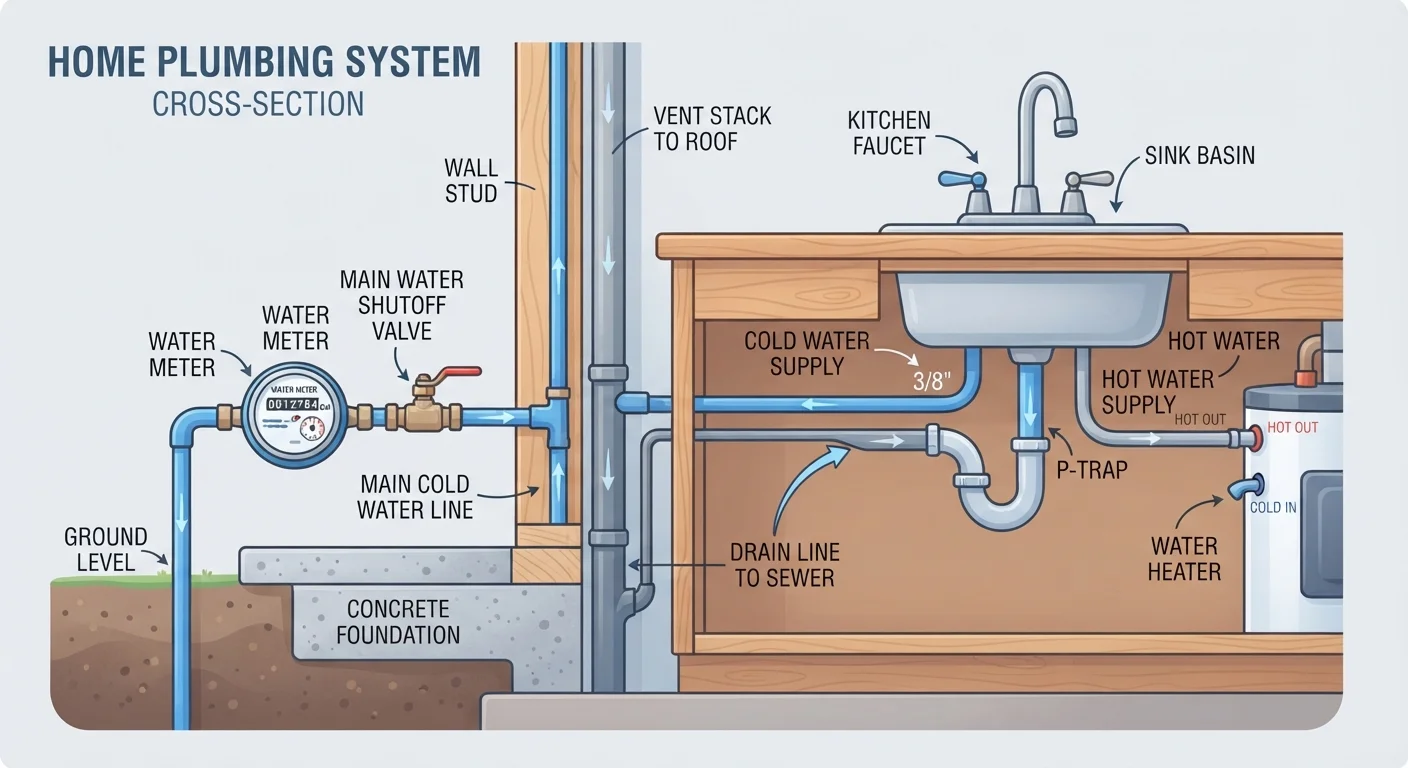
Photo: AnswersSquad.com | Explore Insightful Blogs editorial
Key Takeaways
- Knowing where your main shutoff valve is can prevent serious water damage in an emergency.
- Most homes have both a main shutoff and individual fixture shutoffs - learn both.
- Low or high water pressure can signal underlying problems worth investigating early.
- Running toilets and dripping faucets are often DIY-friendly fixes that save water and money.
- Work involving pipes inside walls, gas lines, or water heaters should always go to a licensed professional.
How Your Home's Water System Works
Your home's plumbing operates on a straightforward principle: pressurized water comes in from a municipal supply line or a private well, distributes to fixtures throughout the house, and wastewater exits through a drain-waste-vent (DWV) system connected to a sewer or septic tank.
These two systems - supply and drainage - run parallel but never mix. The supply side is always under pressure, which is how water reaches upper floors and fixtures. The drainage side relies on gravity and venting (pipes that allow air in so water flows out smoothly).
Understanding this basic layout helps you interpret what's happening when something goes wrong - whether that's a slow drain, a pressure drop, or an unexpected leak. See our First-Year Homeowner's Maintenance Calendar to understand when plumbing checks fit into your broader upkeep routine.
Main shutoff valve
A single valve that stops all water flow into your home. Closing it is the first step in any plumbing emergency.
Water pressure (PSI)
The force at which water moves through your pipes, measured in pounds per square inch. Too high or too low can cause problems.
Drain-waste-vent (DWV) system
The network of pipes that carries wastewater out of your home and uses air vents to ensure drainage flows smoothly.
Pressure-reducing valve (PRV)
A device installed on the main supply line that lowers incoming water pressure to a safe, manageable level for household use.
Fixture shutoff valve
A small valve located near each sink, toilet, or appliance that lets you cut water to just that fixture without shutting off the whole house.
Flapper
A rubber seal inside a toilet tank that opens to release water when you flush and closes again to stop the flow. A worn flapper is a common cause of a running toilet.
Shutoff Valves: Where They Are and Why They Matter
One of the most important things you can do as a new homeowner is locate every shutoff valve in your home before a problem occurs. In a plumbing emergency - a burst pipe, an overflowing toilet, a fixture leak - knowing where to cut the water is the difference between a minor repair and significant water damage.
Main Shutoff Valve
This valve controls water flow to the entire house. It's typically found where the supply line enters the foundation, in a basement or utility room, or near an exterior wall. Turn it clockwise to close. Test it annually to make sure it actually moves - valves left untouched for years can seize.
Fixture and Appliance Shutoffs
Every sink, toilet, and appliance with a water connection should have its own shutoff valve nearby - usually under the sink or behind the toilet. These let you isolate a single fixture without cutting water to the whole house. Locate each one and confirm it turns freely.
Make a Simple Shutoff Map
Water Pressure: Reading the Signs
Residential water pressure is generally measured in pounds per square inch (PSI). A typical healthy range for most homes is 40-80 PSI. Pressure outside that range can cause real problems over time.
- Low pressure at a single fixture usually means a clogged aerator (the small screen on the faucet tip) or a partially closed shutoff valve nearby. Both are easy to check yourself.
- Low pressure throughout the home may point to a pressure regulator that needs adjustment, sediment buildup in older pipes, or an issue with the municipal supply. A plumber should investigate persistent whole-home low pressure.
- High pressure stresses pipe joints, fittings, and appliance connections, and can shorten the life of water heaters and washing machine hoses. A pressure-reducing valve (PRV) is the standard fix - installation is typically a job for a licensed plumber.
An inexpensive water pressure gauge (available at most hardware stores) screws onto an outdoor hose bib and gives you a reading in seconds. It's a useful diagnostic tool to have on hand.
Common Minor Issues You Can Handle Yourself
Not every plumbing problem requires a service call. These are the issues homeowners most commonly resolve themselves - with the right knowledge and appropriate caution.
Dripping Faucets
A steady drip can waste a surprising amount of water over time. Most drips are caused by a worn washer or O-ring inside the faucet. Shut off the fixture's supply valve first, then follow the disassembly process specific to your faucet type (ball, cartridge, ceramic disc, or compression). Replacement parts are widely available.
Running Toilets
If your toilet runs continuously after flushing, the culprit is usually a worn flapper that doesn't seat properly, or a float set too high, causing water to spill into the overflow tube. Both parts are inexpensive and straightforward to replace without specialized tools.
Slow Drains
Hair, soap, and debris accumulate over time. A drain snake or a simple cup plunger handles most slow drains safely. Avoid pouring boiling water down PVC pipes, and be cautious with chemical drain cleaners - they can damage older pipes and are hazardous materials.
For a broader look at how water can affect your home's structure, our guide on waterproofing and drainage fundamentals covers what to watch for around your foundation and exterior.
Don't Ignore Small Leaks
When to Call a Licensed Plumber
Knowing your limits is just as important as knowing what you can handle. Certain plumbing tasks carry real risk of injury, property damage, or code violations if performed incorrectly - and many require permits and inspections under local building codes.
Always hire a licensed plumber for:
- Any work inside walls, floors, or ceilings that involves cutting into or rerouting pipes
- Water heater installation, replacement, or repair (especially gas-fueled units)
- Sewer line inspections, repairs, or replacements
- Installing or adjusting a pressure-reducing valve
- Connecting new supply or drain lines for added fixtures or appliances
Before hiring, verify that the plumber holds a current license in your state and carries liability insurance. Ask for a written estimate that details both labor and materials. Many jurisdictions require permits for certain plumbing work - a reputable plumber will handle this for you or advise you clearly about what's needed.
Staying proactive about small issues helps prevent larger, more expensive problems. For a structured approach, the home maintenance schedule explainer can help you build a consistent routine. And if you've heard that skipping plumbing inspections saves money, our piece on common home maintenance myths may change your perspective.
This article provides general educational information about residential plumbing. It is not a substitute for professional advice. Always consult a licensed plumber for diagnosis, repairs requiring permits, or any work involving gas lines, structural components, or systems you are not fully confident handling safely.
Frequently Asked Questions
The content provided on our blog site traverses numerous categories, offering readers valuable and practical information. Readers can use the editorial team’s research and data to gain more insights into their topics of interest. However, they are requested not to treat the articles as conclusive. The website team cannot be held responsible for differences in data or inaccuracies found across other platforms. Please also note that the site might also miss out on various schemes and offers available that the readers may find more beneficial than the ones we cover.