
Why Cheap Upfront Often Costs More Over Time

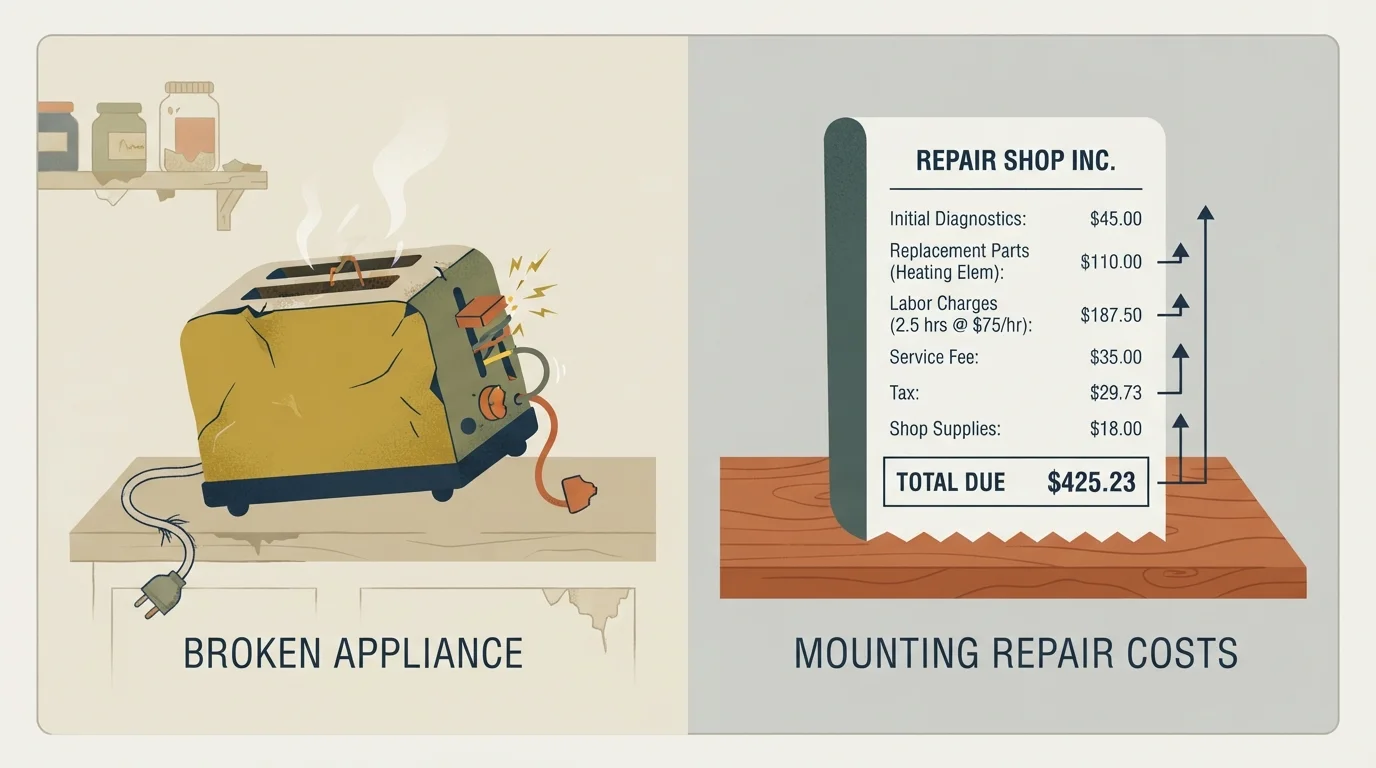
Photo: AnswersSquad.com | Explore Insightful Blogs editorial
Key Takeaways
- Sticker price is only one component of what a purchase actually costs you.
- Recurring costs — maintenance, energy, consumables — often dwarf the original purchase price.
- Calculating cost-per-use reveals value more accurately than comparing list prices.
- Lower-quality items tend to fail sooner, creating replacement cycles that multiply spending.
- Consulting total cost of ownership before buying is a habit that compounds savings over time.
The Sticker Price Trap
When you're watching your budget, a lower price tag naturally feels like a win. But the purchase price is just the entry fee — what happens afterward determines whether you actually saved money. This gap between upfront cost and lifetime cost is where a lot of spending decisions quietly go wrong.
The concept at work here is total cost of ownership (TCO): the sum of every dollar a product will demand from you over its useful life. Maintenance, energy consumption, consumable parts, repairs, and eventual replacement all count. Ignoring these downstream expenses is one of the most common ways shoppers underestimate what they're committing to. For a deeper look at how this plays out in a high-stakes purchase, see the true cost of owning a car beyond the sticker price.
2–4×
Lifetime cost vs. purchase price for major appliances
Consumer energy and maintenance analyses consistently find that operating costs over an appliance's lifespan often exceed the original purchase price by a factor of two to four, depending on the category.
~30%
Energy cost difference between efficiency tiers
Studies of appliance energy ratings regularly show that products in the lowest efficiency tier can cost 20–35% more annually to operate than equivalently sized models in higher efficiency categories.
2×
Replacement frequency for budget vs. mid-range goods
Durability research in categories like footwear, furniture, and small appliances suggests lower-tier products often require replacement roughly twice as often as mid-range alternatives.
Where Hidden Costs Accumulate
Most ongoing costs fall into a few predictable categories:
- Energy and fuel: A cheaper appliance or vehicle often achieves its low price by using less efficient components. Over years of use, the difference in energy bills can exceed the original price gap.
- Consumables and supplies: Printers, razors, and coffee machines are classic examples of products priced low to lock buyers into expensive proprietary consumables. The hardware is almost a loss-leader.
- Maintenance and repairs: Lower build quality typically means more frequent breakdowns. Parts availability can also be limited for budget products, raising repair costs or forcing early replacement.
- Replacement cycles: An item that lasts five years instead of ten means buying twice. Even if each purchase is cheap, the compounding effect of repeated replacement erodes any initial savings.
Cost-per-use and unit pricing metrics are practical tools for surfacing these dynamics before you buy, not after.
How to Run a Simple TCO Estimate
You don't need a spreadsheet to do this well. A rough TCO estimate takes three inputs:
- Purchase price — what you pay today.
- Annual running costs — energy, maintenance, consumables, insurance if applicable. Multiply by expected years of use.
- Replacement or disposal costs — what it'll cost when the item reaches end of life.
Add these together and you have a working TCO. Then compare that figure across your options — not just the sticker prices. This is the same logic explored in why cheap-now-replace-later often costs more, applied to furniture and home goods.
Ask the Right Question Before Buying
It's also worth asking whether a lower price reflects a genuine efficiency or a cost shifted elsewhere — onto you, over time.
When the Low Price Is Actually Justified
TCO analysis isn't an argument for always buying the most expensive option. In some categories, cheaper alternatives genuinely hold up. Generic and store-brand products often match quality benchmarks in categories where formulation or specification is standardized — and where ongoing costs are essentially zero.
The key question is whether the lower price reflects a real trade-off or just a brand markup. Items with short intended lifespans, infrequent use, or low failure consequences are also reasonable candidates for budget options. The discipline is in applying the same TCO lens consistently — not assuming cheap is always bad, but not assuming it's always fine either.
For purchases involving financing, the cost picture gets more complicated. Interest charges effectively add a premium to the purchase price that's easy to overlook when you're focused on monthly payments. The budgeting basics hub covers frameworks for factoring borrowing costs into your overall spending plan.
This article is for general informational and educational purposes only and does not constitute financial advice. Consult a qualified financial professional for guidance specific to your situation.
Frequently Asked Questions
The content provided on our blog site traverses numerous categories, offering readers valuable and practical information. Readers can use the editorial team’s research and data to gain more insights into their topics of interest. However, they are requested not to treat the articles as conclusive. The website team cannot be held responsible for differences in data or inaccuracies found across other platforms. Please also note that the site might also miss out on various schemes and offers available that the readers may find more beneficial than the ones we cover.