
Why 'Cheap Now, Replace Later' Often Costs More in the Long Run

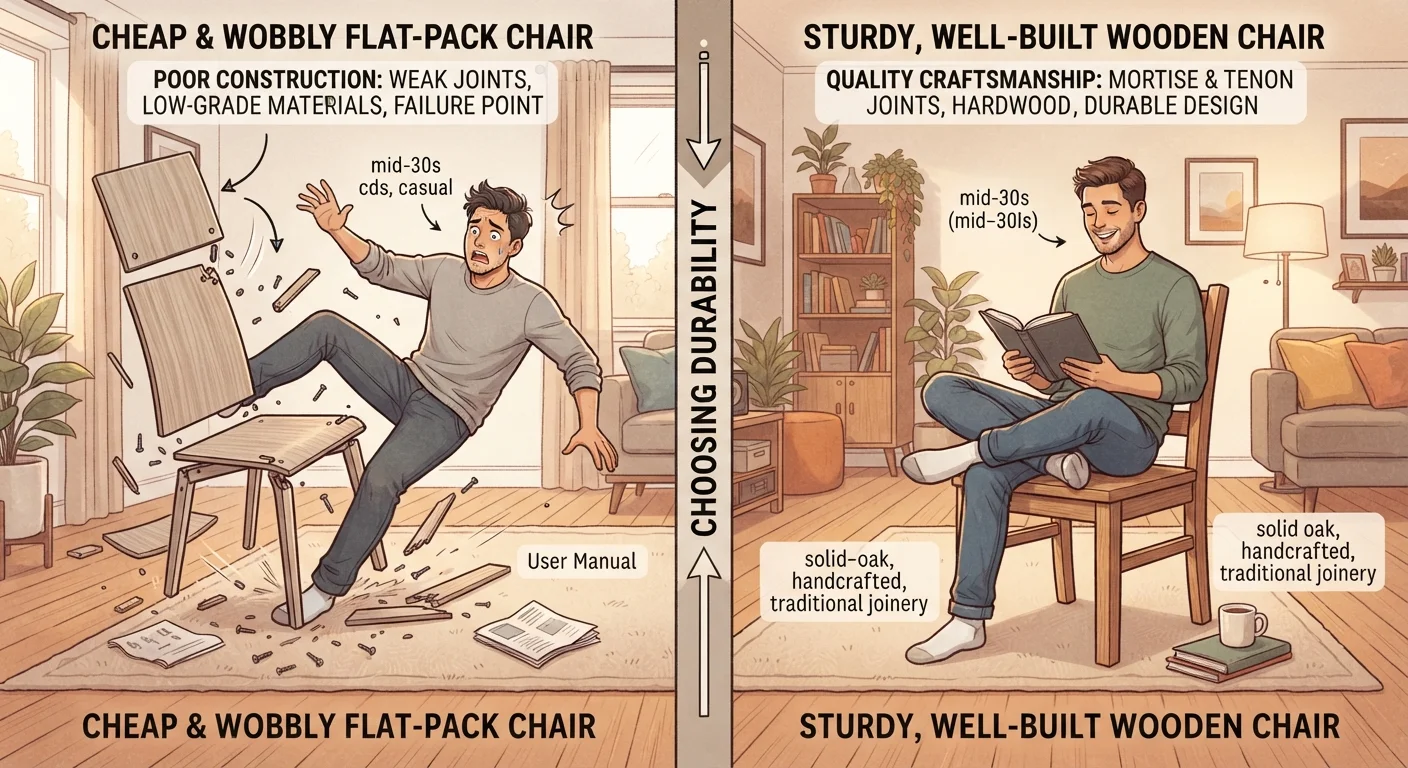
Photo: AnswersSquad.com | Explore Insightful Blogs editorial
Key Takeaways
- Buying the cheapest version of a furniture item often leads to repeated replacement costs that exceed a mid-range purchase.
- Total cost of ownership - not sticker price - is the number that matters most for your budget.
- Durable, repairable pieces tend to hold their value longer, especially in small or frequently moved-to spaces.
- Knowing when a low-cost item is genuinely sufficient versus a false economy requires asking a few simple questions before you buy.
- Some furniture categories reward quality investment far more than others - knowing which saves money overall.
The Logic That Sounds Right - Until It Doesn't
When you're setting up a first apartment on a tight budget, buying the cheapest available option feels like financial discipline. The reasoning is familiar: get something functional now, and upgrade once you're more settled or earning more. On paper, this is sensible. In practice, the maths frequently works against you.
The core issue is that low-cost furniture is often priced low precisely because it's built to shorter tolerances - thinner materials, weaker joinery, less durable finishes. That's not a moral failing of the product; it's an honest trade-off. The problem arises when buyers treat that trade-off as temporary but end up repeating the same purchase cycle every year or two.
Understanding the real difference between price and value is the first step to breaking this pattern. Price is what you pay at checkout. Value is what you get across the full lifespan of the item.
Myth
Buying cheap now and upgrading later is always the smarter budget move.
Fact
Repeated low-cost purchases often cost more in total than a single mid-range purchase bought with longevity in mind.
The upgrade-later plan only works if the cheap version genuinely bridges the gap without needing replacement. In reality, entry-level furniture in high-use categories - bed frames, desk chairs, sofas - frequently fails within 12-24 months of regular use. Each replacement resets your spending clock without building any lasting asset. A mid-range piece bought once and kept for five or more years nearly always comes out ahead on a per-year cost basis.
Myth
A lower sticker price always means you're spending less overall.
Fact
Sticker price and total cost are different figures; only total cost - including replacements, repairs, and disposal - gives an accurate picture.
Consider a desk chair purchased for $60 that needs replacing after 18 months versus one purchased for $150 that lasts five years. Over five years, the cheaper route costs approximately $240 in chairs alone - and that excludes disposal time and effort. Thinking in annual cost rather than purchase price changes the comparison entirely.
Myth
All cheap furniture is equally short-lived, so it doesn't matter which low-cost item you choose.
Fact
Build quality varies significantly even within budget price ranges; material and construction choices matter more than price tier alone.
Within the same price band, solid wood or metal-framed items consistently outlast particleboard or hollow-core alternatives. Checking for corner blocks in chairs, confirming drawer dovetail or box joinery, and testing wobble before purchase - or reading detailed construction descriptions when buying online - can meaningfully extend the life of a budget purchase. Not all inexpensive furniture is identical in durability.
Myth
You can always recoup some money by selling old furniture when you upgrade.
Fact
Most entry-level flat-pack furniture has little to no resale value by the time it's ready to be replaced.
Secondhand markets for worn particleboard furniture are thin. By the time an entry-level piece is visibly failing - swollen edges, wobbly joints, peeling laminate - its resale value is effectively zero. Solid wood or metal pieces, by contrast, often retain meaningful resale value for years and are far more likely to find a secondhand buyer. Factoring in realistic resale value (not optimistic resale value) gives a more honest upgrade-later calculation.
Myth
Spending more on furniture is only worth it if you own your home.
Fact
Renters who move frequently can benefit even more from durable, well-built pieces that survive multiple moves intact.
Moving is physically demanding on furniture. Particleboard pieces are particularly vulnerable to disassembly and reassembly cycles - joints loosen, cam locks strip, and panels chip. Renters who relocate every one to two years often find that a durable, solid-construction piece travels intact while a cheaper equivalent doesn't survive the second move. For renters, longevity across moves - not just longevity in place - is the relevant measure.
Where the Hidden Costs Actually Show Up
Replacement isn't the only cost that accumulates. There are secondary expenses most first-time buyers don't anticipate.
- Disposal fees: Getting rid of broken furniture - especially large pieces - can cost money, whether that's a junk removal service, a vehicle rental, or time spent hauling to a donation center that may not accept damaged goods.
- Time: Re-researching, re-ordering, re-assembling, and re-arranging is a real cost. Doing it twice or three times compounds quickly.
- Opportunity cost: Money spent on a second cheap sofa is money not available for an emergency fund, a security deposit, or a genuinely durable piece you'll keep for a decade.
This dynamic is especially relevant for furniture categories that take daily physical stress: bed frames, desk chairs, sofas, and dining chairs. These are the pieces most likely to fail quickly at the entry price point. Items like bookshelves, side tables, and storage bins are often better candidates for a budget approach because they face less structural load. Exploring home maintenance myths that cost owners unnecessary money can also reveal where similar false economies hide in upkeep decisions.
2-3×
Typical replacement frequency of budget vs. mid-range furniture
Consumer research on furniture lifecycle consistently finds that entry-level upholstered and flat-pack pieces require replacement two to three times as often as mid-range equivalents over a ten-year period.
$150+
Average junk removal cost for large furniture items
Junk removal services in major U.S. metropolitan areas typically charge $100-$200 or more for a single large furniture pickup, a cost that compounds each replacement cycle.
How to Decide Before You Buy
None of this means always spend more. It means ask better questions before committing.
- How often will this item be used daily? High-use items reward higher build quality more than occasional-use pieces.
- How long do I realistically need this to last? If you're six months from a move, a low-cost option may genuinely make sense. If you're settling in for three or more years, the maths shift.
- Can this item be repaired? Solid wood furniture can be re-glued, re-finished, or re-upholstered. Particleboard typically cannot. Repairability dramatically extends useful life.
- What's the total cost if I replace it once? Double the sticker price mentally and compare that to a mid-range option. Sometimes the gap closes or reverses.
For a broader framework on evaluating purchases this way, the total cost of ownership concept is a useful lens to apply before any significant buy. And if you genuinely only need something for a short period, renting rather than buying may be the most honest solution of all.
The Replacement Cycle Is the Real Budget Leak
The content provided on our blog site traverses numerous categories, offering readers valuable and practical information. Readers can use the editorial team’s research and data to gain more insights into their topics of interest. However, they are requested not to treat the articles as conclusive. The website team cannot be held responsible for differences in data or inaccuracies found across other platforms. Please also note that the site might also miss out on various schemes and offers available that the readers may find more beneficial than the ones we cover.