
Travel Myths About Cheap Destinations That Keep People Home

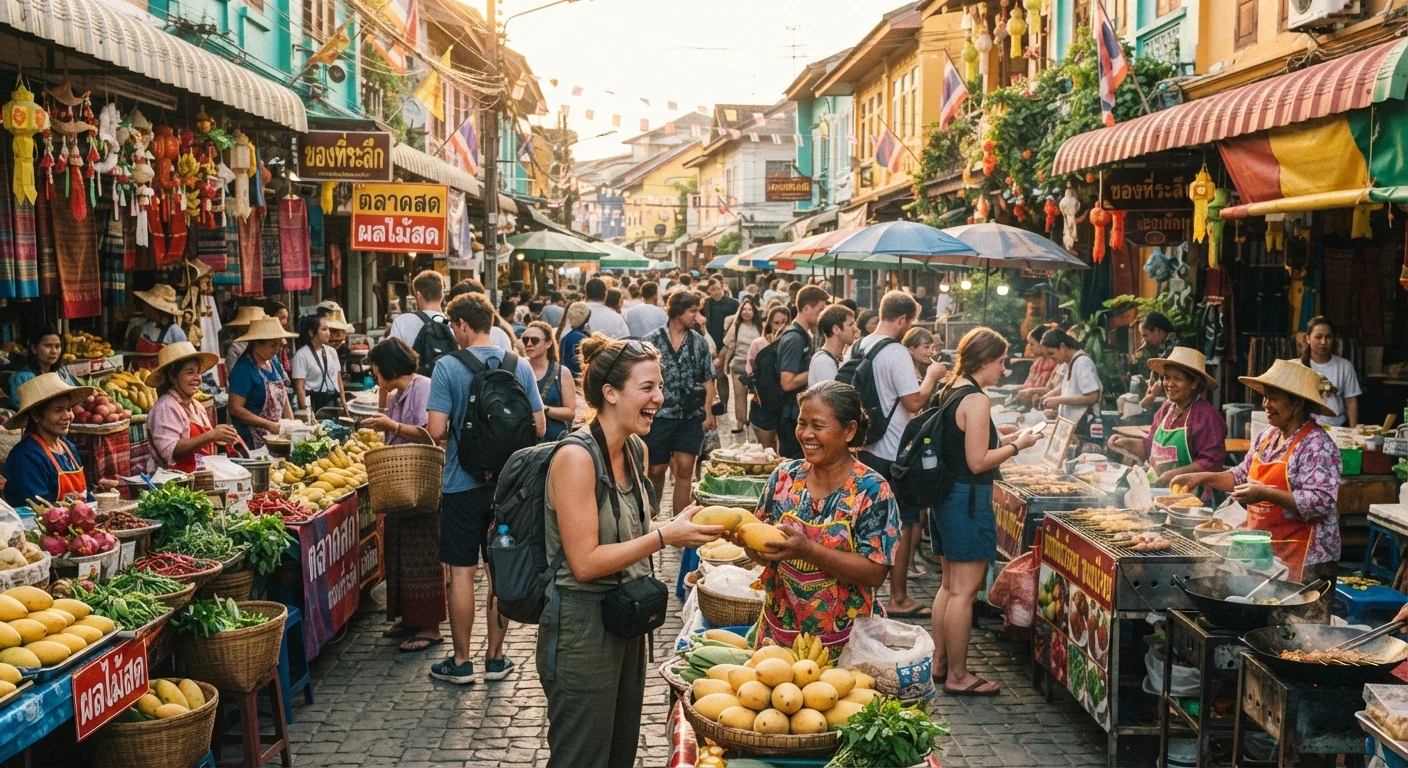
Photo: AnswersSquad.com | Explore Insightful Blogs editorial
Key Takeaways
- Low cost-of-living destinations are not automatically unsafe — safety varies by specific area and behavior.
- Affordable countries often have well-developed tourist infrastructure, including reliable transit and quality lodging.
- "Cheap" destinations frequently offer genuine cultural depth, not stripped-down or inferior experiences.
- Language barriers are manageable; most popular budget destinations have English-speaking tourism services.
- Hidden costs exist everywhere — doing pre-trip research prevents budget surprises regardless of destination.
Why These Myths Stick — And What They Cost You
Certain ideas about affordable travel destinations have circulated long enough that they feel like common sense. "That country is dangerous." "The food will make you sick." "There's nothing to do there." For many young Americans, these assumptions function as a quiet veto — killing trip ideas before any real research happens.
The problem is that most of these beliefs are either outdated, overgeneralized, or based on anecdote rather than evidence. They also tend to cluster around destinations that happen to be affordable, creating a mental shorthand that equates low price with low quality or high risk. That's a costly misreading — in terms of experiences missed and trips never taken.
Understanding where these myths come from, and what the actual picture looks like, is the first step toward traveling more confidently. As you'll see below, the gap between perception and reality is often significant. For a deeper look at why cost comparisons between countries are more nuanced than they appear, see why "cheap" varies by country.
Myth
Cheap destinations are dangerous — that's why they're cheap.
Fact
Price and safety are not reliably correlated. Many affordable destinations have strong safety records in their tourist areas.
Cost of living — not crime rates — is the primary driver of a destination's affordability. Countries where local wages are lower, food is grown domestically, and accommodation isn't priced for luxury markets will simply cost less per day. The U.S. State Department issues country-specific and region-specific travel advisories, and many of the world's most wallet-friendly destinations sit at Level 1 (exercise normal precautions) or Level 2 (exercise increased caution — the same advisory applied to parts of Western Europe). Blanket assumptions about danger based on price alone cause travelers to avoid places that are statistically safer than cities they visit at home.
Myth
Affordable countries have poor infrastructure — expect unreliable transport and bad accommodation.
Fact
Many budget-friendly destinations have invested heavily in tourism infrastructure, with reliable transit and quality lodging options at multiple price points.
Countries that depend significantly on tourism revenue — including much of Southeast Asia, Central America, and Eastern Europe — have strong economic incentives to maintain functioning transportation networks and accommodation standards. Destinations like Vietnam, Portugal, and Colombia have seen substantial infrastructure investment tied to tourism growth. What varies is type of infrastructure, not necessarily quality. Overnight sleeper trains, shared minibuses, and guesthouses are different from business-class transit, but they're not inferior — and for many travelers, they're a more authentic way to move through a place. Read reviews, check recent traveler reports, and set accurate expectations rather than defaulting to the assumption that affordable equals unreliable.
Myth
There's nothing to do in cheap destinations — the good stuff is all in expensive places.
Fact
Many of the world's most culturally and naturally rich destinations are also among the most affordable.
The assumption that cultural depth comes with a premium price tag doesn't hold up to scrutiny. Regions like underrated Latin America destinations offer archaeological sites, biodiversity, and living cultural traditions that rival anything on a European tour itinerary — often at a fraction of the cost. Similarly, budget-friendly beach destinations in Southeast Asia and the Caribbean deliver scenery and marine life comparable to luxury resort coastlines. The issue isn't scarcity of experiences — it's that affordable destinations receive less travel media coverage, making them feel smaller than they are.
Myth
You'll get sick from the food if you travel somewhere cheap.
Fact
Foodborne illness risk depends on hygiene practices and traveler behavior, not a destination's price level.
Street food in Bangkok, Oaxaca, or Hanoi is not categorically riskier than restaurant food in a major U.S. city. Food safety depends on preparation practices: whether ingredients are fresh, whether surfaces and utensils are clean, and whether food is cooked to safe temperatures. Busy street stalls with high turnover and visible cooking processes are often safer than empty restaurants with slow-moving inventory. Basic precautions — eating at busy spots, avoiding raw ingredients in high-risk areas, and staying hydrated with safe water — reduce risk significantly. Travelers with digestive concerns should consult a travel medicine clinic before departure for destination-specific guidance.
Myth
Language barriers make budget destinations too difficult to navigate.
Fact
Most popular budget destinations have English-speaking tourism infrastructure, and translation tools have made independent travel easier than ever.
Tourist hubs in affordable destinations — hostels, guesthouses, popular markets, tour operators — typically have English-speaking staff precisely because international travelers are their core business. Beyond that, translation apps capable of real-time camera translation of menus, signs, and written text have substantially reduced the practical friction of navigating a non-English-speaking country. Learning a handful of key phrases in the local language is still a worthwhile courtesy, but it's far from a prerequisite for a functional trip. Language difference is an obstacle that scales down quickly with minimal preparation — it's not a reason to avoid a destination.
Myth
If a destination is cheap, you can't really have a comfortable or enjoyable trip there.
Fact
Comfort is about matching expectations to context — affordable destinations offer genuine comfort at lower price points.
"Comfortable" is relative, and conflating it with luxury pricing leads to avoidable disappointment in both directions. A well-reviewed guesthouse in Chiang Mai or a boutique hostel in Medellín can offer clean rooms, fast Wi-Fi, and a sociable atmosphere for a fraction of what a mid-range hotel in a major U.S. city costs. The traveler who arrives expecting the same product at a lower price will be frustrated; the one who researches what a destination's hospitality actually looks like will generally find it suits their needs. Comfort in budget travel is achievable — it just requires accurate expectations and solid pre-trip research, not a bigger budget.
What to Actually Research Before Writing Off a Destination
The antidote to travel myths isn't blind optimism — it's targeted research. Before dismissing a destination as unsafe, uncomfortable, or not worth the effort, it helps to ask more specific questions.
160+
Countries rated Level 1 or 2 by U.S. State Dept.
The U.S. State Department's tiered advisory system shows that the majority of the world's nations — including many affordable destinations — carry standard or moderate precaution ratings, not high-risk designations.
~$40–60
Estimated daily travel budget in SE Asia
Experienced independent travelers in Southeast Asian countries such as Vietnam, Cambodia, and Thailand commonly report comfortable daily budgets in this range, covering accommodation, food, and local transport.
On safety: Check the U.S. State Department's travel advisories (travel.state.gov), which break risk down by region within a country — not just by country-wide labels. A nation with a Level 3 advisory in one province may have Level 1 conditions in its most-visited areas. Always verify current conditions before booking.
On costs: Affordable flights to a destination can be offset by expensive internal transport, visa fees, or mandatory travel insurance. Running the full budget before you commit is non-negotiable. Our pre-booking checklist walks through exactly what to verify. It's also worth reviewing common hidden costs that derail tight budgets before finalizing any itinerary.
On experience: Travel forums, recent blog posts (look for ones dated within 12 months), and destination-specific subreddits tend to give more grounded pictures than tourism board marketing. Cross-referencing a few independent sources is more reliable than relying on any single account.
The goal isn't to convince yourself a place is perfect. It's to replace vague fear with accurate information — which almost always leads to a more realistic, and often more encouraging, assessment than the myth suggested. For more on separating budget travel fact from fiction, common myths first-timers believe is worth a read before your next planning session.
The content provided on our blog site traverses numerous categories, offering readers valuable and practical information. Readers can use the editorial team’s research and data to gain more insights into their topics of interest. However, they are requested not to treat the articles as conclusive. The website team cannot be held responsible for differences in data or inaccuracies found across other platforms. Please also note that the site might also miss out on various schemes and offers available that the readers may find more beneficial than the ones we cover.