
Eating Well Abroad Without Spending Like a Tourist

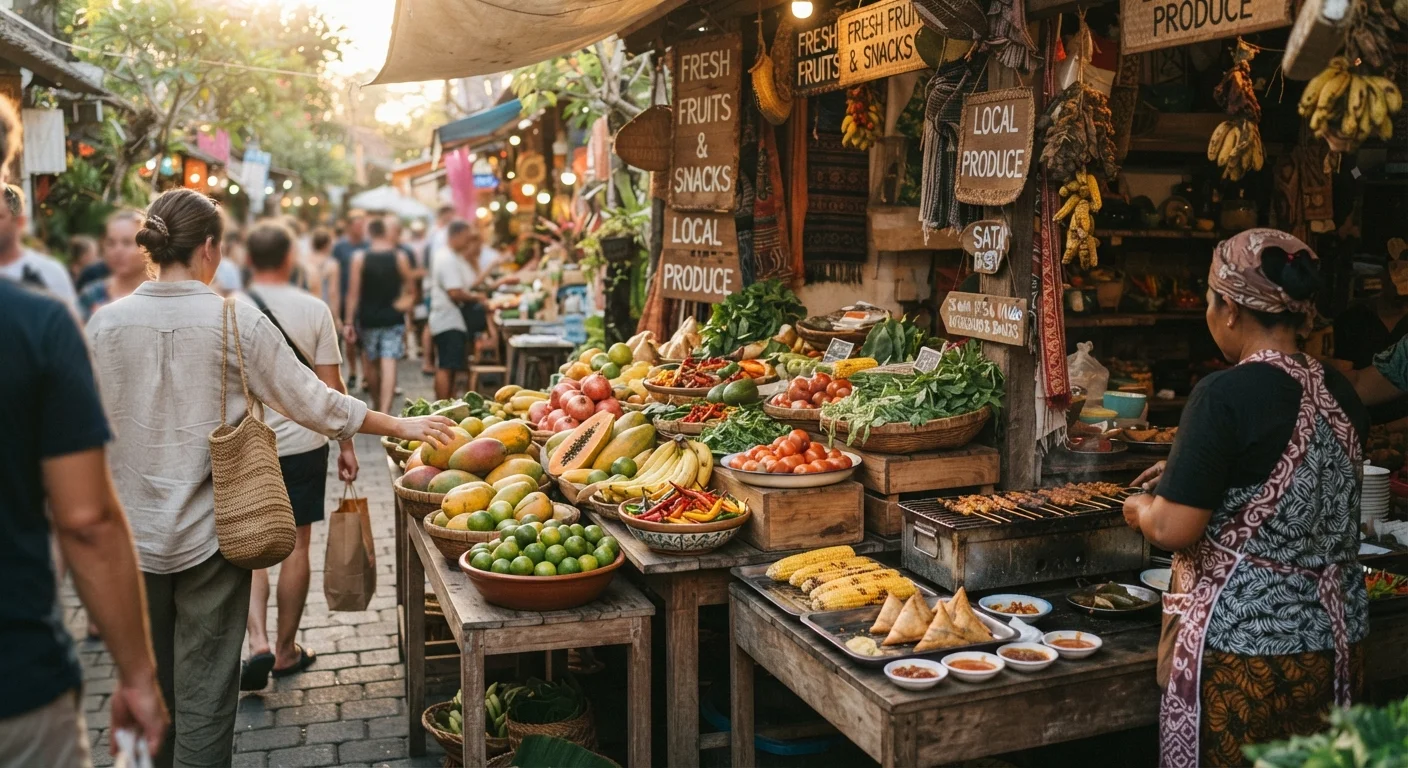
Photo: AnswersSquad.com | Explore Insightful Blogs editorial
Key Takeaways
- Eating where locals eat — not where tourists congregate — is the single most reliable way to cut food costs.
- Markets and street food stalls typically offer the most authentic meals at a fraction of restaurant prices.
- Adjusting when you eat (not just where) can significantly reduce your daily food spend.
- Building one or two self-catered meals per day into your routine dramatically lowers overall trip costs.
- Understanding a destination's tipping and pricing culture prevents avoidable overspending.
- Food budgets vary widely by region — benchmarking before you arrive helps you set realistic expectations.
Why Food Is the Budget Line Most Travelers Get Wrong
Accommodation and flights get all the pre-trip attention, but food is where travel budgets quietly bleed out. Three sit-down meals a day in tourist-facing restaurants can consume a disproportionate share of your daily spend — sometimes more than your bed for the night. The good news: food is also the most flexible cost category you control in real time, meal by meal.
The strategies below aren't about deprivation. They're about understanding how pricing actually works in a given place, and making choices that put more of your money toward experience rather than markup. If you're still building out your overall trip budget, the guide to building a realistic travel budget from scratch is a solid starting point before diving into food-specific tactics.
Eat where the locals actually go
Restaurants near major tourist attractions price for tourists — that's a straightforward business decision, not a conspiracy. A ten-minute walk away from the main square or waterfront will typically land you in a neighborhood where menus are priced for local incomes. Look for places with handwritten menus, no photos on the menu, and a clientele that isn't predominantly made up of people with backpacks and cameras.
In many countries, the lunch hour is when locals eat their main meal. A set lunch menu (often called a menú del día, prix fixe, or daily special depending on the region) frequently offers multiple courses at a price that would barely cover a single entrée at a tourist spot. Shift your heaviest meal to midday and you'll often eat better for less.
A ten-minute walk from the main square can cut your meal cost in half.
Treat markets as your primary food source
Covered markets, wet markets, and street food areas are where the most authentic and affordable meals often live. Vendors in these settings operate on volume and low overhead, which means prices closer to what locals actually pay. Many large city markets have prepared food sections where you can eat a full, freshly cooked meal standing at a counter for a fraction of what a nearby café charges.
Beyond prepared food, fresh produce sections let you build a self-catered meal for very little. Bread, fruit, cheese, cured meats, and local snacks assembled from market stalls can make a genuinely satisfying lunch that costs almost nothing relative to a sit-down alternative. Markets also give you direct exposure to local ingredients and food culture in a way no restaurant can replicate.
Markets let you eat like a local and skip the restaurant markup entirely.
Build at least one self-catered meal into each day
You don't need a full kitchen to make this work. A hostel common room, a park bench, or a hotel room with a kettle covers most of what you need. Breakfast is the easiest meal to handle yourself: local bread, yogurt, fruit, and instant coffee from a nearby shop costs a fraction of a café breakfast and takes less time than waiting for table service.
If your accommodation has any kitchen access, cooking dinner occasionally can generate real savings — particularly on longer trips where daily meal costs compound quickly. Even in places where eating out is very inexpensive, having one self-catered meal per day keeps your food budget predictable and frees up money for experiences you'd otherwise skip.
One self-catered meal per day can free up meaningful money over a week-long trip.
Understand the pricing structure before you order
Cover charges, bread charges, and service fees are standard practice in some countries and nonexistent in others. In parts of Southern Europe, sitting down at a café table automatically triggers a seating surcharge — standing at the bar costs less. In some destinations, the price listed on the menu doesn't include tax or a mandatory service charge that appears only on the bill.
Reading the full menu carefully, including the small print at the bottom, before ordering avoids the frustration of a bill that's 20–30% higher than expected. If you're unsure, ask. This isn't rude — it's how locals navigate the same system. Understanding the tipping norm for each country also matters: over-tipping in places where it isn't expected doesn't help locals and it does hurt your budget.
Hidden charges and tipping norms can add 20–30% to a bill if you don't check first.
Drink strategically — beverages inflate bills fast
Bottled water, soft drinks, and alcohol at tourist-facing restaurants can cost more than the food itself in certain destinations. Tap water safety varies by country and region — verify local advice before assuming it's drinkable, but where it is safe, carrying a refillable bottle eliminates a recurring cost entirely.
Alcohol markups at restaurants are consistently steep. If you want to drink, buying from a local shop and consuming before or after a meal (where local laws and context permit) is a common way budget travelers manage this cost. Similarly, coffee ordered at the counter in many European countries costs a fraction of table service. Small beverage decisions, repeated daily, add up over a trip more than most travelers anticipate.
Beverages at sit-down restaurants can cost more than your entire meal at a market stall.
Learn a few words of the local language around food
Menus in tourist areas are routinely translated, often imperfectly, and priced up accordingly. Menus written only in the local language are a strong indicator you're in a place that serves locals. Being able to read or ask about a few basic dishes, understand portion descriptions, or simply communicate a preference without defaulting to an English-language tourist menu opens up a wider and more affordable range of options.
Even minimal effort — learning how to ask for the daily special, how to say you'd like tap water, or how to confirm whether service is included — signals genuine engagement with a place. It also tends to result in warmer service and, occasionally, small courtesies like an extra portion or a recommendation for where to eat next. It's a low-effort habit with consistent returns.
A menu in the local language only is often a reliable sign prices haven't been inflated for tourists.
Putting It Into Practice
None of these strategies require sacrifice — they require attention. Travelers who eat well on a tight budget aren't just lucky; they've learned to read a destination's food landscape quickly and adapt their habits accordingly. For regional context on what food realistically costs across budget-friendly destinations, the daily budget benchmarks for popular low-cost travel regions article gives useful reference ranges to plan against.
Benchmark food costs before you arrive
Food choices also connect to broader spending patterns. If you find yourself consistently overspending on meals, it's worth reviewing the financial habits that separate chronic over-spenders from savvy travellers — the same principles that apply to travel money generally show up clearly at the table.
The content provided on our blog site traverses numerous categories, offering readers valuable and practical information. Readers can use the editorial team’s research and data to gain more insights into their topics of interest. However, they are requested not to treat the articles as conclusive. The website team cannot be held responsible for differences in data or inaccuracies found across other platforms. Please also note that the site might also miss out on various schemes and offers available that the readers may find more beneficial than the ones we cover.