
Synthetic vs Conventional Motor Oil: What New Drivers Should Know

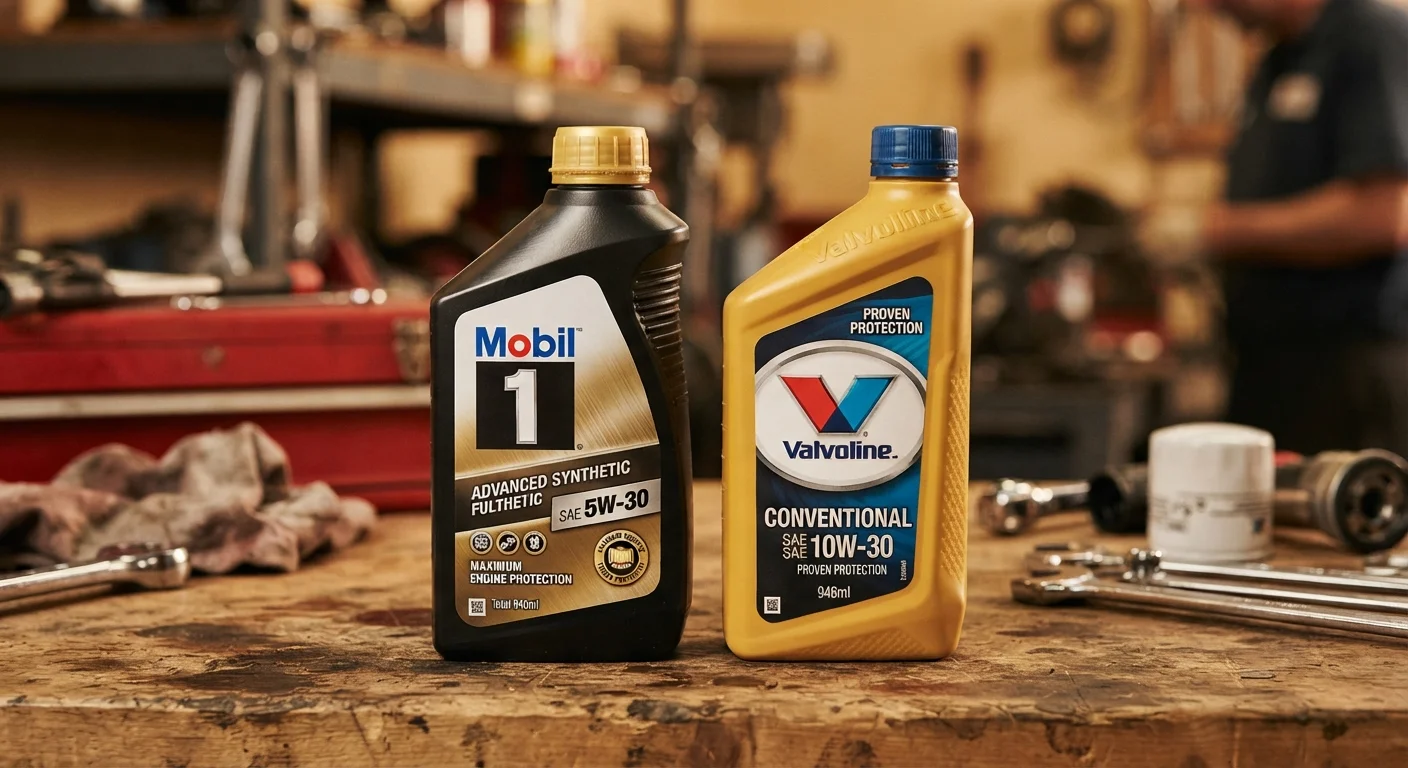
Photo: AnswersSquad.com | Explore Insightful Blogs editorial
Key Takeaways
- Synthetic oil is chemically engineered for better performance and longer change intervals than conventional oil.
- Conventional oil is refined from crude oil and costs less upfront, but typically requires more frequent changes.
- Your owner's manual - not oil marketing - should determine which type your engine requires.
- Using the wrong oil type or skipping changes entirely can cause lasting engine damage.
- Many modern vehicles are factory-filled with synthetic and designed to run on it.
What Each Oil Actually Is
Motor oil's job is straightforward: lubricate the hundreds of moving metal parts inside your engine so they don't grind each other to pieces. The difference between synthetic and conventional oil is about how that lubricant is made.
Conventional motor oil is refined from crude petroleum. It contains a mix of natural hydrocarbon molecules of varying sizes and shapes, along with additives to improve performance. Because it comes from a natural source, the molecule structure isn't perfectly uniform.
Synthetic motor oil is either fully synthesized from chemical compounds or heavily processed from a petroleum base (called a semi-synthetic or synthetic blend). The result is a more uniform molecular structure that engineers can tailor for specific performance properties - including resistance to heat, cold, and oxidation (the process that causes oil to break down and thicken over time).
Neither type does anything useful if it's the wrong viscosity grade for your engine. Viscosity describes how thick or thin the oil flows at different temperatures. For a deeper look at how those numbers on the bottle work, see our guide to oil grades and change intervals.
How They Compare on the Things That Matter
When choosing between the two, four factors deserve your attention: performance under temperature extremes, how long the oil lasts before it needs changing, cost, and what your specific vehicle actually requires.
| Criterion | Synthetic Motor Oil | Conventional Motor Oil |
|---|---|---|
| Source | Chemically engineered or heavily processed | Refined from crude petroleum |
| Typical change interval | 7,500-10,000+ miles (check your manual) | 3,000-5,000 miles (check your manual) |
| Cost per quart | Higher upfront | Lower upfront |
| Performance in extreme temperatures | Flows better in cold; resists breakdown in heat | Less stable at temperature extremes |
| Breakdown resistance | More resistant to oxidation and sludge | Degrades faster; more frequent changes needed |
| Required for some vehicles? | Yes - many modern engines require it | Sufficient for some older or simpler engines |
The price gap narrows when you factor in change frequency. Synthetic oil is typically recommended for change intervals of 7,500 to 10,000 miles or more (always defer to your owner's manual), while conventional oil is often recommended every 3,000 to 5,000 miles. More frequent changes mean more quarts purchased and more labor costs over time.
One common myth worth addressing: switching from conventional to synthetic will not cause your engine to leak. This idea originated decades ago when early synthetic formulas were occasionally incompatible with certain older seal materials. Modern synthetics are formulated to be compatible with standard engine seals. For more persistent maintenance myths, our breakdown of common car maintenance myths is worth a read.
The Rule That Overrides Everything Else
No article, no auto parts store employee, and no well-meaning friend should override your vehicle's owner's manual on oil selection. The manufacturer tested your specific engine extensively and specified an oil type and viscosity grade for good reason.
If your manual calls for synthetic, use synthetic - running conventional in its place can void your powertrain warranty and may not provide adequate protection. If your manual says conventional is acceptable, synthetic is generally a safe upgrade, but it's still worth confirming there are no compatibility notes specific to your model.
~50%
Share of new US vehicles factory-filled with synthetic oil
Industry estimates suggest roughly half of new passenger vehicles sold in the US now come from the factory with full synthetic oil, reflecting manufacturer preferences for tighter engine tolerances.
3,000 mi
Outdated oil change interval still widely believed
The 3,000-mile oil change rule originated with older engine designs and conventional oil formulas; most modern vehicles and oils support significantly longer intervals according to manufacturer guidance.
What genuinely causes engine damage is not choosing the "wrong" type between synthetic and conventional - it's neglecting oil changes entirely. Degraded oil loses its ability to lubricate, traps combustion byproducts, and can cause metal-on-metal wear that leads to expensive repairs. Learn what that process looks like in detail in our article on what happens inside your engine when you skip an oil change.
If you're unsure whether to handle an oil change yourself or take the car in, our guide on DIY maintenance vs. taking it to a mechanic can help you decide what's appropriate for your skill level and situation.
This article provides general educational information about motor oil types and is not a substitute for advice from a qualified mechanic or your vehicle manufacturer's specifications.
The content provided on our blog site traverses numerous categories, offering readers valuable and practical information. Readers can use the editorial team’s research and data to gain more insights into their topics of interest. However, they are requested not to treat the articles as conclusive. The website team cannot be held responsible for differences in data or inaccuracies found across other platforms. Please also note that the site might also miss out on various schemes and offers available that the readers may find more beneficial than the ones we cover.