
Small Space Furniture: Principles That Actually Work

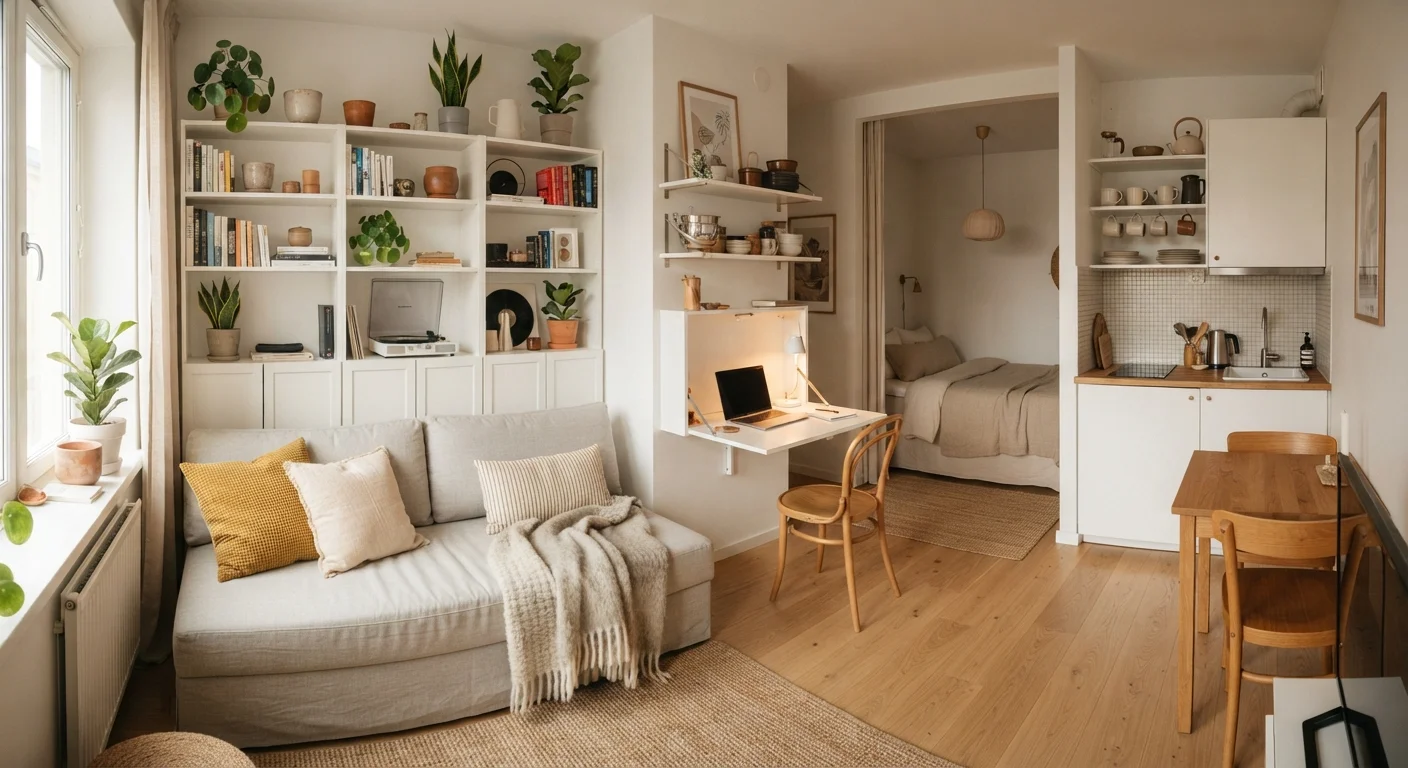
Photo: AnswersSquad.com | Explore Insightful Blogs editorial
Key Takeaways
- Multi-use furniture reduces clutter and maximizes function without requiring more floor area.
- Raised furniture legs create visual breathing room, making compact spaces feel larger.
- Measuring your room before buying is essential to avoid costly sizing mistakes.
- Vertical space is often underutilized - shelving and wall storage can replace bulky floor pieces.
- Scale and proportion matter more than square footage when arranging a small room.
Why Small-Space Furniture Is Its Own Discipline
Furnishing a compact apartment or a small first home isn't simply about buying less - it's about thinking differently. The standard advice (get a smaller sofa, use mirrors) barely scratches the surface. What actually works is a set of spatial principles that, once understood, reshape how you evaluate every piece before you buy it.
If you're just beginning the process, starting with priorities and a plan will save you from the most common early mistakes. This article picks up from there, focusing specifically on what makes furniture work - or fail - in rooms where space is limited.
Choose furniture that serves two or more functions at once.
Select furniture with exposed, raised legs rather than pieces that sit flush to the floor.
Use vertical space aggressively for storage and display.
Match furniture scale to the actual room dimensions before purchasing.
Limit the visual weight of pieces by favoring lighter colors, materials, and silhouettes.
Define zones within open or multipurpose rooms using rugs and furniture arrangement, not walls.
Quick Wins You Can Act On Today
Some spatial improvements don't require new furniture at all - they require better information or a simple swap. These actions are low-effort and immediately clarifying:
For deeper guidance on the measurement step - which is genuinely the most overlooked part of the process - see our guide to room measurements.
Making Informed Choices on a Realistic Budget
Small-space furniture done well doesn't have to be expensive, but it does require more careful decision-making than buying for a large room. In a bigger space, a misfit purchase can be moved to a corner or replaced later without much consequence. In a small room, one wrong piece dominates everything.
Renting? Check Before You Mount
Flat-pack furniture is a practical option for many renters and first-time owners, though it carries real trade-offs in durability and reassembly flexibility. Understanding what you gain and give up helps you decide when it makes sense and when it doesn't. Whatever you spend, the scale and function principles above apply equally to every price point - a well-chosen affordable piece will always outperform an oversized expensive one in a compact room.
This article provides general home furnishing guidance for informational purposes. Results will vary depending on room dimensions, building structure, lease terms, and individual circumstances.
The content provided on our blog site traverses numerous categories, offering readers valuable and practical information. Readers can use the editorial team’s research and data to gain more insights into their topics of interest. However, they are requested not to treat the articles as conclusive. The website team cannot be held responsible for differences in data or inaccuracies found across other platforms. Please also note that the site might also miss out on various schemes and offers available that the readers may find more beneficial than the ones we cover.