
Flat-Pack Furniture: The Trade-Offs Nobody Tells You About

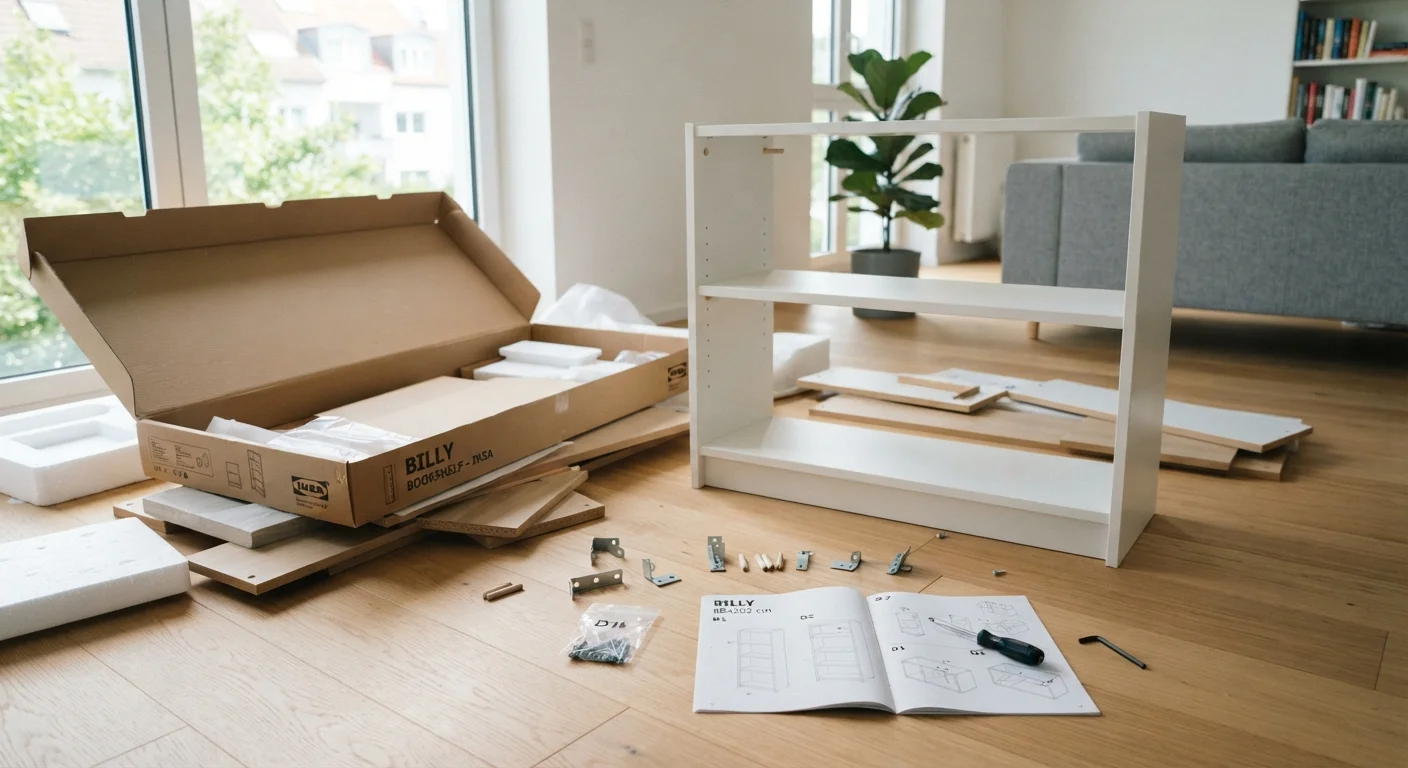
Photo: AnswersSquad.com | Explore Insightful Blogs editorial
Key Takeaways
- Flat-pack furniture costs significantly less upfront than solid assembled alternatives.
- Most flat-pack pieces use engineered wood, which affects long-term durability and repairability.
- Assembly is a real time investment - factor it in before you buy.
- Flat-pack works well for renters who move frequently because pieces ship compactly.
- Weight limits and joint integrity should be checked before placing heavy loads on flat-pack pieces.
Lower upfront cost than assembled alternatives
Flat-pack's compact shipping reduces logistics costs, and that saving is typically reflected in the retail price. For budget-conscious furnishers, this can mean equipping multiple rooms for what one assembled piece might cost.
Easy to transport and move between homes
Because pieces disassemble, they fit back into manageable boxes - a genuine advantage for renters who relocate every year or two.
Wide size and configuration variety
Flat-pack lines tend to offer modular options and multiple dimensions, making it easier to fit specific wall spans, corner spaces, or room layouts.
Available immediately without long lead times
Unlike custom or made-to-order furniture, flat-pack is typically in stock and ready to take home or receive within days - useful when you need a furnished space quickly.
Low barrier for replacement when damaged
Because flat-pack is affordable and widely available, replacing a damaged piece doesn't carry the same financial or emotional weight as losing an expensive heirloom or investment piece.
Shorter lifespan than solid wood furniture
Engineered wood materials like particleboard are more susceptible to moisture damage, surface wear, and joint failure over time. A well-used flat-pack piece may need replacement within five to ten years.
Assembly takes significant time and effort
Many flat-pack pieces require one to three hours of assembly and benefit from a second person. Poor instructions or missing hardware - both common issues - extend that time further.
Joints weaken with repeated disassembly
Cam-lock and dowel joints are designed for single assembly. Repeatedly taking a piece apart and rebuilding it - as movers often do - gradually strips the fittings and creates instability.
Limited repairability if damaged
Unlike solid wood, particleboard can't be sanded, refinished, or easily patched. A chipped edge or swollen panel typically means replacing the whole unit rather than repairing it.
Weight and load limits are often modest
Flat-pack shelving and storage units frequently carry lower weight ratings than equivalent solid-wood pieces. Overloading a shelf - especially one with books or equipment - can cause sagging or joint failure.
Environmental footprint of short-use items
Flat-pack furniture that ends up in a landfill after a few years contributes to material waste. Engineered wood products are generally difficult to recycle and may contain adhesives that complicate disposal.
What Flat-Pack Actually Is
Flat-pack furniture - sometimes called ready-to-assemble (RTA) furniture - arrives in a box, disassembled, with hardware and instructions included. You put it together at home using basic tools, often nothing more than a screwdriver or an Allen wrench. It's sold widely across furniture retailers, home goods stores, and online marketplaces.
The category covers everything from bookshelves and bed frames to wardrobes and dining tables. Most pieces are built from engineered wood products like particleboard or MDF (medium-density fiberboard) rather than solid timber. If you're curious how those materials compare in practice, our guide on solid wood, engineered wood, and MDF breaks down what the differences mean for durability and value.
Understanding what flat-pack is made of helps you evaluate it honestly - which is exactly the point of this article.
The Real Advantages
Flat-pack's biggest draw is price. Because pieces ship flat, retailers save on freight and warehousing - savings that typically pass through to you. For someone furnishing an entire apartment from scratch, that gap can mean the difference between a furnished space and an empty one.
Lower upfront cost than assembled alternatives
Flat-pack's compact shipping reduces logistics costs, and that saving is typically reflected in the retail price. For budget-conscious furnishers, this can mean equipping multiple rooms for what one assembled piece might cost.
Easy to transport and move between homes
Because pieces disassemble, they fit back into manageable boxes - a genuine advantage for renters who relocate every year or two.
Wide size and configuration variety
Flat-pack lines tend to offer modular options and multiple dimensions, making it easier to fit specific wall spans, corner spaces, or room layouts.
Available immediately without long lead times
Unlike custom or made-to-order furniture, flat-pack is typically in stock and ready to take home or receive within days - useful when you need a furnished space quickly.
Low barrier for replacement when damaged
Because flat-pack is affordable and widely available, replacing a damaged piece doesn't carry the same financial or emotional weight as losing an expensive heirloom or investment piece.
Portability is another underrated benefit. If you're renting and expect to move in a few years, flat-pack pieces disassemble and repack. That makes them far easier to transport than bulky solid-wood furniture. This matters especially for people in smaller apartments - our small space furniture guide explores how piece size and flexibility affect livability in compact rooms.
Flat-pack also offers a wide range of sizes and configurations, making it easier to find something that fits an awkward corner or an exact wall span - a practical edge over secondhand shopping or custom orders.
~30-60%
Typical price gap vs. comparable solid-wood pieces
General industry comparisons suggest flat-pack pieces often cost substantially less than solid-wood equivalents in the same category, though the exact gap varies by retailer and product type.
5-10 years
Estimated lifespan of average flat-pack furniture
Furniture industry observers generally estimate that particleboard flat-pack furniture, under typical household use, lasts around five to ten years before joints or surfaces show significant wear.
The Trade-Offs Worth Knowing
The limitations of flat-pack are real, and they tend to show up after the initial excitement of a furnished room fades.
Shorter lifespan than solid wood furniture
Engineered wood materials like particleboard are more susceptible to moisture damage, surface wear, and joint failure over time. A well-used flat-pack piece may need replacement within five to ten years.
Assembly takes significant time and effort
Many flat-pack pieces require one to three hours of assembly and benefit from a second person. Poor instructions or missing hardware - both common issues - extend that time further.
Joints weaken with repeated disassembly
Cam-lock and dowel joints are designed for single assembly. Repeatedly taking a piece apart and rebuilding it - as movers often do - gradually strips the fittings and creates instability.
Limited repairability if damaged
Unlike solid wood, particleboard can't be sanded, refinished, or easily patched. A chipped edge or swollen panel typically means replacing the whole unit rather than repairing it.
Weight and load limits are often modest
Flat-pack shelving and storage units frequently carry lower weight ratings than equivalent solid-wood pieces. Overloading a shelf - especially one with books or equipment - can cause sagging or joint failure.
Environmental footprint of short-use items
Flat-pack furniture that ends up in a landfill after a few years contributes to material waste. Engineered wood products are generally difficult to recycle and may contain adhesives that complicate disposal.
Durability is the most significant concern. Particleboard and MDF don't handle moisture well and can swell or warp over time, particularly in kitchens and bathrooms. Hardware joints - cam locks, dowels, and Allen bolts - also loosen with repeated use or if a piece is disassembled and reassembled more than once or twice.
If you're comparing flat-pack against picking up a used solid-wood piece, it's worth reading our article on secondhand furniture to understand where older, sturdier furniture might actually be the smarter call.
Assembly itself is a trade-off. Instructions vary in quality, and a piece that looks simple in the box can take two to three hours and a second set of hands to build correctly. Rushing assembly is one of the main reasons flat-pack furniture becomes wobbly or unstable.
Assembly Quality Affects Longevity
How to Buy Flat-Pack More Strategically
Not all flat-pack is equal, and not all furniture in your home needs to last twenty years. The smartest approach is to match piece type to expected wear. Use flat-pack for bookshelves, side tables, and storage units. For items that take daily stress - bed frames, dining chairs, sofas - consider spending more or looking at secondhand solid-wood alternatives.
Before buying, check the listed weight capacity and read assembly reviews specifically, not just product ratings. A piece can look beautiful in photos but have notoriously poor instructions or weak joinery.
If you're starting from scratch, our guide on furnishing your first home walks through how to prioritize what to buy first - which directly affects whether flat-pack or a more durable option makes sense in each room. And if budget allocation across a whole property is the challenge, furnishing an entire home without running out of budget offers a structured way to plan that out.
The content provided on our blog site traverses numerous categories, offering readers valuable and practical information. Readers can use the editorial team’s research and data to gain more insights into their topics of interest. However, they are requested not to treat the articles as conclusive. The website team cannot be held responsible for differences in data or inaccuracies found across other platforms. Please also note that the site might also miss out on various schemes and offers available that the readers may find more beneficial than the ones we cover.