
What 'Furniture Scale' Actually Means - and Why It Changes Everything

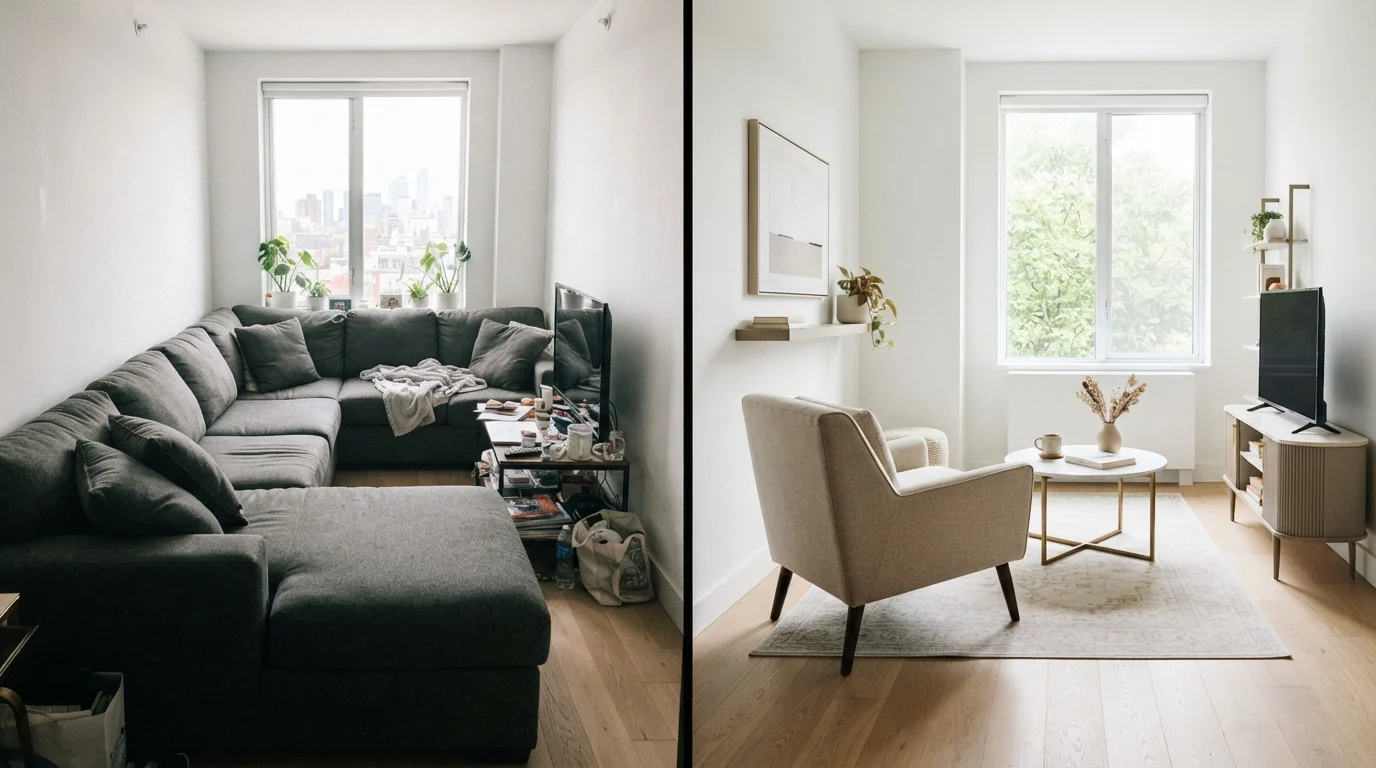
Photo: AnswersSquad.com | Explore Insightful Blogs editorial
Key Takeaways
- Scale is about relative size between furniture and room - not absolute measurements alone.
- A piece can pass the tape measure test and still make a room feel wrong if its visual weight is misjudged.
- Ceiling height, wall length, and negative space all factor into whether a piece looks right.
- Mixing scales intentionally - a large anchor piece with smaller accents - creates visual balance.
- Always view furniture dimensions in the context of the whole room, not just the footprint.
Why the Measurements Don't Tell the Whole Story
Most people approach furniture shopping with a tape measure and a checklist. They confirm the sofa is 86 inches wide, the wall is 10 feet across, so it should work. Then the sofa arrives and the room feels like a waiting room. This is a scale problem, not a measurement problem.
Measurements tell you whether a piece will fit physically - they don't tell you how it will read in the space. Scale is about relationships. How does this sofa relate to the coffee table in front of it? How does that coffee table relate to the rug underneath? How does the whole arrangement relate to the ceiling height and the open floor around it?
Before you buy a single piece, make sure you've captured the right room data. Our room measurement guide walks through which numbers actually matter and how to use them to avoid expensive mistakes.
⅔
Max wall span recommended for large furniture
Interior design guidelines commonly suggest a sofa or large case piece should not exceed two-thirds of the wall it anchors, leaving visual breathing room on either side.
18"
Typical clearance between sofa and coffee table
A gap of roughly 18 inches between a sofa and the coffee table in front of it is a widely cited standard for comfortable reach and legroom without the table feeling disconnected.
Visual Weight: The Hidden Variable
Every piece of furniture carries what designers call visual weight - how substantial it appears to the eye, independent of its actual dimensions. Two sofas with identical footprints can feel completely different in a room based on their color, material, leg height, and arm style.
A low-slung sofa in a deep charcoal velvet, sitting flush to the floor, has very high visual weight. It anchors the room aggressively. A sofa in a light linen with slender tapered legs and lower arms has far less visual weight - your eye passes over it more easily, and the room breathes around it.
This is why color and material choices are not just aesthetic decisions. They are scale decisions. A room full of dark, solid, heavy-looking furniture will feel smaller than its square footage, even if every measurement technically clears.
How to Think About Scale Room by Room
Scale plays out differently depending on the room and what it needs to do. In a living room, the sofa is typically the anchor piece - the largest item that sets the scale reference for everything else. A coffee table should be roughly two-thirds the length of the sofa. Side tables should sit close to arm height. Lamps should be tall enough to cast light at seated eye level, not so short they disappear.
In a bedroom, the bed is the anchor. Nightstands that are too tiny beside a king-size bed look like afterthoughts. A dresser that crowds a walkway or blocks a window undermines the whole room regardless of how nice it looks in isolation.
For smaller spaces, the principles shift slightly but the logic stays the same. Our article on small space furniture principles goes deeper on how to make compact rooms feel livable without defaulting to miniature everything.
Use Painter's Tape Before You Buy
Putting Scale Into Practice Before You Buy
The most practical thing you can do is use painter's tape on the floor to outline the footprint of any piece you're considering. This gives you an immediate visual of how much floor space disappears - and how much remains. Walk around it. Sit in the imagined space. Check what the sightlines will be from the entryway.
Next, consider the wall relationship. As a general guideline, large case pieces like bookshelves and entertainment units shouldn't span more than about two-thirds of a wall's length without some deliberate visual break. Leaving negative space - intentional empty space - isn't wasted room. It's what lets the furniture breathe and the room feel intentional rather than stuffed.
If you're furnishing a whole home and working with a budget, scale decisions also have financial consequences: an oversized anchor piece that dominates a room leaves little room - literally and financially - for the supporting pieces that complete it. See our guide to furnishing a whole home on a budget for a structured approach to allocating across every room.
Scale isn't a design luxury - it's the reason a room works. Getting it right means understanding that every piece exists in relationship to everything around it, not just in isolation on a showroom floor.
Frequently Asked Questions
The content provided on our blog site traverses numerous categories, offering readers valuable and practical information. Readers can use the editorial team’s research and data to gain more insights into their topics of interest. However, they are requested not to treat the articles as conclusive. The website team cannot be held responsible for differences in data or inaccuracies found across other platforms. Please also note that the site might also miss out on various schemes and offers available that the readers may find more beneficial than the ones we cover.