
Dynamic Currency Conversion: The Airport Trap That Quietly Drains Your Account

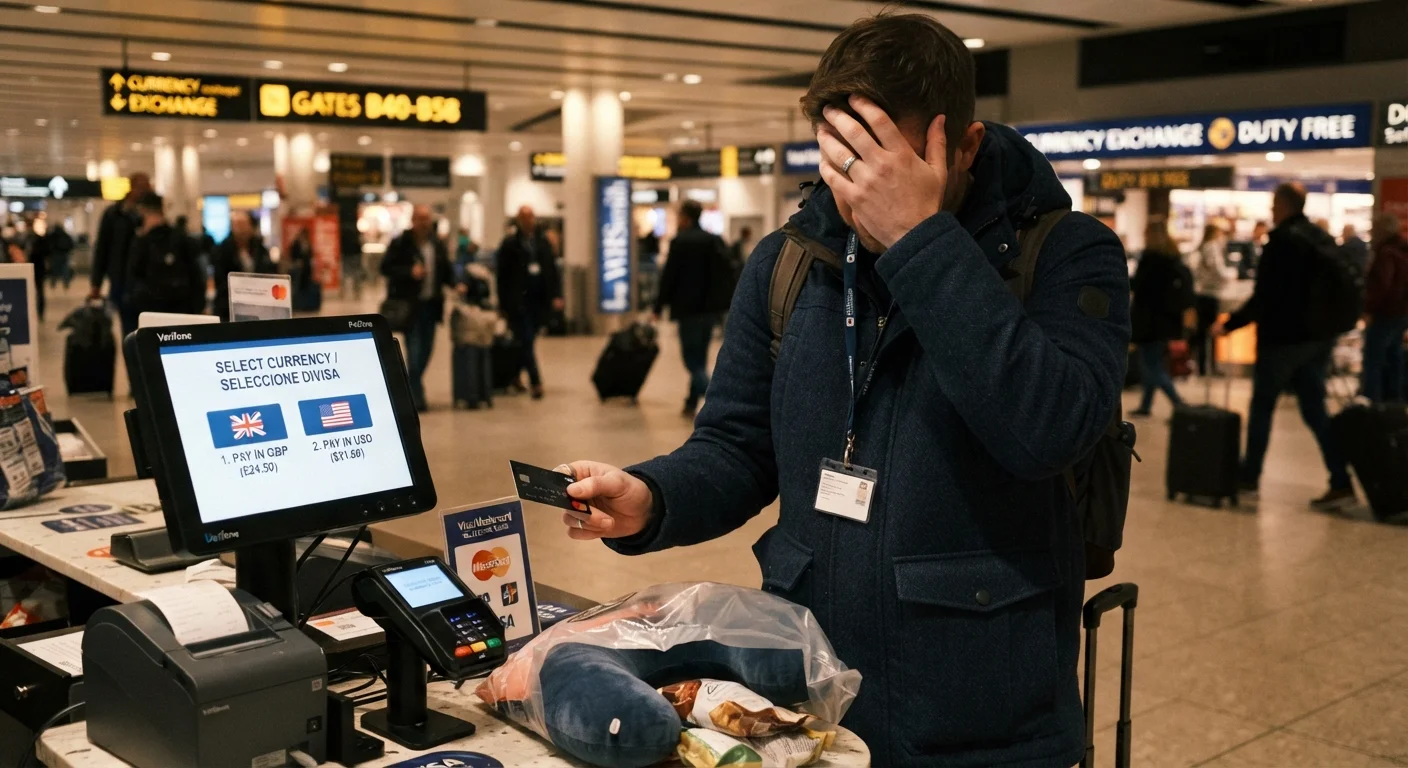
Photo: AnswersSquad.com | Explore Insightful Blogs editorial
Key Takeaways
- DCC lets merchants convert your transaction to your home currency at their own exchange rate, which is almost always unfavorable.
- Accepting DCC typically costs travelers an extra 3–8% per transaction compared to paying in local currency.
- Merchants and ATM operators profit from the conversion margin, which is why they actively promote the option.
- You always have the legal right to decline DCC and pay in local currency — say 'no' clearly and firmly.
- Using a card with no foreign transaction fees and paying in local currency is generally the lowest-cost approach.
- The DCC trap is most common at airports, hotels, tourist ATMs, and popular restaurants abroad.
What Actually Happens When You Accept DCC
You're at an airport shop in Paris, you tap your Visa card, and the terminal asks: "Would you like to pay $47.82 USD or €43.50 EUR?" The dollar amount feels familiar and safe, so you tap "USD." That single tap just cost you money you didn't need to spend.
When you accept DCC, the merchant's payment processor — not your bank or card network — handles the currency conversion. They apply their own exchange rate, which includes a built-in margin that functions as a fee. That margin goes to the processor and often a cut to the merchant, which is exactly why terminal prompts are engineered to make DCC sound like the sensible choice: phrases like "pay in your home currency" or "avoid uncertainty" are common.
Your card network (Visa, Mastercard) would have converted the same transaction using a rate much closer to the real mid-market rate. By opting into DCC, you're bypassing that rate entirely and accepting a worse one in exchange for nothing except a number that looks familiar on a screen.
DCC Is Legal — But Must Be Disclosed
Where the Trap Is Most Common
DCC is disproportionately concentrated in places where travelers are tired, rushed, or unfamiliar with their surroundings — by design. High-frequency DCC environments include:
- International airports — shops, restaurants, and ATMs in arrival and departure terminals
- Hotel checkout desks — particularly at chain hotels in tourist areas where large bills are settled quickly
- Tourist-zone ATMs — standalone ATMs near major attractions often default to DCC without a clear opt-out
- Popular restaurants and souvenir shops in heavily visited districts
The pattern makes sense from a business standpoint: distracted, time-pressured travelers are less likely to read terminal prompts carefully. This is part of a broader set of hidden costs that quietly blow travel budgets, where the damage only becomes visible after you're back home reviewing statements.
How to Decline DCC Every Time
The fix is simple, but it requires a consistent habit under conditions (fatigue, unfamiliar language, queue pressure) that work against you.
Build a Two-Second Terminal Habit
At a card reader: Read the screen before tapping or inserting. If it shows an amount in your home currency with a prompt to confirm, look for the option to pay in local currency instead. It's usually a smaller button or a secondary prompt. Select it without hesitation.
At an ATM: When the machine asks whether you want to be charged in your home currency or local currency, always select local currency. If the ATM only shows one option or tries to lock in a conversion without asking, cancel the transaction and find a different machine.
With a cashier present: You can say directly, "Please charge me in , not dollars." Most cashiers can reprocess if caught before final confirmation. If DCC slips through anyway, ask for a void and a reprocessing before you leave the counter.
Pairing this habit with a card that charges no foreign transaction fees eliminates nearly all card-related conversion costs abroad. For a broader look at how card choice affects your total costs, see this comparison of no-fee travel cards versus traditional debit cards.
Why This Habit Is Worth Building Before You Travel
Individually, a single DCC acceptance might cost you $3 on a coffee or $12 on a museum ticket. But most trips involve dozens of card transactions, and the compounding effect is real. On a two-week international trip with moderate spending, travelers who routinely accept DCC can easily lose $80–$200 or more compared to those who consistently decline — without ever feeling it happen.
The broader principle here applies well beyond DCC. The financial habits that separate chronic over-spenders from savvy travelers are rarely dramatic — they're small, repeated decisions made consistently in moments of low resistance. Declining DCC is one of the clearest examples: it costs you nothing to say no, takes two seconds, and compounds into meaningful savings across a trip.
Before departure, it's worth reviewing the full picture of managing money internationally — from pre-trip planning through to your return. The complete travel money roadmap covers exchange strategy, ATM access, and how to handle spending across the full arc of a trip.
3–8%
Typical DCC markup over mid-market rate
Industry analyses of DCC transactions consistently find merchant and ATM rates marked up between 3% and 8% above the interbank (mid-market) exchange rate.
~$100+
Estimated DCC losses on a two-week trip
Travel finance researchers note that travelers who routinely accept DCC across a multi-week trip can lose meaningful amounts — often exceeding $100 — without a single large transaction triggering concern.
2 seconds
Time it takes to decline DCC
Pressing the local-currency button at a terminal takes no longer than accepting DCC — the only cost of declining is the habit of reading the screen before confirming.
Frequently Asked Questions
The content provided on our blog site traverses numerous categories, offering readers valuable and practical information. Readers can use the editorial team’s research and data to gain more insights into their topics of interest. However, they are requested not to treat the articles as conclusive. The website team cannot be held responsible for differences in data or inaccuracies found across other platforms. Please also note that the site might also miss out on various schemes and offers available that the readers may find more beneficial than the ones we cover.