
No-Fee Travel Cards vs Traditional Debit Cards: Which Handles Foreign Transactions Better

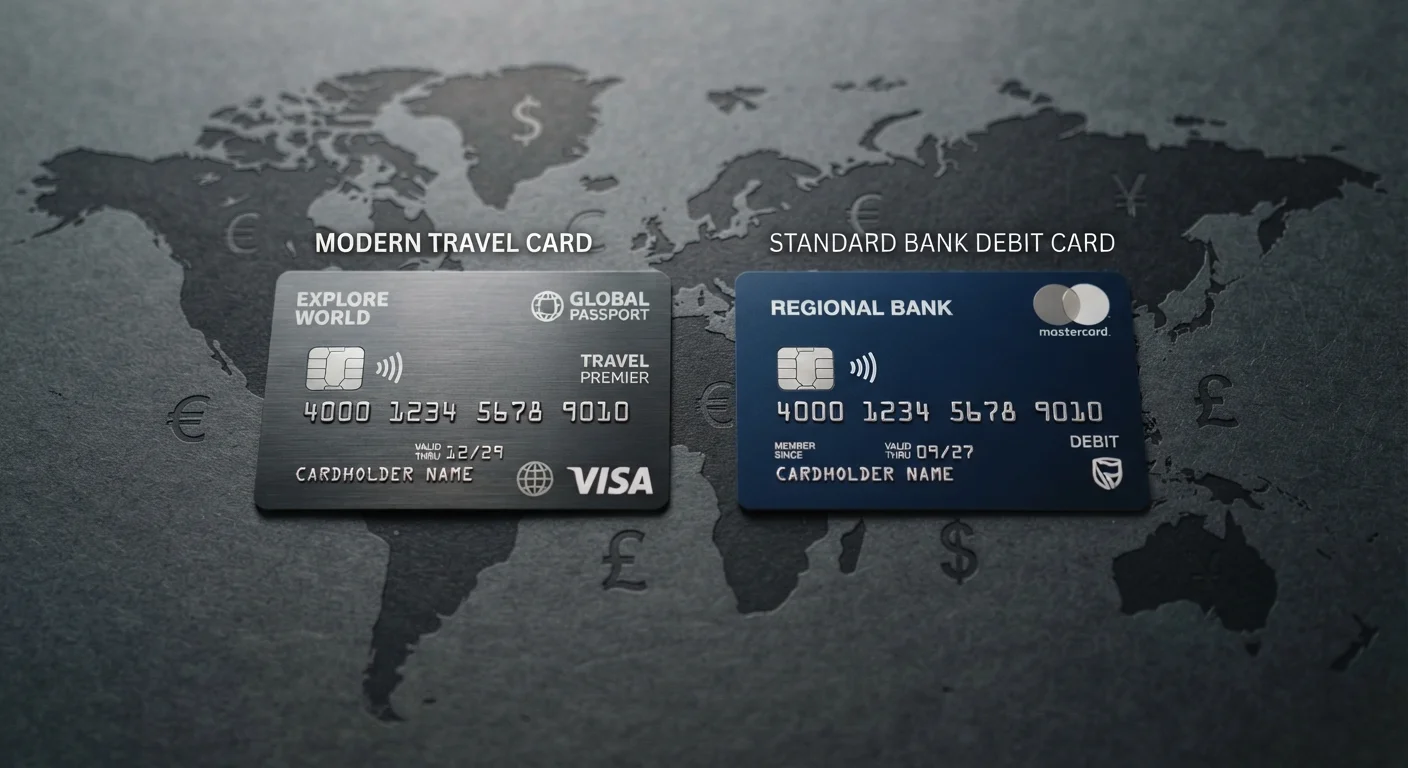
Photo: AnswersSquad.com | Explore Insightful Blogs editorial
Key Takeaways
- Traditional debit cards typically charge 1%–3% foreign transaction fees on every overseas purchase.
- No-fee travel cards are designed to apply interbank or mid-market exchange rates, reducing conversion costs.
- ATM withdrawal fees vary significantly — travel-focused accounts often reimburse or waive these charges.
- Dynamic currency conversion is a trap both card types are vulnerable to; always choose to pay in local currency.
- Your existing debit card may block international transactions by default — notify your bank before traveling.
- Carrying a backup card of either type protects against lost cards or unexpected access issues.
Where the Costs Actually Show Up
Most travelers don't realize how many separate fees can stack up on a single overseas transaction. When you swipe a traditional debit card abroad, you may encounter a foreign transaction fee (typically 1%–3% of the purchase), a currency conversion markup applied on top of the baseline exchange rate, and — if you're using an ATM — both your bank's withdrawal fee and the local ATM operator's fee. Each charge is small in isolation, but together they can add 5%–8% to the real cost of your spending.
No-fee travel cards are designed to eliminate or reduce most of these layers. Many accounts in this category apply the mid-market exchange rate (the rate banks use when trading between themselves) rather than a marked-up retail rate. That distinction alone can represent meaningful savings over a week-long trip. For a broader look at how unpreparedness compounds these costs, see what financial unpreparedness actually costs travelers abroad.
| Criterion | No-Fee Travel Cards | Traditional Debit Cards |
|---|---|---|
| Foreign transaction fee | Typically 0% | Usually 1%–3% per transaction |
| Exchange rate applied | Often mid-market or near mid-market | Bank's marked-up retail rate |
| International ATM fees | Often waived or reimbursed (limits apply) | $3–$5 flat fee plus operator charge |
| Account setup required | Yes — new account application | No — use existing account |
| Card freeze risk abroad | Lower, with travel notification | Higher without prior bank notice |
| Best suited for | Frequent or longer international travel | Domestic use or as a travel backup |
ATM Access and Cash Withdrawal Abroad
Accessing cash overseas exposes the starkest difference between the two card types. With a traditional debit card, expect your bank to charge a flat international ATM fee — commonly $3–$5 per withdrawal — plus the ATM operator's own surcharge. Some banks also apply the foreign transaction percentage on top. Withdraw cash four or five times on a two-week trip and you may lose $30–$50 before conversion markups are even counted.
Travel-focused accounts approach this differently. Some offer a set number of free international ATM withdrawals per month; others reimburse third-party ATM fees at the end of each statement cycle. Neither option is universal — specific terms vary by account and can change — so it's worth reviewing the fee schedule of any account you're considering before you travel.
One practice that helps regardless of which card you carry: withdraw larger amounts less frequently to minimize the number of fixed fees you trigger. And always decline the ATM's offer to convert the amount into US dollars — that's dynamic currency conversion, which guarantees a worse rate. Learn more about how dynamic currency conversion quietly drains your travel budget.
1%–3%
Typical foreign transaction fee on standard debit cards
Most major U.S. banks charge a percentage-based fee on every transaction processed in a foreign currency, per published fee schedules.
$5+
Common international ATM withdrawal fee (bank + operator)
When combining a bank's own international ATM fee with the local operator's surcharge, travelers often pay $4–$8 per withdrawal.
2%–3%
Typical dynamic currency conversion markup
Industry analyses have consistently found DCC rates carry a 2%–3% margin above the mid-market rate, benefiting the merchant rather than the cardholder.
Exchange Rates: What You're Actually Comparing
The exchange rate applied to your transaction is where much of the real cost difference lives — and it's the hardest fee to see on a receipt. Traditional debit cards typically route transactions through their bank's proprietary rate, which includes a markup above the interbank rate. That markup is the bank's margin, and it's rarely disclosed clearly at the point of sale.
No-fee travel accounts often advertise mid-market rate conversion with no additional markup, though some do charge a small percentage on currency exchange or apply the mid-market rate only during weekday trading hours. Weekend transactions may carry a small buffer to account for market volatility. Reading the fine print on any account's exchange rate policy before you travel is essential — don't assume "no foreign transaction fee" means zero conversion cost.
If you want a baseline for understanding how rates work and what fair conversion looks like, this primer on exchange rates and travel budgeting covers the fundamentals clearly.
Practical Considerations Before You Travel
Whichever card type you rely on, two steps are non-negotiable before departure. First, notify your card provider of your travel dates and destinations. Traditional debit cards are frequently flagged and frozen when foreign transactions appear without prior notice. Second, confirm your daily spending and withdrawal limits — some accounts set low international limits by default that can leave you short at the worst possible time.
It's also worth considering the role of cash versus card at your specific destination. Some countries and regions remain heavily cash-dependent, while others are nearly card-only. Neither card type is automatically the right tool for every situation. Weighing the cash vs. card trade-offs for your destination can help you calibrate the right mix before you leave.
Finally, carry at least two separate payment methods. If your primary card is lost, stolen, or frozen mid-trip, having a backup — even a traditional debit card — keeps you from being stranded without access to funds.
This article is for general informational purposes only and does not constitute financial advice. Fee structures, exchange rate policies, and account terms vary by provider and are subject to change. Verify current terms directly with any financial institution before making decisions about your travel money arrangements. Consider consulting a licensed financial professional for advice tailored to your circumstances.
The content provided on our blog site traverses numerous categories, offering readers valuable and practical information. Readers can use the editorial team’s research and data to gain more insights into their topics of interest. However, they are requested not to treat the articles as conclusive. The website team cannot be held responsible for differences in data or inaccuracies found across other platforms. Please also note that the site might also miss out on various schemes and offers available that the readers may find more beneficial than the ones we cover.