
Travel Money for First-Timers: Exchange Rates, Fees, and Budgeting Explained

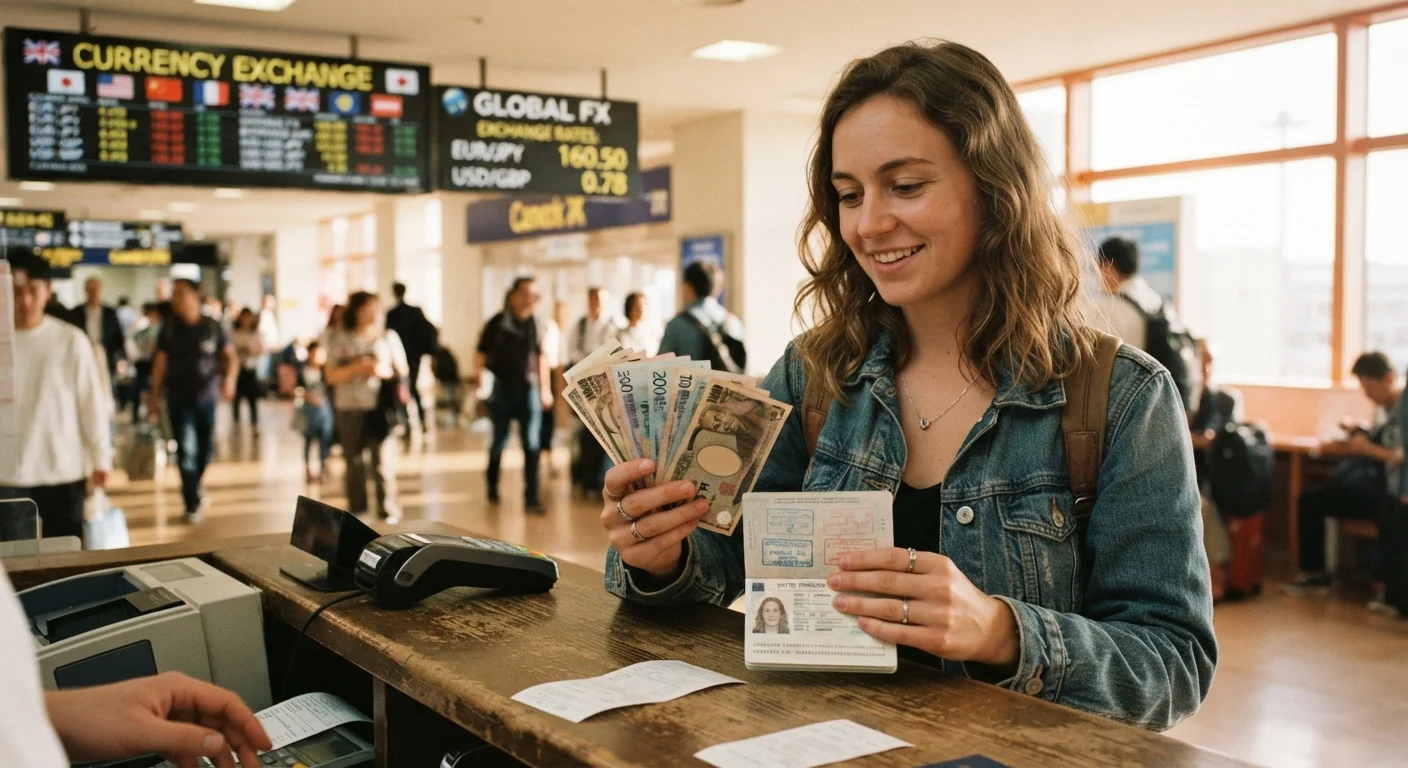
Photo: AnswersSquad.com | Explore Insightful Blogs editorial
Key Takeaways
- The mid-market rate is the fairest benchmark — any rate offered to you will be worse by some margin.
- Foreign transaction fees, ATM charges, and currency conversion markups stack up and are often avoidable.
- Most destinations call for a mix of cash and card, not one or the other.
- Notifying your bank before departure helps prevent card blocks while abroad.
- A simple daily budget framework — accommodation, food, transport, activities — covers most first-timer needs.
How Exchange Rates Actually Work
An exchange rate is simply the price of one currency expressed in another. If the USD/EUR rate is 0.92, one US dollar buys 0.92 euros. Rates shift constantly based on economic data, interest rates, and market sentiment — so the number you see today may differ from what you get next week.
The rate you'll find on Google or a currency site like XE is the mid-market rate — the fairest baseline. Every provider you deal with (banks, kiosks, card networks) adds a margin on top. That margin is their revenue. A 2% margin might feel small, but on a $2,000 trip it's $40 gone before you've spent a cent.
Mid-market rate
The midpoint between the buying and selling prices of two currencies on the global market. It's the fairest reference rate, but retail providers never offer it exactly — they add a margin on top.
Foreign transaction fee
A percentage-based charge added by your card issuer whenever you make a purchase in a foreign currency, typically ranging from 1% to 3% of the transaction amount.
Dynamic currency conversion (DCC)
A service offered at some payment terminals that converts the price to your home currency on the spot. It almost always uses an unfavorable exchange rate — paying in the local currency is generally better.
ATM withdrawal fee
A flat fee charged by your home bank, the foreign ATM operator, or both every time you withdraw cash abroad. These can range from $2 to $5 or more per transaction.
Daily budget
An estimate of your total spending per day across accommodation, food, transport, and activities. Setting one before you travel gives you a concrete spending target to track against.
For destination-specific context on how far your dollar actually stretches, the Budget Destinations hub covers cost levels across a range of affordable countries.
The Fees That Quietly Drain Your Travel Budget
Exchange rate margins aren't the only cost. Most first-timers are surprised by how many separate charges apply to international spending. The main ones to know:
- Foreign transaction fees: 1–3% added by your card issuer on every foreign-currency purchase. Many travel-oriented cards waive this; standard debit cards often don't.
- ATM operator fees: The foreign ATM bank may charge a flat fee (often $2–5 equivalent) on top of whatever your home bank charges. Two fees per withdrawal adds up fast.
- Dynamic currency conversion (DCC): When a terminal offers to charge you in USD instead of local currency, it's using a marked-up rate. Always decline and pay in local currency.
- Airport kiosk markups: Convenient but costly — often 5–10% above mid-market. Use them only for a small emergency amount.
Airport and Hotel Exchange Desks Charge a Premium
Understanding what these fees actually cost in dollar terms is eye-opening. Our article on what financial unpreparedness really costs travelers breaks this down with concrete numbers.
Cash vs. Card: Choosing the Right Payment Mix
There's no single correct answer — destination and context matter. Street markets, rural guesthouses, and small restaurants in many countries are cash-only. Urban hotels, chain restaurants, and larger retailers typically accept cards. The practical approach is to carry both.
Always Pay in Local Currency at Card Terminals
A reasonable starting point for most trips: keep enough local cash for one to two days of small purchases, and use a low-fee debit or credit card for everything else. Withdraw cash from in-network ATMs in larger amounts to minimize the number of withdrawal fees you pay.
The right split varies by destination. Our cash vs. card breakdown helps you think through the decision by destination type and travel style. And if you're headed to Southeast Asia specifically, the Southeast Asia first-timer's guide includes payment norms for the region.
Building a Realistic Daily Travel Budget
Vague budgets fail. A workable daily budget breaks spending into four categories:
- Accommodation — your biggest fixed cost. Research average nightly prices for your destination and travel style (hostel dorm vs. private room vs. budget hotel).
- Food — street food and local restaurants are significantly cheaper than tourist-facing spots. Budget separately for tourist meals you expect to splurge on.
- Local transport — buses, metro, tuk-tuks, or ride-share. Look up typical fares before you go.
- Activities and entrance fees — museums, tours, national parks. These vary widely; list the ones you plan and price them out.
Add the four categories together and build in a 15–20% buffer for unexpected costs — a medical copay, a missed bus, a spontaneous side trip. Tools like Numbeo can give you crowd-sourced price data for specific cities.
For help thinking through every money-related decision before departure, the Trip Planning Basics hub walks through the full planning process step by step.
Pre-Departure Money Checklist
The most effective travel money decisions happen before you leave home. Run through these before your departure date:
- Notify your bank and card issuers of your travel dates and destinations. This reduces the risk of a fraud alert blocking your card mid-trip.
- Check your card's foreign transaction fees in writing — not just what a customer service rep tells you.
- Identify ATMs at your destination that are part of a global network to minimize fees.
- Carry a backup payment method — a second card stored separately, or a small amount of USD as an absolute emergency reserve.
- Research the destination's cash norms — some countries are heavily card-based; others are still predominantly cash economies.
Our pre-departure financial checklist covers each of these points in detail and adds a few less-obvious ones. For a complete view of money management across an entire trip — from packing your wallet to reconciling expenses on return — see the travel money roadmap.
This article provides general financial and travel information for educational purposes only. It is not personalized financial or travel advice. Exchange rates, fees, and destination conditions change — always verify current terms directly with your bank, card issuer, or relevant authorities before traveling.
Frequently Asked Questions
The content provided on our blog site traverses numerous categories, offering readers valuable and practical information. Readers can use the editorial team’s research and data to gain more insights into their topics of interest. However, they are requested not to treat the articles as conclusive. The website team cannot be held responsible for differences in data or inaccuracies found across other platforms. Please also note that the site might also miss out on various schemes and offers available that the readers may find more beneficial than the ones we cover.