
Travel Money from Departure to Return: A Complete Financial Roadmap

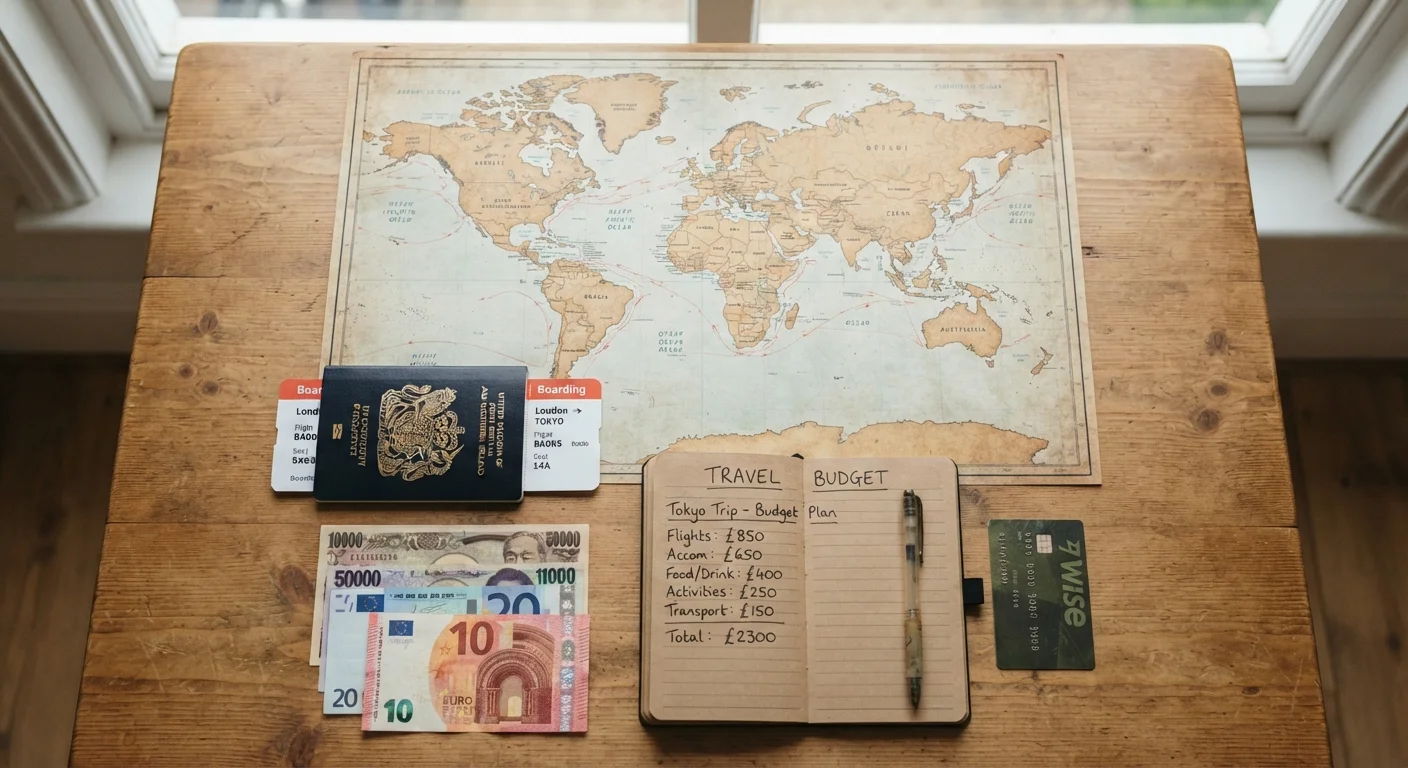
Photo: AnswersSquad.com | Explore Insightful Blogs editorial
Key Takeaways
- Build your travel budget before booking anything — costs vary widely by destination and season.
- Notify your bank, audit your card fees, and set a daily spending cap before departure.
- Use cards with no foreign transaction fees and withdraw local cash in moderate amounts.
- Always carry an emergency fund and know how to access money if your card is lost or blocked.
- After returning, reconcile your spending to sharpen estimates for future trips.
Start With a Realistic Budget Before You Book Anything
The most common travel money mistake isn't overspending abroad — it's underestimating costs before you even leave. Locking in flights and accommodation before you've mapped out ground-level expenses (meals, transport, entry fees, visa costs) is a reliable way to arrive under-resourced.
A solid budget covers six categories: flights, accommodation, food, local transport, activities, and a contingency buffer of roughly 15–20% of your total. For a practical framework on estimating each of these, see Building a Realistic Travel Budget From Scratch.
Destination choice has an outsized impact on daily costs. Southeast Asia, parts of Eastern Europe, and Latin America generally run $40–$70 per day for budget travelers; Western Europe and Australia can easily run two to three times that. Explore Budget Destinations for regions that stretch dollars further before you commit to a location.
3%
Typical foreign transaction fee on standard cards
Many standard U.S. credit and debit cards charge a foreign transaction fee of 1–3% on every overseas purchase, per general card terms data.
$200+
Average ATM and currency fees on a two-week trip
Combining ATM flat fees, foreign transaction charges, and poor DCC rates can cost budget travelers over $200 on a typical two-week international trip.
15–20%
Recommended contingency buffer as share of total budget
Travel finance planners commonly recommend building a 15–20% buffer into total trip budgets to absorb unplanned costs without derailing the trip.
Pre-Departure Financial Prep: What to Lock Down
The window between booking and departure is when most financial groundwork should happen. Skipping these steps costs real money once you're on the road.
- Notify your bank and card issuers. Cards flagged for unusual foreign activity get blocked. A quick call or app notification before departure prevents this.
- Audit your card fees. Many standard debit and credit cards charge a 1–3% foreign transaction fee on every purchase. Identify which cards in your wallet don't carry this fee — and make those your primary travel cards.
- Set a daily spending limit. Decide on a per-day number before you go, not after the first splurge day. This is harder to fudge when it's written down in advance.
- Check ATM access at your destination. Some countries are still heavily cash-based; others are nearly cashless. Knowing which you're entering changes how much local currency you need to carry.
- Purchase travel insurance. Medical emergencies abroad can generate bills that erase an entire travel fund. Verify what your policy covers — especially medical evacuation — before departure.
For a full pre-flight checklist organized by task, Before You Fly: A Financial Checklist for Affordable Travel walks through every money-related action item.
Open a second, separate bank account before international travel and load it with your trip budget — keeping it isolated from your main savings prevents accidental overspending and limits exposure if that card is compromised.
Screenshot your bank's international support number and store it offline on your phone before you leave — carrier issues or lost connectivity abroad can make it impossible to look up in the moment you need it most.
Spending Abroad Without Getting Burned by Fees
Foreign fees are quiet and cumulative. A 3% transaction fee, a $5 ATM charge, and a poor dynamic currency conversion rate can add up to $100–$200 in avoidable costs on a two-week trip.
Cards vs. Cash
Neither is universally better — the right mix depends on your destination. As a starting point: use a no-foreign-fee card for larger purchases (hotels, tours, restaurants) and carry moderate amounts of local cash for markets, transit, and smaller vendors who don't accept cards.
ATM Strategy
Withdraw larger amounts less frequently rather than small amounts daily. Each ATM visit may carry a flat fee from both your bank and the local machine — frequent small withdrawals multiply that cost unnecessarily.
Dynamic Currency Conversion (DCC)
When a foreign merchant or ATM offers to charge you in U.S. dollars instead of local currency, decline. DCC uses exchange rates that typically favor the merchant, not you. Always pay in local currency and let your card issuer handle the conversion.
Tracking Daily Spend
Without a system, it's easy to lose track of what you're spending until it's too late to adjust. Managing a Daily Travel Budget Without Spreadsheets or Stress covers lightweight methods — including app-based tools and simple envelope approaches — that hold up in real travel conditions.
Handling Money Emergencies on the Road
Even well-prepared travelers face financial disruptions: a lost wallet, a frozen card, an unexpected medical bill, or a travel disruption that requires unplanned accommodation. Having a plan before you need it matters.
Don't Rely on a Single Card Abroad
Build a Backup Fund
Keep a separate emergency reserve — ideally on a second card stored apart from your primary wallet — equivalent to roughly two to three days of your daily budget. This isn't money you plan to spend; it's your financial floor if something goes wrong.
If Your Card Is Lost or Stolen
Most U.S. card issuers allow you to freeze a card instantly through their app. Do this immediately, then call to report it. Many issuers can ship a replacement card to a foreign address, though this takes days — your backup card and emergency cash bridge that gap.
Emergency Cash Access
Wire transfers through banks or money transfer services can reach you if you're completely stranded without funds. Know in advance which service your contacts at home can use to send money quickly, and have the recipient information ready.
Travel Insurance Claims
If a disruption is covered by your travel insurance, document everything — receipts, written confirmation of the event, medical records if applicable. Insurers require documentation to process claims; photos and written notes taken at the time are far more reliable than memory reconstructed later.
Settling Up: What to Do With Your Finances After You Return
Most travelers close the book on trip finances the moment they land home. That's a missed opportunity. A brief post-trip financial review makes every future trip cheaper and more accurately planned.
Reconcile Your Actual Spending
Pull your bank and card statements for the trip period. Compare actual category spend against your original budget. Where did you overspend? Where did you come in under? These variances are the most accurate data you'll ever have for the next trip's planning phase.
Convert and Spend Remaining Foreign Currency
Leftover cash in a foreign currency loses value if it sits in a drawer. Options include: exchanging it at an airport kiosk before you leave (convenient but rates are typically poor), keeping it if you plan to return to the same country, or using it as a small buffer in a savings envelope for your next international trip fund.
Review Your Credit Card Statement Carefully
Foreign transactions occasionally produce duplicate charges, incorrect DCC conversions, or billing errors that are easier to dispute shortly after they appear. Don't wait until your next monthly cycle to review.
Update Your Budget Template
If you used a planning framework — like the one in The Anatomy of a Budget Trip — update it with your real numbers. Future-you, planning the next trip, will have a much sharper starting point than a generic estimate from the internet.
This article provides general financial information for travel planning purposes only. It is not personalized financial or legal advice. For decisions specific to your circumstances, consult a qualified financial professional. Always verify entry requirements, insurance terms, and card conditions directly with relevant providers before traveling.
The content provided on our blog site traverses numerous categories, offering readers valuable and practical information. Readers can use the editorial team’s research and data to gain more insights into their topics of interest. However, they are requested not to treat the articles as conclusive. The website team cannot be held responsible for differences in data or inaccuracies found across other platforms. Please also note that the site might also miss out on various schemes and offers available that the readers may find more beneficial than the ones we cover.