
Petrol, Diesel, Hybrid, or Electric: Choosing a Fuel Type as a First-Time Buyer

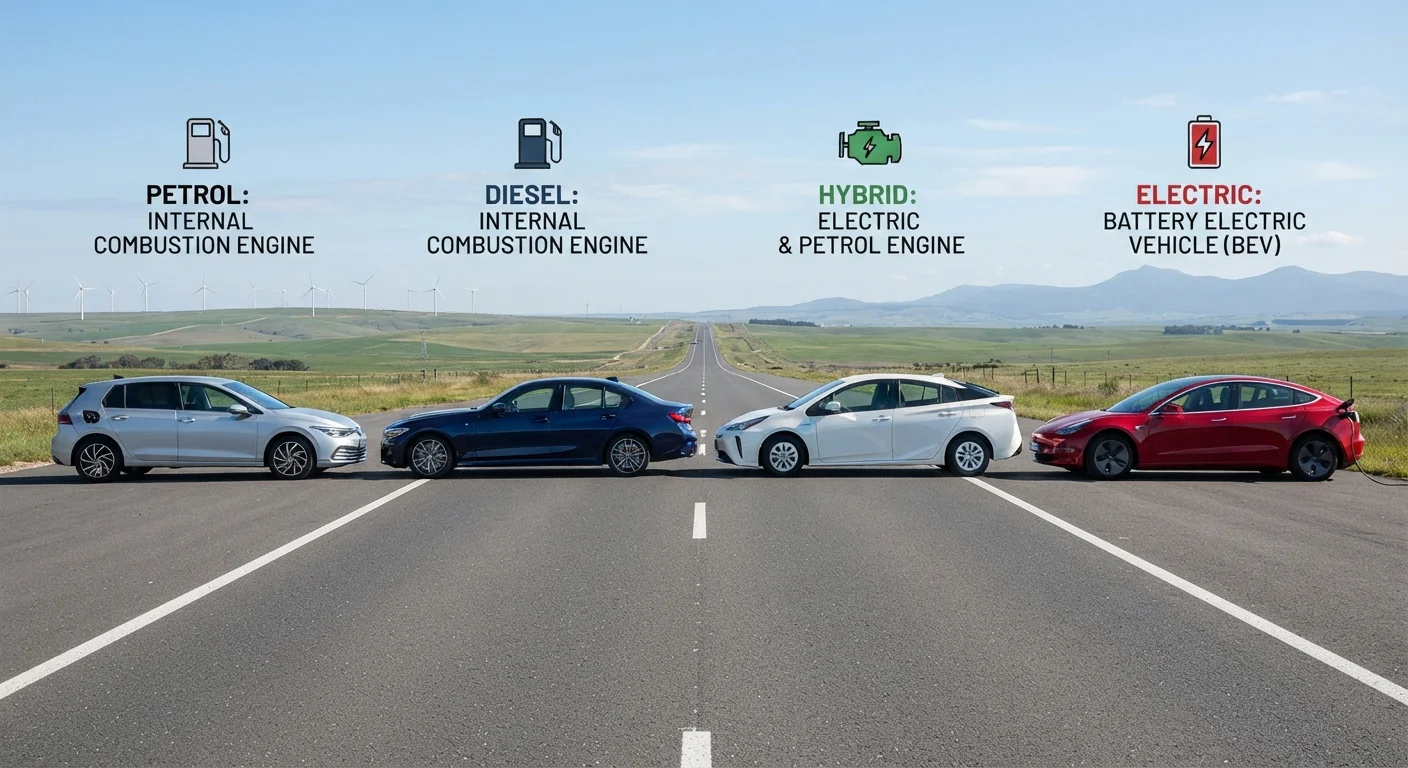
Photo: AnswersSquad.com | Explore Insightful Blogs editorial
Key Takeaways
- Petrol cars typically have lower upfront costs and suit drivers with varied, short-to-medium trip patterns.
- Diesel becomes more cost-effective only for drivers covering consistently high annual mileage on highways.
- Hybrid vehicles blend a combustion engine with an electric motor, reducing fuel use without requiring home charging.
- Electric vehicles have higher purchase prices but significantly lower fuel and routine maintenance costs over time.
- Your daily driving distance, access to charging, and total budget should drive the fuel-type decision.
Why Fuel Type Is One of Your Biggest First-Car Decisions
When buying your first car, it's tempting to focus on color, brand, or monthly payment - but fuel type shapes almost every cost you'll encounter afterward. It affects what you pay at the pump (or charging station), how much maintenance you'll need, and even what you might get when you eventually sell. Before signing anything, it's worth understanding exactly what each option means for your wallet and your routine. For a full picture of what ownership involves, see this end-to-end first-car guide.
The four main fuel types available in the US market are petrol (gasoline), diesel, hybrid, and electric. Each suits a different driving profile. This article breaks down the real-world trade-offs so you can match the engine type to the way you actually live - not just the way a dealership describes it.
Petrol: The Familiar Starting Point
Gasoline-powered cars remain the most common choice for first-time buyers in the US, and for good reason. They tend to have lower purchase prices than diesel, hybrid, or electric equivalents, and the refueling infrastructure is essentially universal - you won't struggle to find a gas station anywhere in the country.
Petrol engines also tend to be simpler and cheaper to repair, which matters when you're still building familiarity with car ownership. The trade-off is fuel economy: gasoline engines are generally less efficient than diesel on long highway runs, and fuel costs can add up meaningfully over time. To estimate what that might look like for your specific habits, see how engine size and driving patterns affect annual fuel spend.
Best suited to: Drivers who need flexibility, have a limited upfront budget, and drive a mix of short city trips and occasional longer journeys.
Check Your Annual Mileage First
Diesel: Worth It Only Under the Right Conditions
Diesel engines are built for efficiency at sustained highway speeds. They extract more energy per gallon than petrol engines, which historically made them attractive for high-mileage drivers. However, diesel fuel often costs more per gallon than regular gasoline, and diesel vehicles typically carry a higher purchase price.
Diesel also comes with some important caveats for city driving. Frequent short trips at low speeds can cause a problem called diesel particulate filter (DPF) clogging - a filter designed to trap soot that needs periodic high-speed runs to self-clean. If it clogs and requires professional cleaning or replacement, repair costs can be significant. Emissions regulations in some US states (particularly California) have also tightened restrictions on diesel vehicles, so it's worth checking local rules before committing.
Best suited to: Drivers who regularly cover 15,000+ miles per year, predominantly on highways, and who live in states without restrictive diesel emissions rules.
Short City Trips Can Damage Diesel Engines
Hybrid: A Practical Middle Ground
Hybrid vehicles combine a traditional combustion engine with an electric motor and a small battery. The battery charges itself through normal driving - a process called regenerative braking, which captures energy usually lost as heat when you slow down. You never need to plug in a standard (non-plug-in) hybrid.
This makes hybrids especially efficient in stop-and-go city traffic, where the electric motor does a lot of the work. Highway fuel savings are more modest. Purchase prices sit above comparable petrol cars but below most fully electric vehicles. Maintenance is generally similar to petrol cars, though the dual powertrain does add some complexity.
Plug-in hybrids (PHEVs) add a larger battery that can be charged externally, giving a short range on electricity alone - typically 20-50 miles - before the combustion engine takes over. This can be a useful option if you have access to home or workplace charging but aren't ready to rely entirely on it.
Best suited to: Drivers who want better fuel economy than a petrol car but aren't set up for full EV charging - particularly those doing a lot of city or suburban driving.
Electric: High Upfront, Lower Over Time
Electric vehicles (EVs) run entirely on electricity stored in a large battery pack. They produce zero direct emissions and have significantly fewer moving parts than combustion engines - no oil changes, no exhaust system, no transmission fluid to service. Over several years, this can translate into meaningful savings on routine maintenance. For a closer look at what fluid-related servicing combustion-engine cars require, see this overview of vehicle fluids and what each one does.
The main barriers for first-time buyers are upfront cost and charging access. EVs generally cost more to purchase than petrol or hybrid equivalents, though federal tax credits (subject to eligibility rules that change over time - verify current rules with the IRS or a tax professional) can offset some of that gap. Charging at home overnight using a standard 240V outlet is the most convenient approach; relying solely on public charging is workable but requires more planning.
Range anxiety - worry about running out of charge - is a common concern. Most EVs now offer 200-300+ miles of range, which comfortably covers typical daily driving, but longer road trips require more planning around charging stops.
Best suited to: Buyers who can charge at home or work, plan to keep the vehicle for several years, and have a total-cost-of-ownership mindset rather than focusing purely on sticker price. Also worth considering how fuel type interacts with broader ownership costs - this breakdown of running costs that catch new owners off guard covers expenses that apply regardless of powertrain.
| Petrol | Diesel | Hybrid | Electric | |
|---|---|---|---|---|
| Typical upfront cost | Lower | Medium-High | Medium-High | Highest |
| Fuel/energy cost per mile | Moderate | Lower (highway) | Lower than petrol | Lowest |
| Routine maintenance complexity | Simple | Moderate | Moderate | Lower |
| Refueling/charging convenience | Very easy | Easy | Very easy | Requires planning |
| Best driving environment | Mixed/flexible | Highway/high mileage | City/suburban | Any with charging access |
| Long-term total cost potential | Moderate | Lower if high mileage | Lower than petrol | Lowest over time |
| Emissions profile | Higher | Higher (+ particulates) | Lower than petrol | Zero direct emissions |
How to Make the Call for Your Situation
The right fuel type isn't a universal answer - it's a function of three practical questions:
- How many miles do you drive each year, and where? City-heavy, low-mileage drivers benefit most from hybrids or EVs. Highway-heavy, high-mileage drivers get more from diesel or EV efficiency. Petrol suits mixed, unpredictable patterns.
- Where will you charge or refuel? If you rent an apartment without EV charging access and your building isn't likely to add it, a full EV may not be practical yet. Hybrids and petrol require no charging infrastructure at all.
- What's your total budget - upfront and over three to five years? A lower purchase price doesn't always mean lower total cost. Factor in fuel, insurance, and servicing. This overview of hidden ownership costs can help you build a realistic total picture.
Also consider whether you're buying new or used - the availability and reliability of used EVs and hybrids has improved considerably, and that changes the upfront cost equation. See the full trade-off breakdown between new and used vehicles before making that call.
This article is for general informational and educational purposes only and does not constitute financial, legal, or professional advice. Fuel type suitability, costs, tax credit eligibility, and local regulations vary by individual circumstances and location. Consult relevant professionals and verify current rules before making purchasing decisions.
The content provided on our blog site traverses numerous categories, offering readers valuable and practical information. Readers can use the editorial team’s research and data to gain more insights into their topics of interest. However, they are requested not to treat the articles as conclusive. The website team cannot be held responsible for differences in data or inaccuracies found across other platforms. Please also note that the site might also miss out on various schemes and offers available that the readers may find more beneficial than the ones we cover.