
Anchoring a Room: The Logic Behind Choosing a Focal Point

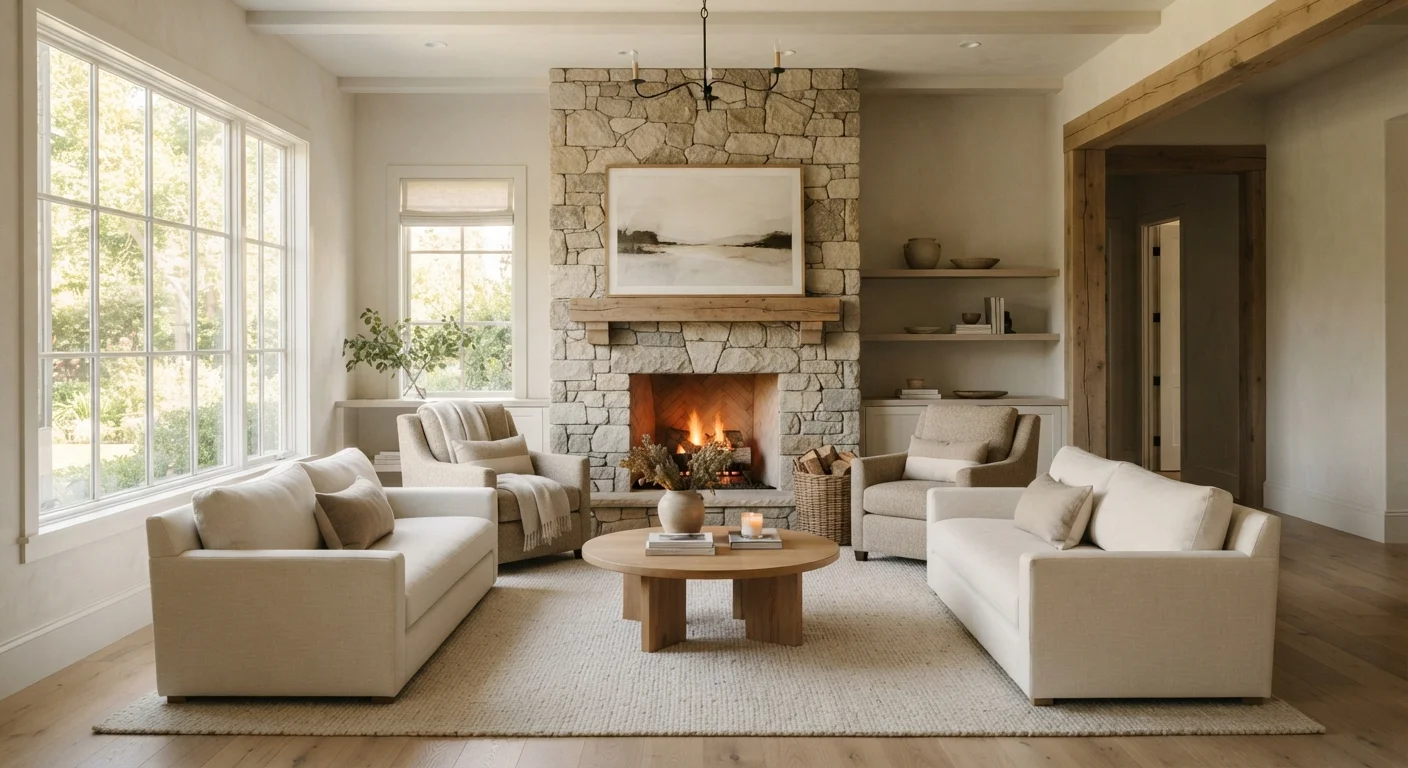
Photo: AnswersSquad.com | Explore Insightful Blogs editorial
Key Takeaways
- Every room has - or should have - one dominant focal point that guides furniture placement.
- Architectural features like fireplaces and windows are the most common natural focal points.
- In rooms without a built-in focal point, you can create one using furniture, art, or a feature wall.
- All major seating and furniture pieces should orient toward, not away from, the focal point.
- Identifying your focal point before buying furniture prevents costly layout mistakes.
Why the Focal Point Comes First
When you're staring at an empty room wondering where to put everything, the instinct is often to start with the largest piece of furniture. But that approach frequently leads to layouts that feel off - furniture pushed against walls, awkward gaps, or a room that never quite settles. The smarter starting point is the focal point.
A focal point gives the room a logical center of gravity. Once you've identified it, furniture placement follows a clear principle: everything should face toward it, frame it, or at least acknowledge it. Without one, you're essentially arranging furniture in a vacuum, which is why so many first attempts at decorating feel directionless.
If you're just beginning to think about furnishing a space, it helps to read our guide to starting your first home before committing to any purchases.
1 in 3
First-time renters who feel unsure about furniture layout
Surveys from home improvement platforms consistently find that furniture arrangement - not cost - is the top source of decorating anxiety for people setting up their first home.
70%
Of living rooms use the TV as the primary focal point
Interior design research suggests the majority of contemporary living spaces orient seating primarily toward a screen rather than an architectural feature.
Natural Focal Points: What to Look For
Some rooms hand you their focal point. A fireplace is the classic example - it's architectural, it has visual weight, and there's an almost instinctive human pull toward it. Large windows with a strong view, an exposed brick wall, a built-in shelving unit, or a bay window all serve the same function.
When a natural focal point exists, your job is to resist overriding it. A common mistake is placing a large TV on a different wall from the fireplace, splitting the room's attention. Instead, work with the existing feature. Mount the TV above or adjacent to the fireplace if needed, or simply accept that different activities might use different parts of the room.
In open-plan spaces, identifying focal points gets more layered - you may need one per zone. Our article on arranging furniture in open-plan vs. defined rooms explains how to handle that.
Creating a Focal Point When the Room Has None
Rental apartments and newer builds often have blank, symmetrical walls and no architectural drama whatsoever. That's not a problem - it just means you'll define the focal point yourself.
The most practical approach is to designate one wall as the anchor wall and build intentionally toward it. A large-format piece of art, a gallery wall, or a media unit with a TV all work well. In a bedroom, a substantial headboard against the wall that faces the doorway immediately establishes hierarchy.
Whatever you choose, scale matters. A small print on a large wall won't hold the room's attention. The focal element needs to feel proportionate to the space around it - which is also why measuring your room carefully before selecting anything is essential.
Stand at the Doorway First
Arranging Furniture Around the Focal Point
Once the focal point is established, furniture placement becomes more intuitive. In a living room, the primary seating - typically a sofa - should face the focal point directly. Supporting chairs angle toward it. The coffee table anchors the conversation area in front of it. Secondary furniture like side tables and floor lamps fill the edges without competing for attention.
Avoid the common habit of pushing all furniture against the walls. Pulling seating inward - even by a foot or two - creates a more cohesive, human-scaled arrangement that reinforces rather than abandons the focal point.
If you're managing a tight budget across multiple rooms, thinking about focal points early can also help you spend more intentionally. See our room-by-room furniture priority guide for how to sequence your purchases so the most-used spaces get the attention they deserve.
The focal point principle applies in every room - not just living rooms. In a dining room, the table is the anchor. In a home office, the desk facing the door. In a bathroom, sometimes even a framed mirror over a vanity serves the role. Once you start seeing rooms this way, layout decisions become far less intimidating.
Frequently Asked Questions
The content provided on our blog site traverses numerous categories, offering readers valuable and practical information. Readers can use the editorial team’s research and data to gain more insights into their topics of interest. However, they are requested not to treat the articles as conclusive. The website team cannot be held responsible for differences in data or inaccuracies found across other platforms. Please also note that the site might also miss out on various schemes and offers available that the readers may find more beneficial than the ones we cover.