
Second-Hand, Refurbished, and New: Matching Condition to Context

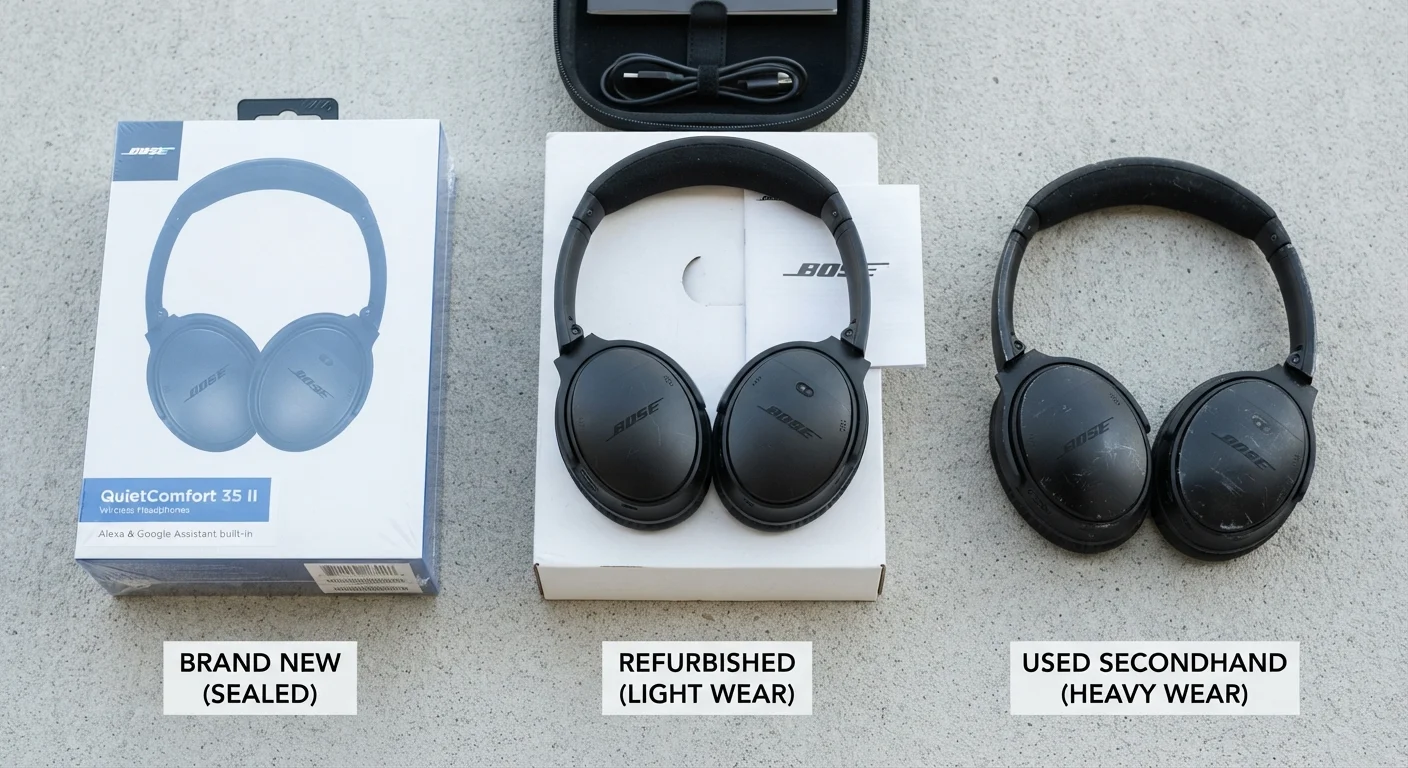
Photo: AnswersSquad.com | Explore Insightful Blogs editorial
Key Takeaways
- Secondhand, refurbished, and new each make sense in different buying contexts — no tier is universally superior.
- Refurbished items often offer a middle path: lower price with some quality assurance, though warranties vary widely.
- High-contact, safety-critical, or hygiene-sensitive items generally warrant buying new regardless of budget.
- Your intended usage duration and resale expectations should factor directly into which condition you choose.
- Always verify what warranty or return protection exists before committing to any used or refurbished purchase.
Why Condition Tier Is a Strategic Choice
Most people default to new out of habit, and some default to used out of necessity — but neither reflex is a strategy. Condition tier is a variable you can control deliberately, and getting it right often matters more than chasing a discount on a single platform.
The three tiers — secondhand, refurbished, and new — each carry distinct risk and value profiles. Understanding those profiles lets you allocate your budget where it actually counts. If you're working through a purchase decision and want a structured approach, this pre-purchase checklist is a useful companion to the framework below.
It's also worth noting that for some items, none of the three tiers is the right answer — renting may outperform ownership entirely when usage is infrequent.
Secondhand: Where It Works and Where It Doesn't
Secondhand purchasing makes the most sense for goods that are durable, non-safety-critical, and whose value doesn't depend on pristine condition. Furniture, hand tools, bicycles, books, kitchenware, and sporting equipment are categories where used items can perform identically to new ones for a fraction of the price. Secondhand furniture in particular rewards careful evaluation — some categories hold up well, others carry hidden costs.
The risks with secondhand are real, though: no warranty, unknown history, and no standardized quality grading. On peer-to-peer marketplaces, you're relying on seller transparency and your own inspection skills. For a balanced look at the specific trade-offs involved in buying used online, see this comparison of secondhand vs. new on online marketplaces.
Avoid secondhand for: car seats, helmets, mattresses, personal care devices, or anything where structural integrity or hygiene cannot be independently verified.
Never Skip Inspection on High-Stakes Secondhand Purchases
Refurbished: The Middle Tier Explained
Refurbished means the item has been returned, inspected, repaired if necessary, and re-listed — typically by a manufacturer, authorized reseller, or certified third party. The key distinction from plain "used" is that some level of quality verification has occurred. That said, the word "refurbished" is not regulated, so what it means in practice varies considerably by seller.
Manufacturer-certified refurbished programs tend to offer the strongest assurances: standardized testing, replacement of worn components, and at least a limited warranty. Third-party refurbishers range from rigorous to minimal, so reading the specific warranty terms and return policy before purchasing is essential — not optional.
Refurbished electronics, appliances, and power tools are common categories where buyers can capture meaningful savings without accepting the full uncertainty of a raw secondhand purchase. For anyone navigating broader money decisions around purchases like these, foundational saving strategies can help contextualize how much to allocate.
Check What 'Refurbished' Actually Covers
New: When the Premium Is Actually Justified
New is not always wasteful, and the case for it isn't just psychological comfort. There are categories where buying new is the genuinely rational choice:
- Safety-critical items — car seats, helmets, smoke detectors, and medical devices where structural history matters
- Items with manufacturer warranties that materially reduce long-term cost — appliances or electronics where warranty coverage meaningfully offsets the price gap
- Hygiene-sensitive goods — undergarments, certain personal care devices, or anything where sanitation cannot be reliably restored
- Items likely to be used heavily and long-term — when depreciation is spread over many years, the per-use cost of new versus used narrows considerably
Buying new to avoid the inconvenience of inspection, or because used feels vaguely risky, is a different calculation — one that often costs more than it saves in reduced anxiety. Being honest about which category applies to your purchase is the real skill here. That clarity connects directly to the broader framework of distinguishing needs from wants when making spending decisions.
For major purchases like vehicles, the new-versus-used decision involves additional layers — financing terms, depreciation curves, and reliability data all shift the calculus. First-time car buyers face a particularly layered version of this trade-off.
A Side-by-Side Comparison Across Key Criteria
The table below summarizes how each condition tier typically performs across the factors that matter most to a practical buyer. These are general patterns — individual listings can deviate significantly in either direction.
| Secondhand | Refurbished | New | |
|---|---|---|---|
| Typical price relative to retail | 30–70% below retail | 15–50% below retail | Full retail price |
| Quality assurance | None; buyer-verified only | Varies; may include testing | Standardized by manufacturer |
| Warranty coverage | Rarely included | Limited; varies by seller | Full manufacturer warranty |
| Return policy | Often final sale | Usually available | Standard retail returns |
| Condition transparency | Depends on seller honesty | Graded by reseller | Consistent and predictable |
| Best use case | Durable, low-risk goods | Electronics, appliances | Safety-critical or hygiene items |
Use this as a starting framework, not a fixed rule. A well-documented refurbished item from a reputable source may outperform a hastily listed new item with no return policy.
The content provided on our blog site traverses numerous categories, offering readers valuable and practical information. Readers can use the editorial team’s research and data to gain more insights into their topics of interest. However, they are requested not to treat the articles as conclusive. The website team cannot be held responsible for differences in data or inaccuracies found across other platforms. Please also note that the site might also miss out on various schemes and offers available that the readers may find more beneficial than the ones we cover.