
Balkan Road Trip: Mapping a Low-Cost Route Through an Overlooked Region

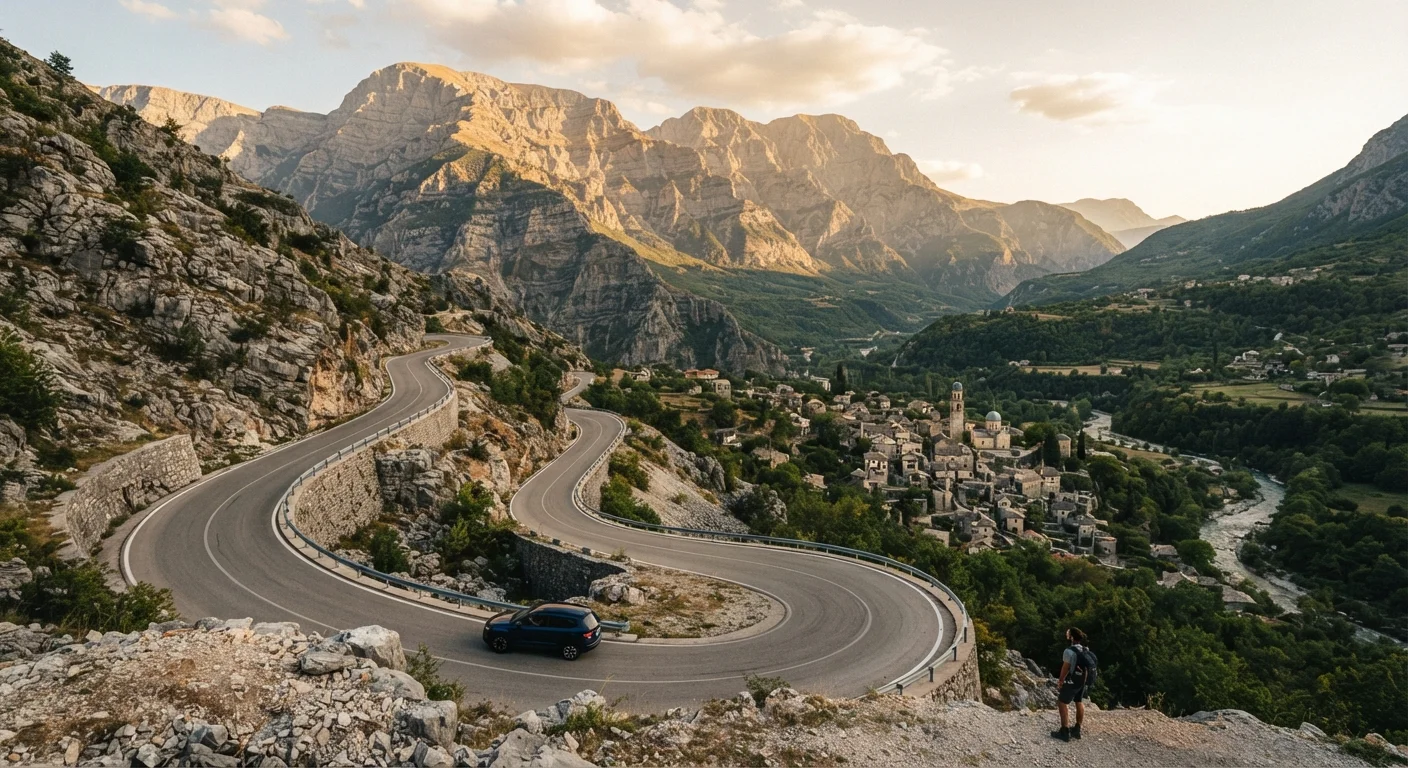
Photo: AnswersSquad.com | Explore Insightful Blogs editorial
Key Takeaways
- The Balkans include countries outside the Eurozone, which keeps daily costs significantly lower than Western Europe.
- A logical route minimizes backtracking and reduces fuel and transport costs on a road trip.
- Border crossings in the region vary — some require specific documentation or have wait times.
- Shoulder season travel (April–May and September–October) lowers accommodation costs and crowds.
- Daily budgets in countries like Albania, North Macedonia, and Kosovo can run under $50 per person.
- Road conditions and driving laws differ by country — research each before you depart.
Why the Balkans Make Sense for Budget Road Trippers
The Balkan Peninsula covers roughly a dozen countries — Slovenia, Croatia, Bosnia and Herzegovina, Serbia, Montenegro, Albania, North Macedonia, Kosovo, and Bulgaria among the most visited — yet it collectively draws far fewer international tourists than France, Italy, or Spain. That gap translates directly into lower prices for accommodation, food, and activities. For context, cost comparisons between Eastern and Western Europe consistently show daily spending gaps of 40–60% in favor of the east.
A road trip format suits this region especially well. Public transport between smaller Balkan towns is infrequent or unreliable, and renting a car — or driving your own from a Western European country — unlocks coastal villages, mountain passes, and rural valleys that buses simply don't reach. The tradeoff is managing fuel, tolls, and cross-border vehicle documentation, which we cover in the steps below.
Before committing to a full itinerary, it's worth checking daily budget benchmarks for this region so your financial expectations match reality on the ground.
Shoulder Season Is the Sweet Spot
What You'll Need Before You Leave
Planning a Balkan road trip involves more logistical groundwork than a comparable Western European drive. Currency varies — Croatia uses the euro, but Serbia uses the dinar, Albania the lek, and Bosnia the convertible mark. ATM access is decent in cities but patchy in rural areas, so carrying local cash matters.
What you will need
Also spend time on your overall trip budget before finalizing your route. The guide on building a realistic travel budget from scratch walks through how to estimate costs per leg and buffer for surprises — both especially useful when crossing multiple currency zones.
Mapping a Logical Low-Cost Route
The route below is a practical loop designed to minimize backtracking while hitting a mix of coastal, mountain, and urban highlights. It assumes a starting point of Dubrovnik, Croatia — a common international gateway — but can be adapted. Adjust pacing based on whether you prefer slower immersion or faster multi-country coverage.
Choose a realistic route length and time frame
A circuit covering five to six countries comfortably takes 14–18 days at a pace that allows more than windshield time. Trying to hit every country in under ten days typically means long driving days and surface-level visits that negate the cost savings of slower travel. Decide upfront whether this is a two-week focused trip or a longer open-ended journey, then build your country list around that constraint.
Sequence countries to minimize border crossings and backtracking
A practical counterclockwise loop from Dubrovnik: south into Montenegro (Kotor, Durmitor), then Albania (Shkodër, Berat, Gjirokastër), across to North Macedonia (Ohrid, Skopje), north into Kosovo (Prizren, Pristina), then Serbia (Belgrade), and back west through Bosnia and Herzegovina (Sarajevo, Mostar) before returning to the Croatian coast. This route covers immense geographic and cultural variety without retracing roads.
Research border crossing rules for each country pair
Not all Balkan borders are equal. Serbia and Kosovo have a politically sensitive relationship that affects how each country stamps your passport — entering Kosovo from Serbia is possible, but entering Serbia after Kosovo can create complications for some travelers. Check current conditions via the U.S. State Department or your country's equivalent foreign affairs office before finalizing your sequence.
Book accommodation in advance only for peak dates
Outside of July–August on the Croatian and Montenegrin coasts, the Balkans have reasonable walk-in availability for guesthouses and smaller hotels. Booking two to three days ahead is generally sufficient in shoulder season (April–May, September–October) and gives you flexibility to linger somewhere unexpectedly good. For coastal July–August travel, book further ahead — that sub-region sees heavy summer demand.
Set a per-day fuel and toll budget for each leg
Toll systems vary: Slovenia and Croatia have highway tolls or vignettes (sticker permits); other countries have minimal or no tolls. Albania's mountain routes are largely toll-free but fuel efficiency drops on steep gradients. Estimate each driving leg's distance, factor in likely fuel consumption for your vehicle class, and add a 15–20% buffer for detours and mountain terrain.
Identify free or low-cost highlights for each country
Most of the Balkans' best experiences cost little or nothing: hiking Durmitor National Park (Montenegro), exploring Gjirokastër's Ottoman old town (Albania), wandering Ohrid's lakeside medieval churches (North Macedonia), and walking Sarajevo's Baščaršija bazaar (Bosnia). Paid attractions — museums, cable cars, national park vehicle entry — are generally inexpensive by Western standards. Allocating $5–10 per person per day for paid activities is usually more than sufficient outside Croatia.
If you're weighing the Balkans against other off-the-beaten-path regions, Georgia (the country) offers a comparable budget appeal with its own distinct culture — though it requires more complex logistics from the US.
Practical Driving and Border Tips
Road conditions across the Balkans range from excellent (Slovenia's motorways, Croatian coastal routes) to genuinely challenging (mountain passes in Albania, unpaved rural roads in North Macedonia). Always verify your rental agreement covers cross-border travel — many standard contracts explicitly exclude certain Balkan countries, which could void your insurance.
Border wait times vary widely. The Serbia–Kosovo crossing, for example, can involve longer delays due to diplomatic complexity; some nationalities face entry restrictions. Always verify current entry requirements through your government's official travel advisory site before your trip — do not rely on travel blogs for visa or border rules, as these change without notice.
Verify Insurance Before Crossing Borders
Fuel costs track closely with regional economies — generally lower than Western Europe — but mountain terrain reduces efficiency significantly. Budget conservatively on fuel for any route through Montenegro's interior or Albania's highlands.
For a broader perspective on stretching your travel dollars in this part of the world, the Eastern vs. Western Europe cost breakdown provides useful context on what your dollar actually buys across different countries.
The content provided on our blog site traverses numerous categories, offering readers valuable and practical information. Readers can use the editorial team’s research and data to gain more insights into their topics of interest. However, they are requested not to treat the articles as conclusive. The website team cannot be held responsible for differences in data or inaccuracies found across other platforms. Please also note that the site might also miss out on various schemes and offers available that the readers may find more beneficial than the ones we cover.