
Georgia (the Country): A Budget Traveller's Honest Assessment

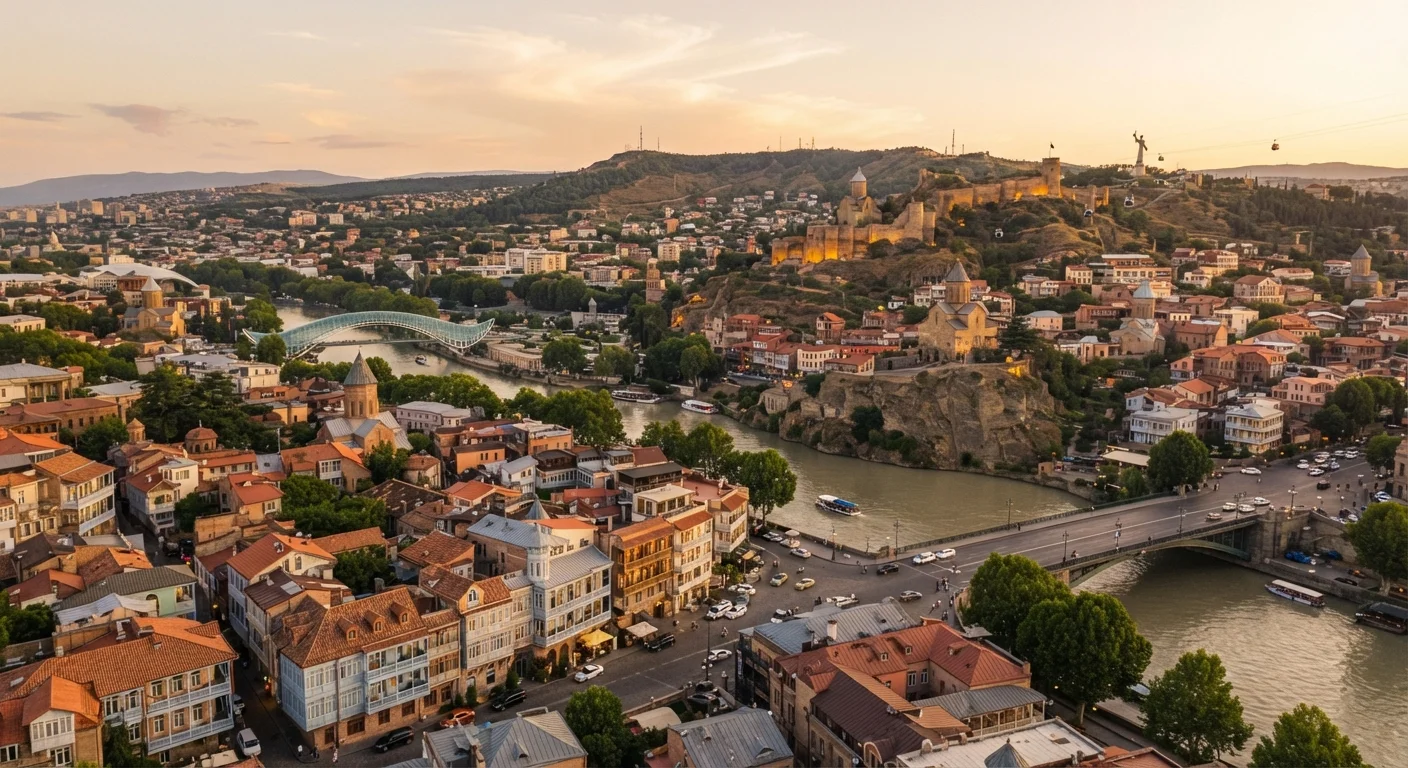
Photo: AnswersSquad.com | Explore Insightful Blogs editorial
Key Takeaways
- Georgia offers some of the lowest daily travel costs in Europe or the broader Caucasus region.
- Most nationalities can enter Georgia visa-free for up to one year, a major logistical advantage.
- Getting to Georgia involves limited flight options and no budget-airline hub, which raises arrival costs.
- The country's infrastructure outside Tbilisi is uneven — rewarding for adventurous travellers, challenging for others.
- Food, wine, and hospitality are genuine cultural highlights that add strong value beyond just low prices.
Visa-free access for most nationalities up to one year
Citizens of the US, EU, UK, and many other countries can enter Georgia visa-free for up to 365 days — one of the most generous entry policies anywhere. This eliminates a significant planning hurdle and cost that applies in many competing destinations.
Exceptionally low daily costs for food and accommodation
A realistic daily budget of $25–$40 covers a private guesthouse room, three meals including local wine, and local transport in most Georgian cities. That's a spending level that's difficult to match in Europe.
Outstanding food and wine culture included in the price
Georgian cuisine — khinkali dumplings, khachapuri cheese bread, slow-cooked stews — is widely considered one of the world's most underrated culinary traditions. Natural wine from the Kakheti region costs a few dollars a bottle at source.
Compact geography with dramatic landscape variety
In a country smaller than South Carolina, travellers can move between the Caucasus mountain villages, the semi-arid Alazani valley, Black Sea coast, and Soviet-era cave cities within a single trip without long hauls.
Genuine hospitality culture that reduces incidental costs
Georgian hospitality — known locally as "supra" culture — means travellers are frequently hosted, fed, or assisted by locals in ways that are rare in more heavily touristed regions. This isn't guaranteed, but it's a recurring experience many visitors report.
Minimal tourist crowds outside peak summer
Spring (April–June) and autumn (September–October) offer ideal weather with noticeably fewer visitors than summer, meaning better guesthouse availability and more authentic interactions in popular areas.
Limited and expensive international flight options
Georgia has no budget-airline hub equivalent. Flights typically route through Istanbul, Riga, or Vienna, and round-trip fares from the US often run $700–$1,100 or more. For travellers outside Europe, the flight cost can undermine the low in-country spend.
Uneven infrastructure outside major cities
Roads in mountain regions can be unpaved, unreliable, or seasonally inaccessible. Public transport between smaller towns is infrequent and schedules are informal, making rural exploration time-consuming without a private vehicle or paid driver.
Growing tourist pressure in key spots
Kazbegi, Mestia, and Tbilisi's Abanotubani district have seen sharp increases in visitor numbers in recent years, pushing guesthouse prices up seasonally and eroding the off-the-beaten-path experience in the most popular areas.
Language barrier is more pronounced than in Southeast Asia
Georgian script is unique and unrelated to Latin or Cyrillic alphabets. English is spoken in Tbilisi's tourist areas, but communication outside the capital requires patience and often relies on translation apps or gesture.
Safety and access considerations near certain borders
The regions of South Ossetia and Abkhazia are disputed territories with active travel advisories from multiple governments. Travellers should review their own government's current travel guidance and understand that border situations can change.
Why Georgia Is Catching Budget Travellers' Attention
Georgia — the small Caucasus nation between the Black Sea and the Greater Caucasus mountains — has quietly become a talking point among independent travellers looking for somewhere that feels genuinely undiscovered. Tbilisi draws comparisons to cities that were considered hidden gems a decade ago before prices climbed. For a young adult traveller weighing where limited dollars go furthest, Georgia deserves a serious, unsentimental look.
This assessment covers the real advantages and the real trade-offs. If you're comparing regions, see how Georgia stacks up against European alternatives for broader context on regional value.
Visa-free access for most nationalities up to one year
Citizens of the US, EU, UK, and many other countries can enter Georgia visa-free for up to 365 days — one of the most generous entry policies anywhere. This eliminates a significant planning hurdle and cost that applies in many competing destinations.
Exceptionally low daily costs for food and accommodation
A realistic daily budget of $25–$40 covers a private guesthouse room, three meals including local wine, and local transport in most Georgian cities. That's a spending level that's difficult to match in Europe.
Outstanding food and wine culture included in the price
Georgian cuisine — khinkali dumplings, khachapuri cheese bread, slow-cooked stews — is widely considered one of the world's most underrated culinary traditions. Natural wine from the Kakheti region costs a few dollars a bottle at source.
Compact geography with dramatic landscape variety
In a country smaller than South Carolina, travellers can move between the Caucasus mountain villages, the semi-arid Alazani valley, Black Sea coast, and Soviet-era cave cities within a single trip without long hauls.
Genuine hospitality culture that reduces incidental costs
Georgian hospitality — known locally as "supra" culture — means travellers are frequently hosted, fed, or assisted by locals in ways that are rare in more heavily touristed regions. This isn't guaranteed, but it's a recurring experience many visitors report.
Minimal tourist crowds outside peak summer
Spring (April–June) and autumn (September–October) offer ideal weather with noticeably fewer visitors than summer, meaning better guesthouse availability and more authentic interactions in popular areas.
The Honest Drawbacks
Georgia isn't a frictionless destination. Several structural challenges affect the trip experience in ways that matter more at lower budgets — where flexibility and contingency funds are limited.
Limited and expensive international flight options
Georgia has no budget-airline hub equivalent. Flights typically route through Istanbul, Riga, or Vienna, and round-trip fares from the US often run $700–$1,100 or more. For travellers outside Europe, the flight cost can undermine the low in-country spend.
Uneven infrastructure outside major cities
Roads in mountain regions can be unpaved, unreliable, or seasonally inaccessible. Public transport between smaller towns is infrequent and schedules are informal, making rural exploration time-consuming without a private vehicle or paid driver.
Growing tourist pressure in key spots
Kazbegi, Mestia, and Tbilisi's Abanotubani district have seen sharp increases in visitor numbers in recent years, pushing guesthouse prices up seasonally and eroding the off-the-beaten-path experience in the most popular areas.
Language barrier is more pronounced than in Southeast Asia
Georgian script is unique and unrelated to Latin or Cyrillic alphabets. English is spoken in Tbilisi's tourist areas, but communication outside the capital requires patience and often relies on translation apps or gesture.
Safety and access considerations near certain borders
The regions of South Ossetia and Abkhazia are disputed territories with active travel advisories from multiple governments. Travellers should review their own government's current travel guidance and understand that border situations can change.
Check Travel Advisories Before You Go
Costs in Practice: What Daily Spending Actually Looks Like
Accommodation in Tbilisi runs from roughly $10–$18 per night in a hostel dorm to $30–$50 for a private guesthouse room — figures that compare favourably to most of Southern Europe. A full sit-down meal with wine at a mid-range local restaurant rarely exceeds $10–$15 per person. Public marshrutka minibuses between cities cost a few dollars. Entry to most historical sites is either free or a nominal fee.
Where costs accumulate unexpectedly: international flights, any guided adventure activities in the mountains, and accommodation in popular mountain villages like Kazbegi or Mestia during peak summer season, where demand increasingly outpaces supply. For a detailed regional comparison of daily spend ranges, the daily budget benchmarks guide provides useful reference points.
$30–$45
Estimated daily budget (mid-range traveller)
General traveller reports and guesthouse pricing data suggest a mid-range independent traveller can cover accommodation, food, and local transport in Georgia for this range, excluding international flights.
365 days
Visa-free stay allowed for eligible nationalities
Georgia's visa policy allows citizens of approximately 95 countries — including the US — to stay up to one calendar year without a visa, according to Georgia's Ministry of Foreign Affairs.
~70,000 sq km
Total area of Georgia
Georgia's compact size — roughly comparable to South Carolina — means significant landscape and cultural variety is accessible within short travel distances, keeping in-country transport costs manageable.
How Georgia Compares to Similar Budget Destinations
Georgia often gets compared to Southeast Asia on pure price-per-day terms, though the trip profiles are different. Southeast Asia offers more established backpacker infrastructure, more hostel competition, and more low-cost flight routes. Georgia offers a denser cultural contrast in a smaller geography and a food and wine culture that has few equivalents at the price point. See the Southeast Asia budget travel resource if you're deciding between the two regions.
The Balkans are a closer geographic and logistical comparison — similar raw costs, better connectivity, more established tourist routes. A Balkan road trip suits travellers who want more infrastructure with comparable value. Georgia suits those who want fewer crowds and a less-trodden path, at the cost of some planning friction. Before committing to either, it's worth reviewing what actually goes into planning a budget trip to make sure your timeline and contingency plan are solid.
The content provided on our blog site traverses numerous categories, offering readers valuable and practical information. Readers can use the editorial team’s research and data to gain more insights into their topics of interest. However, they are requested not to treat the articles as conclusive. The website team cannot be held responsible for differences in data or inaccuracies found across other platforms. Please also note that the site might also miss out on various schemes and offers available that the readers may find more beneficial than the ones we cover.