
Why Your Home Bank Is Often the Worst Place to Exchange Currency

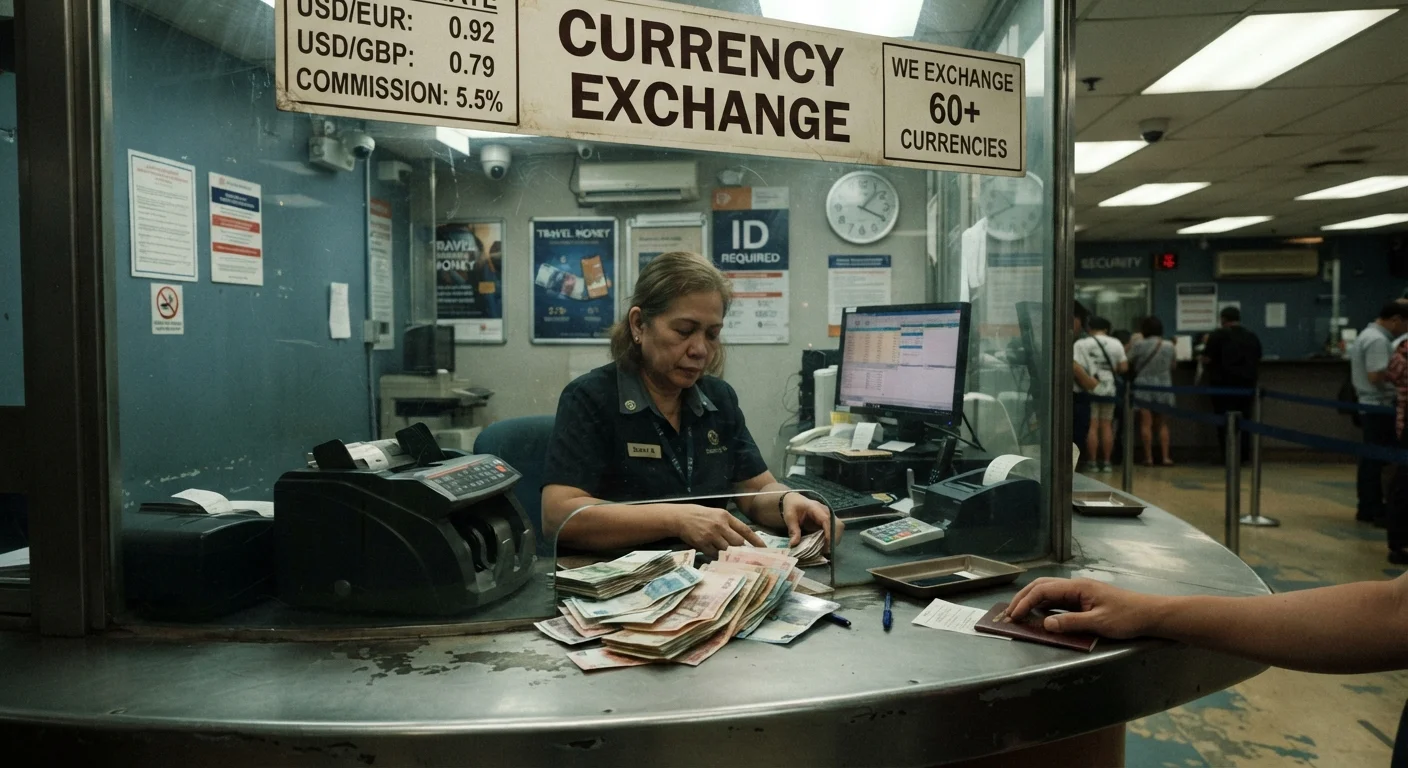
Photo: AnswersSquad.com | Explore Insightful Blogs editorial
Key Takeaways
- Banks typically apply a markup of 3–7% above the mid-market exchange rate, costing travelers real money.
- Convenience is the main genuine advantage of exchanging currency at your home bank.
- ATMs abroad using local networks and no-fee travel cards are usually more cost-effective alternatives.
- Banks can still be a reasonable option for rare currencies that are hard to source elsewhere.
- Always compare the effective rate — including all fees — not just the headline exchange rate offered.
Trusted, familiar institution with account security
Exchanging currency through your existing bank means you're working within a relationship you already have, with fraud protections in place. For travelers anxious about moving large sums, this familiarity has genuine value.
Access to rare or exotic currencies
Major banks sometimes stock currencies from less-visited countries that airport kiosks and online providers won't carry. For travel to destinations like Cambodia or certain African nations, your bank may be one of few practical pre-departure sources.
No need to carry a card or access an ATM abroad
Arriving with local cash already in hand eliminates the stress of finding a working ATM in an unfamiliar city. Some destinations — particularly rural areas or cash-dominant markets — make this worth considering.
Wide spreads above the mid-market rate
Banks routinely mark up exchange rates by 3–7% above the interbank (mid-market) rate — the rate you see on financial data sites. On a $1,000 exchange, that's $30–$70 disappearing before you even board the plane.
Flat transaction and order fees add up
Many banks charge a flat fee of $5–$15 per currency order, on top of the rate markup. Smaller exchanges are hit hardest proportionally, since the fee represents a larger percentage of the total.
Rates are not negotiable and rarely competitive
Unlike specialist currency brokers who may offer tighter margins for larger amounts, bank rates are typically fixed and non-negotiable. You have no leverage as a consumer in the exchange transaction.
Must order in advance for most currencies
Most retail bank branches don't keep large stocks of foreign currency on hand. You may need to order several business days ahead, which removes the option for spontaneous or last-minute travel decisions.
Better alternatives are widely accessible
No-fee travel cards, overseas ATMs on local networks, and some online currency services frequently offer rates much closer to mid-market. The bank option is increasingly hard to justify purely on cost grounds.
How Bank Currency Exchange Actually Works
When you walk into your bank and ask to exchange dollars for euros, the bank isn't doing you a favor — it's running a transaction with a built-in profit margin. Banks source foreign currency at or near the interbank rate, then sell it to you at a marked-up rate. The difference is their revenue. This is standard practice across the industry, but the size of that markup varies considerably and is rarely disclosed upfront in plain terms.
The markup is embedded in the exchange rate itself, making it easy to overlook. If the mid-market rate for USD to EUR is 1.10 but your bank quotes 1.04, you're effectively paying roughly 5.5% more than the benchmark rate. Add a flat order fee on top, and the real cost of a bank exchange becomes clearer. See our introduction to exchange rates and travel fees for a fuller breakdown of how to read a rate quote.
3–7%
Typical bank markup above mid-market rate
Industry analyses of retail bank currency exchange margins consistently show spreads in this range for common currency pairs such as USD to EUR or GBP.
$15
Common flat fee per bank currency order
Many major U.S. retail banks charge between $5 and $15 as a fixed order fee for foreign currency, separate from the exchange rate margin.
The Case For (and Against) Using Your Bank
To be fair, bank exchanges aren't without merit. For travelers heading to countries with currencies that are difficult to source — certain Central Asian, African, or Pacific Island currencies — a large retail bank may be one of very few pre-departure options. There's also a genuine comfort factor: working within a trusted institution with existing fraud protections is something some travelers reasonably value.
Trusted, familiar institution with account security
Exchanging currency through your existing bank means you're working within a relationship you already have, with fraud protections in place. For travelers anxious about moving large sums, this familiarity has genuine value.
Access to rare or exotic currencies
Major banks sometimes stock currencies from less-visited countries that airport kiosks and online providers won't carry. For travel to destinations like Cambodia or certain African nations, your bank may be one of few practical pre-departure sources.
No need to carry a card or access an ATM abroad
Arriving with local cash already in hand eliminates the stress of finding a working ATM in an unfamiliar city. Some destinations — particularly rural areas or cash-dominant markets — make this worth considering.
But those advantages don't offset the structural cost problem for most travelers to common destinations. For a typical trip to Europe, Mexico, or Southeast Asia, the currency is readily available through cheaper channels.
Wide spreads above the mid-market rate
Banks routinely mark up exchange rates by 3–7% above the interbank (mid-market) rate — the rate you see on financial data sites. On a $1,000 exchange, that's $30–$70 disappearing before you even board the plane.
Flat transaction and order fees add up
Many banks charge a flat fee of $5–$15 per currency order, on top of the rate markup. Smaller exchanges are hit hardest proportionally, since the fee represents a larger percentage of the total.
Rates are not negotiable and rarely competitive
Unlike specialist currency brokers who may offer tighter margins for larger amounts, bank rates are typically fixed and non-negotiable. You have no leverage as a consumer in the exchange transaction.
Must order in advance for most currencies
Most retail bank branches don't keep large stocks of foreign currency on hand. You may need to order several business days ahead, which removes the option for spontaneous or last-minute travel decisions.
Better alternatives are widely accessible
No-fee travel cards, overseas ATMs on local networks, and some online currency services frequently offer rates much closer to mid-market. The bank option is increasingly hard to justify purely on cost grounds.
What to Use Instead
The most cost-effective approach for most travelers combines two strategies: a no-fee debit or travel card that uses the mid-market rate for ATM withdrawals, and a small amount of local currency obtained from in-network ATMs after arrival. Our comparison of no-fee travel cards vs. traditional debit cards explains the specific mechanics of each.
If you plan to use ATMs abroad, withdraw larger amounts less frequently to minimize per-transaction fees. Decline any offer to pay in U.S. dollars at a foreign ATM or merchant — that's a separate trap called dynamic currency conversion (DCC). Our guide on dynamic currency conversion covers exactly why you should always choose to pay in the local currency.
What Is the Mid-Market Rate?
Going in unprepared is the most expensive option of all. Review our analysis of what financial unpreparedness actually costs travelers to understand the full picture before your next trip.
When Your Bank Still Makes Sense
There are scenarios where a bank exchange is a defensible choice. If you're traveling somewhere with limited ATM infrastructure and need physical cash before departure, and the currency isn't easily available elsewhere, your bank may be the most practical option. Similarly, if you're only exchanging a small amount for a short trip and the convenience saves meaningful time, the cost difference may be acceptable to you personally.
The key is making the choice deliberately, with full awareness of the cost. Pull up the mid-market rate before you visit the bank, note the rate you're offered, and calculate the implied markup. That number is what the convenience is costing you. For guidance on how to balance cash and card use based on your specific destination, see our breakdown of cash vs. card trade-offs abroad.
This article is for general informational purposes only and does not constitute financial or investment advice. Exchange rates and fee structures vary by institution and change over time. Verify current rates and terms directly with your bank or provider before making any currency exchange decisions.
The content provided on our blog site traverses numerous categories, offering readers valuable and practical information. Readers can use the editorial team’s research and data to gain more insights into their topics of interest. However, they are requested not to treat the articles as conclusive. The website team cannot be held responsible for differences in data or inaccuracies found across other platforms. Please also note that the site might also miss out on various schemes and offers available that the readers may find more beneficial than the ones we cover.